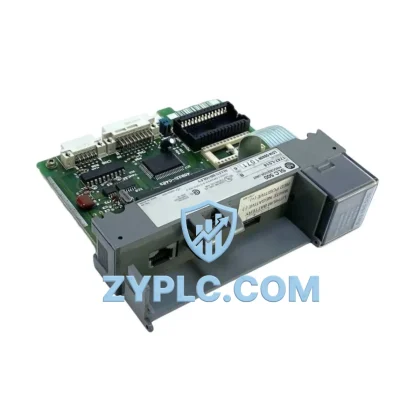
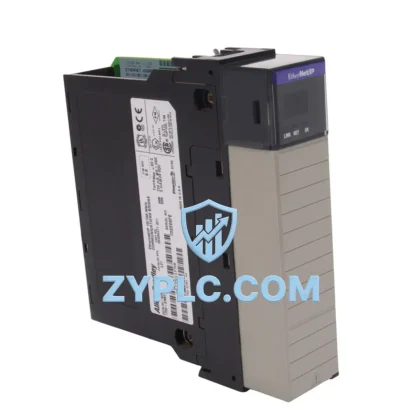
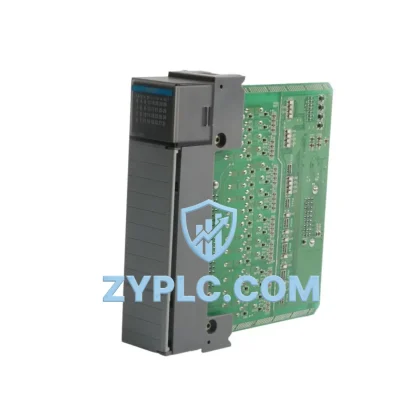
Allen-Bradley 1771-SDN Energy-Saving DeviceNet Scanner PLC-5: Precision Energy Control for Optimized Automation
The Allen-Bradley 1771-SDN DeviceNet Scanner Module is a high-performance I/O scanning component engineered for the PLC-5 platform, delivering measurable improvements in energy efficiency, device utilization, and production line throughput. Designed for demanding industrial environments, the 1771-SDN enables factories to reduce unnecessary energy consumption by establishing deterministic, high-speed communication between the PLC-5 processor and field-level DeviceNet devices — including variable frequency drives, smart sensors, motor starters, and distributed I/O blocks — eliminating polling inefficiencies that silently inflate energy costs.
In modern manufacturing, energy waste rarely originates from a single source. It accumulates across idle drives running at full speed, uncoordinated motor start sequences, and unmonitored I/O cycles that keep devices energized beyond operational demand. The 1771-SDN addresses this at the network architecture level: by centralizing DeviceNet device management within the PLC-5 rack, it allows the control program to precisely schedule device activation, monitor real-time status, and execute energy-aware shutdown sequences during low-demand periods — all without additional middleware or external energy management hardware.
Efficiency Performance Table
| Parameter |
Specification / Value |
| SKU / Part Number |
1771-SDN |
| Brand / Series |
Allen-Bradley / PLC-5 |
| Module Type |
DeviceNet Scanner Module |
| Network Protocol |
DeviceNet (CAN-based) |
| Max DeviceNet Nodes |
Up to 63 nodes per scanner |
| Backplane Power Consumption |
Low-draw I/O module design |
| Scan Cycle Efficiency |
Deterministic, configurable scan rate |
| Compatible Systems |
Allen-Bradley PLC-5 (1771 I/O chassis) |
| Application Environment |
Industrial automation, motor control, distributed I/O, energy monitoring |
| Energy Optimization Value |
Reduces idle device polling, enables demand-based device control |
| Operating Temperature |
0°C to 60°C (standard industrial range) |
| Warranty |
12-Month Warranty |
| Stock Status |
In Stock — Ships after outgoing test |
Energy-Aware Automation Architecture
The 1771-SDN operates as the DeviceNet master within the PLC-5 rack, coordinating communication with a wide range of field devices that directly influence energy consumption. In a typical energy-optimized architecture, the scanner interfaces with Allen-Bradley PowerFlex 40 and PowerFlex 70 variable frequency drives over DeviceNet, enabling the PLC-5 program to dynamically adjust motor speed references based on real-time production demand — a fundamental technique for reducing motor energy consumption by 30–50% compared to fixed-speed operation.
Alongside drive control, the 1771-SDN connects to 1771-SDN-compatible distributed I/O blocks such as the 1734 POINT I/O series and 1738 ArmorPoint I/O modules, which are positioned close to field equipment to minimize wiring runs and associated resistive losses. The scanner’s configurable scan list allows engineers to prioritize high-frequency polling for energy-critical devices — such as current transducers and power monitoring relays — while reducing scan rates for low-priority status inputs, optimizing backplane bandwidth and processor load simultaneously.
For power quality monitoring, the 1771-SDN can integrate with Allen-Bradley PowerMonitor 500 and PowerMonitor 1000 units via DeviceNet, feeding real-time kW, kVAR, and power factor data directly into the PLC-5 data table. This enables closed-loop energy control strategies: when the PowerMonitor detects a power factor drop below threshold, the PLC-5 can automatically command capacitor bank switching or adjust drive output frequency to restore efficiency — all coordinated through the 1771-SDN’s network management layer.
Communication between the PLC-5 and upstream SCADA or MES systems is typically handled via a 1785-KE or 1784-PKTX Data Highway Plus interface, while the 1771-SDN manages the field-level DeviceNet subnet independently. This two-tier architecture ensures that energy data collected at the device level — from drives, I/O modules, and power monitors — flows seamlessly to plant-level reporting systems without burdening the DeviceNet scan cycle with supervisory traffic.
In multi-axis motion applications, the 1771-SDN complements Allen-Bradley 1394 GMC servo drive systems by handling auxiliary DeviceNet I/O — such as safety light curtains, proximity sensors, and pneumatic valve islands — freeing the motion controller to focus exclusively on trajectory and torque control. This separation of concerns reduces jitter in the motion control loop and prevents energy-intensive re-homing sequences caused by I/O-related faults.
Power Optimization in Real Production Lines
On automotive assembly lines, the 1771-SDN has been deployed to manage DeviceNet networks spanning conveyor motor starters, weld gun controllers, and part-present sensors across multiple stations. By enabling the PLC-5 to implement zone-based power management — where conveyor segments and tooling are de-energized during scheduled micro-stops and shift breaks — facilities have documented reductions in standby power consumption of 15–25% per production zone.
In food and beverage processing, the scanner’s ability to monitor DeviceNet drive status words in real time allows maintenance teams to detect motor loading anomalies before they escalate into failures. A drive consistently operating at 95%+ of rated current during a normally light-load phase is a reliable early indicator of mechanical wear — a bearing beginning to seize, a conveyor belt misaligned, or a pump impeller partially blocked. Catching these conditions through the 1771-SDN’s continuous device monitoring eliminates unplanned downtime events that typically consume 3–5× more energy during emergency restart sequences than normal operation.
For batch chemical processes, the 1771-SDN enables recipe-driven motor speed profiles: agitator drives ramp to full speed during mixing phases and step down to minimum speed during hold periods, with the PLC-5 managing the entire sequence through DeviceNet speed reference commands. This approach eliminates the energy waste of running agitators at fixed speed throughout the batch cycle — a common inefficiency in older relay-logic-controlled systems.
Every 1771-SDN unit supplied by ZYPLC undergoes a full functional outgoing test prior to shipment, verifying DeviceNet node commissioning, scan list integrity, and backplane communication under load. Units are confirmed in-stock and available for immediate dispatch, supported by a 12-month warranty covering hardware defects and operational failures under normal industrial use conditions.
Energy Optimization FAQ
Q1: How does the 1771-SDN contribute to measurable energy savings on the production floor?
The 1771-SDN enables the PLC-5 to implement demand-based device control over DeviceNet — commanding variable frequency drives to reduce speed during low-load periods, de-energizing distributed I/O nodes during planned stops, and collecting real-time power data from monitoring devices. These capabilities, when programmed into the PLC-5 control strategy, directly reduce active energy consumption and eliminate the standby losses associated with fixed-speed, always-on device operation.
Q2: Is the 1771-SDN compatible with current Allen-Bradley DeviceNet devices and drives?
Yes. The 1771-SDN is fully compatible with the DeviceNet open standard (IEC 62026-3), meaning it communicates with any conformant DeviceNet device regardless of firmware revision. This includes current-generation PowerFlex drives, 1734 POINT I/O, 1738 ArmorPoint I/O, and third-party DeviceNet sensors and actuators. The scanner’s EDS-based configuration via RSNetWorx for DeviceNet ensures straightforward integration with both legacy and modern field devices.
Q3: What is the recommended replacement or upgrade path if the 1771-SDN is end-of-life in my system?
For systems where a full platform migration is planned, the functional equivalent in the ControlLogix platform is the 1756-DNB DeviceNet Bridge module, which provides the same DeviceNet master functionality within the 1756 chassis. For PLC-5 systems that must remain in service, ZYPLC maintains inventory of tested 1771-SDN units to support ongoing spare parts requirements. Our technical team can advise on migration planning and compatibility assessment based on your specific network topology.
Q4: What does the 12-month warranty cover, and what is the testing process before shipment?
Every 1771-SDN shipped by ZYPLC is tested for DeviceNet master functionality, backplane communication integrity, and node scanning performance prior to dispatch. The 12-month warranty covers hardware defects and operational failures arising under normal industrial operating conditions. In the event of a warranty claim, ZYPLC provides direct technical support and unit replacement coordination. Contact our team at plc.sales@zyplc.com or +86 19859288691 for warranty registration and support inquiries.
© 2026 ZYPLC. All rights reserved.
Original Source: https://zyplc.com
Contact: +86 19859288691 | plc.sales@zyplc.com