Allen-Bradley 1771-WS System-Ready Weigh Scale for PLC-5 Architecture: Control System Coordination and Upstream-Downstream Synergy
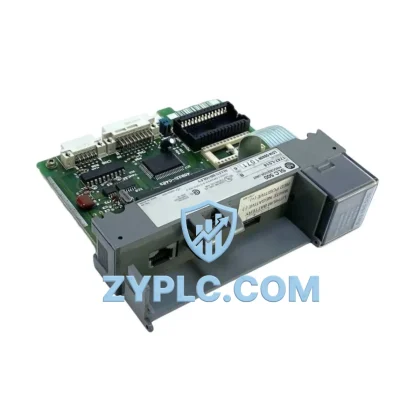
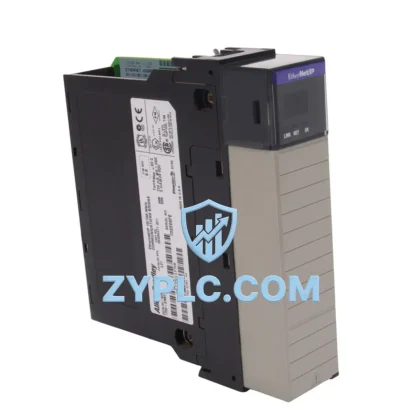
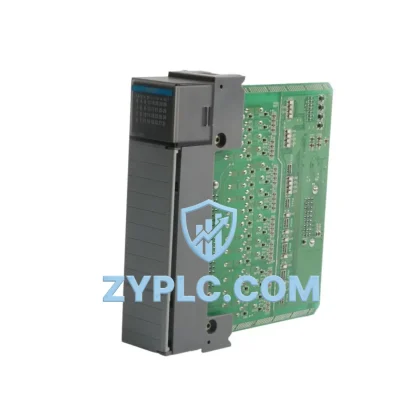
The Allen-Bradley 1771-WS Weigh Scale Module is a precision analog I/O component engineered for seamless integration within the PLC-5 control platform. Rather than functioning as a standalone measurement device, the 1771-WS occupies a critical position within the layered automation hierarchy — bridging the physical process layer and the control logic layer to deliver accurate, real-time weight data that drives process decisions across the entire system architecture. In demanding industrial environments such as chemical batching, food and beverage filling lines, mining conveyor systems, and metallurgical process control, the 1771-WS enables the PLC-5 CPU to execute weight-based logic with the precision and repeatability that modern production demands.
Understanding the 1771-WS requires viewing it not in isolation, but as a functional node within a coordinated control system. Its value is realized through its interaction with upstream signal sources, downstream actuators, peer I/O modules, and the supervisory control layer — all of which depend on the accuracy and stability of weight measurement data flowing through the 1771 I/O chassis.
Architecture Specification Table
| Parameter |
Specification |
| System Role |
Analog Weigh Scale I/O Module — PLC-5 1771 I/O Chassis |
| Compatible Platform |
Allen-Bradley PLC-5 Series (1771 I/O System) |
| Chassis Compatibility |
1771-A1B, 1771-A2B, 1771-A3B, 1771-A4B I/O Chassis |
| Input Signal Type |
Load cell / strain gauge bridge input (millivolt-level) |
| Excitation Voltage |
10 VDC regulated (for load cell excitation) |
| Resolution |
High-resolution analog-to-digital conversion for weight accuracy |
| Communication |
1771 I/O backplane communication to PLC-5 CPU |
| Data Transfer |
Block transfer read/write (BTR/BTW) via PLC-5 ladder logic |
| Operating Temperature |
0°C to 60°C (32°F to 140°F) |
| Storage Temperature |
-40°C to 85°C |
| Power Consumption |
Supplied via 1771 I/O chassis backplane |
| Mounting |
Single-slot 1771 I/O chassis module |
| Indicators |
LED status indicators for power and communication status |
| Certifications |
UL Listed; CE compliant (as applicable) |
| Warranty |
12-Month Warranty — tested, verified, and ready to deploy |
| Contextual Integration |
Full Contextual Integration support within PLC-5 / 1771 architecture |
Coordinated Control System Design
The 1771-WS Weigh Scale Module achieves its full potential when deployed within a well-structured PLC-5 control architecture. At the control layer, the Allen-Bradley PLC-5/20, PLC-5/30, or PLC-5/40 CPU serves as the central processing unit, executing block transfer instructions (BTR/BTW) to read weight data from the 1771-WS and trigger downstream control actions based on configurable setpoints. The CPU’s scan cycle is synchronized with the module’s data update rate, ensuring that weight measurements are always current and actionable.
At the I/O layer, the 1771-WS coexists within the 1771-A3B or 1771-A4B I/O chassis alongside complementary modules such as the 1771-OAD analog output module for driving control valves or variable-speed drives, and the 1771-IFE analog input module for monitoring process variables such as temperature, pressure, or flow rate. This multi-module chassis configuration allows the PLC-5 to correlate weight data with other process parameters in real time, enabling sophisticated ratio control, batching sequences, and alarm management strategies.
For applications requiring discrete control coordination, the 1771-OBD digital output module and 1771-IBD digital input module provide the interface between the PLC-5 logic and field devices such as solenoid valves, conveyor drives, and limit switches. When the 1771-WS signals that a target weight has been reached, the PLC-5 CPU can simultaneously trigger a digital output to close a fill valve, start a conveyor, or activate a reject mechanism — all within a single scan cycle.
At the network and communication layer, the PLC-5 platform supports Data Highway Plus (DH+) and Remote I/O (RIO) communication, enabling the 1771-WS weight data to be shared across multiple control nodes, SCADA systems, and HMI terminals. Integration with a 1784-KTX or 1784-PKTX communication card allows engineering workstations running RSLogix 5 to monitor live weight values, tune setpoints, and perform online diagnostics without interrupting production.
At the human-machine interface layer, PanelView 550 or PanelView 900 terminals connected via DH+ provide operators with real-time weight readouts, batch totals, and alarm acknowledgment capabilities. The seamless data flow from the 1771-WS through the PLC-5 CPU to the HMI ensures that operators always have accurate, up-to-date process information at their fingertips.
For power supply integrity — a critical factor in analog measurement accuracy — the 1771-P4S or 1771-P7 power supply provides stable, regulated power to the 1771 I/O chassis, minimizing electrical noise that could affect the millivolt-level signals processed by the 1771-WS. Proper power supply selection and grounding practices are essential to achieving the full measurement accuracy of the weigh scale module.
Application in Layered Automation Systems
Manufacturing and Packaging Lines: In high-speed packaging and filling operations, the 1771-WS enables the PLC-5 to implement gravimetric filling control — precisely measuring the weight of product dispensed into each container and adjusting fill rates in real time to maintain target weights within tight tolerances. This capability is essential for compliance with net content regulations in food, beverage, and pharmaceutical packaging.
Chemical and Petrochemical Batching: In batch reactor systems, the 1771-WS provides the weight measurement foundation for recipe-driven ingredient addition. The PLC-5 CPU sequences multiple ingredient additions based on cumulative weight targets, with the 1771-WS providing the feedback signal that triggers each addition step. This architecture supports both manual and fully automated batch execution modes.
Mining and Bulk Material Handling: On conveyor belt systems and truck loading stations, the 1771-WS integrates with belt scale or hopper scale load cells to provide continuous or batch weight measurement. The PLC-5 uses this data to optimize loading rates, prevent overloading, and generate production reports for inventory management and regulatory compliance.
Metallurgical and Steel Processing: In ladle weighing, scrap charging, and alloy addition systems, the 1771-WS delivers the measurement precision required for metallurgical process control. Integration with the PLC-5 control architecture allows weight data to be correlated with temperature, chemistry, and timing parameters to optimize melt quality and yield.
Water and Wastewater Treatment: In chemical dosing systems, the 1771-WS monitors the weight of chemical storage tanks to calculate consumption rates, trigger reorder alerts, and ensure accurate dosing ratios. The PLC-5 architecture provides the control logic framework for integrating weight measurement with flow measurement and dosing pump control.
Architecture Engineering FAQ
Q1: Is the 1771-WS compatible with all PLC-5 processor models, and what chassis configurations are supported?
The 1771-WS is designed for use within the Allen-Bradley 1771 I/O system, which is the standard I/O platform for all PLC-5 processor families including the PLC-5/11, PLC-5/20, PLC-5/30, PLC-5/40, and PLC-5/60. It occupies a single slot in any 1771 I/O chassis (1771-A1B through 1771-A4B) and communicates with the PLC-5 CPU via block transfer instructions. No special chassis or adapter is required, making it straightforward to add weigh scale capability to existing PLC-5 installations.
Q2: How does the 1771-WS maintain measurement accuracy in electrically noisy industrial environments, and what installation practices are recommended?
The 1771-WS is designed with shielded signal conditioning circuitry to minimize the impact of electrical noise on millivolt-level load cell signals. For optimal performance, it is recommended to use shielded, twisted-pair cable for load cell connections, maintain physical separation between signal cables and power cables, ensure proper chassis grounding, and use a high-quality 1771 chassis power supply such as the 1771-P4S. In environments with severe electrical interference, additional signal conditioning or isolation may be appropriate. These installation practices are consistent with Allen-Bradley’s standard recommendations for analog I/O modules in the 1771 system.
Q3: What does the 12-Month Warranty cover, and how does ZYPLC support long-term maintenance and spare parts availability for the 1771-WS?
Every 1771-WS supplied by ZYPLC is covered by a 12-Month Warranty against defects in materials and workmanship, with each unit tested and verified prior to shipment. For long-term maintenance planning, ZYPLC maintains inventory of 1771-WS modules and related PLC-5 I/O components to support both emergency replacement and planned maintenance programs. Our technical team can assist with module configuration, block transfer programming guidance, and system integration support. For spare parts inquiries, warranty claims, or technical assistance, contact ZYPLC at +86 19859288691 or [email protected].
© 2026 ZYPLC. All rights reserved.
Original Source: https://zyplc.com
Contact: +86 19859288691 | [email protected]