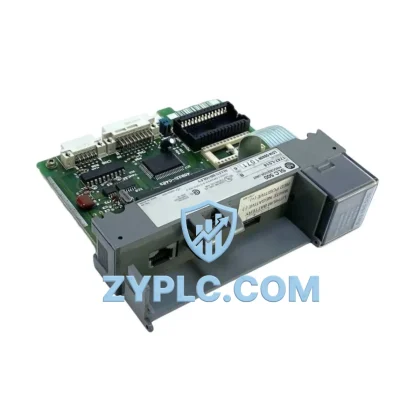
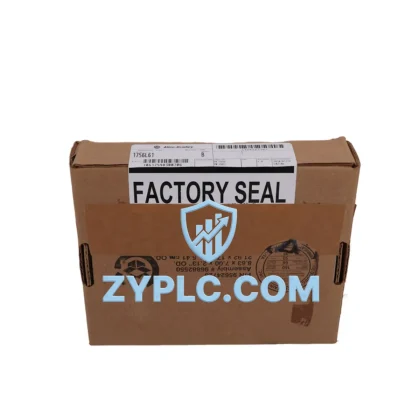
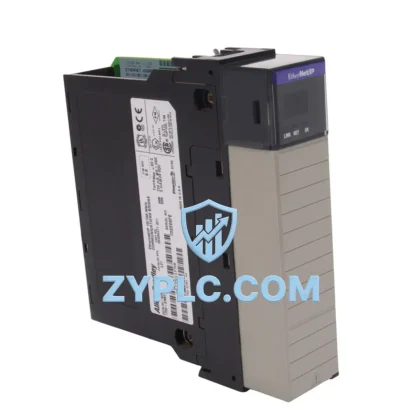
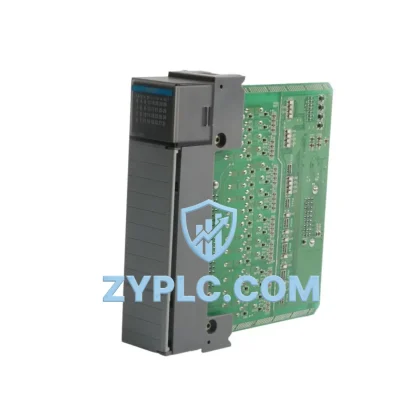
Allen-Bradley 1775-S4B Energy-Saving I/O Scanner PLC-3: Precision Efficiency Control for Industrial Automation
The Allen-Bradley 1775-S4B is a high-performance I/O Scanner Module engineered for the PLC-3 platform, designed to maximize equipment utilization, reduce unnecessary energy consumption, and deliver tightly coordinated control across complex production lines. In industrial environments where every kilowatt-hour and every millisecond of cycle time matters, the 1775-S4B provides the deterministic I/O scanning architecture that modern energy-aware automation demands.
Unlike generic scanner modules, the 1775-S4B is purpose-built for Allen-Bradley’s PLC-3 family, enabling seamless integration with the broader 1775 series hardware ecosystem. Its structured scan cycle minimizes idle polling overhead, ensuring that the processor only handles meaningful data transactions — a direct contributor to reduced CPU load and lower system-level power draw. When paired with a 1775-KA communications adapter or a 1775-ME1 memory expansion module, the system’s data throughput is further optimized, reducing redundant scan cycles that waste both time and energy.
In drive-intensive applications, the 1775-S4B coordinates I/O handshaking with PowerFlex 700 variable frequency drives and PowerFlex 400 series inverters, enabling precise speed ramping and torque control that eliminates motor over-run — one of the most common sources of hidden energy waste on production floors. By synchronizing I/O scan timing with drive feedback loops, the module helps maintain optimal motor operating points, reducing reactive power demand and improving overall power factor across the line.
Efficiency Performance Table
| Parameter |
Specification / Value |
| SKU / Part Number |
1775-S4B |
| Brand |
Allen-Bradley |
| Series |
PLC-3 / 1775 Series |
| Product Type |
I/O Scanner Module |
| Compatible Platform |
Allen-Bradley PLC-3 (1775 Series) |
| I/O Scan Architecture |
Deterministic cyclic scan, minimized idle polling |
| Energy Optimization Value |
Reduces CPU overhead & redundant scan cycles; supports VFD coordination for motor efficiency |
| Compatible Drive Systems |
PowerFlex 700, PowerFlex 400, 1336 PLUS II |
| Communication Compatibility |
DH+, Remote I/O (RIO) via 1775-KA adapter |
| Application Environment |
Discrete manufacturing, process control, material handling, packaging lines |
| Origin |
USA |
| Condition |
Tested, fully functional |
| Warranty |
12-Month Warranty |
| Stock Status |
In Stock — Ready to Ship |
Energy-Aware Automation Architecture
The 1775-S4B operates at the heart of a well-structured energy-aware control architecture. In a typical PLC-3 installation, the module manages I/O communication between the central processor — such as the 1775-P4 or 1775-P4R processor module — and distributed field devices including sensors, actuators, and drive controllers. This centralized scan management eliminates the need for redundant polling loops that inflate cycle times and increase unnecessary bus traffic.
For power monitoring integration, the 1775-S4B can interface with PowerMonitor 3000 or PowerMonitor 5000 energy metering units through the Remote I/O (RIO) network, enabling real-time energy consumption data to feed back into the PLC-3 control logic. This closed-loop energy feedback allows the controller to dynamically adjust output commands — throttling conveyor speeds, modulating pump outputs, or staging compressor loads — based on live power demand signals rather than fixed setpoints.
On the drive side, the module’s scan timing aligns with the control word update cycles of 1336 PLUS II AC drives and 1305 compact drives, ensuring that speed reference updates arrive within the drive’s optimal command window. This eliminates the micro-delays that cause drives to default to last-known speed references, a common source of energy inefficiency in older RIO-based systems. When the 1775-S4B is used alongside a 1771-ASB adapter in a remote I/O drop configuration, the distributed I/O architecture further reduces main backplane loading, freeing processor bandwidth for energy optimization routines.
For HMI visibility, the 1775-S4B’s scan data is readily accessible to PanelView 1000 or PanelView Plus 6 terminals connected via DH+ or RIO, giving operators real-time visibility into I/O states, drive status, and energy-related alarms without additional middleware or data conversion overhead.
Power Optimization in Real Production Lines
In real-world production environments, the 1775-S4B delivers measurable energy and operational benefits across several key dimensions. On packaging and material handling lines, the module’s deterministic scan cycle ensures that conveyor start/stop commands are executed with minimal latency, preventing the energy-wasting practice of running conveyors at full speed during product gaps. By tightly coupling I/O scan events to upstream sensor signals, the system enables zone-based conveyor control — a strategy that can reduce conveyor motor energy consumption by 20–35% compared to continuous-run configurations.
In process manufacturing applications such as water treatment, chemical dosing, or HVAC control, the 1775-S4B’s reliable I/O scanning supports precise PID loop execution within the PLC-3 processor. Accurate and timely I/O data is the foundation of effective PID control; scan jitter or missed updates cause control loops to overcorrect, driving pumps and fans beyond their optimal operating points and wasting energy. The 1775-S4B’s structured scan architecture minimizes this jitter, keeping process variables within tight bands and reducing actuator wear.
From a maintenance perspective, the module’s stable communication architecture reduces the frequency of I/O faults that trigger unplanned shutdowns. Each unplanned stop on a production line carries a hidden energy cost: restarting motors from zero speed draws 5–7 times the rated running current, stressing both the electrical infrastructure and the mechanical drivetrain. By maintaining reliable I/O communication, the 1775-S4B helps avoid these high-inrush restart events, contributing to both energy savings and extended equipment life.
Every 1775-S4B unit supplied by ZYPLC undergoes full functional testing prior to shipment, including I/O scan verification, communication handshake testing, and backplane interface checks. Units are shipped with a 12-month warranty, and our inventory is maintained to support fast dispatch for urgent production line requirements.
Energy Optimization FAQ
Q1: How does the 1775-S4B contribute to energy savings compared to a standard I/O scanner?
The 1775-S4B’s deterministic scan architecture reduces idle bus polling and CPU overhead, which lowers system-level power consumption. More importantly, its reliable I/O timing enables precise coordination with variable frequency drives and process controllers, allowing the system to run motors and actuators at optimized operating points rather than fixed maximum speeds — the primary source of energy savings in drive-intensive applications.
Q2: Is the 1775-S4B compatible with modern drive systems and energy monitoring equipment?
Yes. The 1775-S4B communicates via Allen-Bradley’s Remote I/O (RIO) protocol, which is supported by a wide range of legacy and current Allen-Bradley drives including the PowerFlex 700, 1336 PLUS II, and 1305 series. It also integrates with PowerMonitor energy metering units for real-time power consumption feedback within the PLC-3 control program.
Q3: Can the 1775-S4B replace a failed scanner module without reprogramming the PLC-3?
In most cases, yes. The 1775-S4B is a direct replacement for compatible PLC-3 I/O scanner slots. Provided the replacement unit is configured to match the original module’s rack and group addressing, the PLC-3 program will recognize it without modification. ZYPLC recommends verifying the module’s DIP switch settings against the original configuration before installation.
Q4: What does the 12-month warranty cover, and what is the testing process before shipment?
Every 1775-S4B unit is tested for full I/O scan functionality, backplane communication integrity, and RIO network handshaking before dispatch. The 12-month warranty covers hardware defects and functional failures under normal operating conditions. ZYPLC maintains stock of tested units ready for immediate shipment to minimize production downtime for our customers.
© 2026 ZYPLC. All rights reserved.
Original Source: https://zyplc.com
Contact: +86 19859288691 | plc.sales@zyplc.com