Allen-Bradley 1784-KTCS Energy-Saving ControlNet Module for Optimized 1784 Series Automation
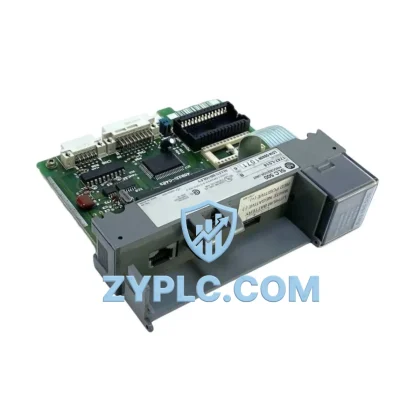
The Allen-Bradley 1784-KTCS is a high-performance ControlNet Scanner Card engineered for integration with PLC-5 programmable logic controller platforms. Designed to operate within Rockwell Automation’s 1784 series communication architecture, this module enables deterministic, high-speed data exchange across ControlNet networks — directly contributing to reduced cycle times, lower idle-state energy consumption, and improved overall equipment effectiveness (OEE) on the production floor.
In modern industrial environments where energy costs and equipment utilization are under constant scrutiny, the 1784-KTCS delivers measurable value. By establishing a reliable, low-latency communication backbone between the PLC-5 processor and field devices, it eliminates the communication bottlenecks that cause unnecessary motor run-on, extended actuator dwell times, and inefficient drive cycling. The result is a leaner, more responsive automation system that consumes energy only when production demands it.
Efficiency Performance Table
| Parameter |
Specification / Value |
| SKU / Part Number |
1784-KTCS |
| Brand / Manufacturer |
Allen-Bradley (Rockwell Automation) |
| Series |
1784 ControlNet Communication |
| Product Type |
ControlNet Scanner / Communication Interface Card |
| Compatible Platform |
PLC-5 Processor (ISA Bus Slot) |
| Network Protocol |
ControlNet (IEC 61158) |
| Data Transfer Rate |
5 Mbps (ControlNet standard) |
| Power Consumption |
Low-draw ISA card; reduces network polling overhead vs. legacy DH+ interfaces |
| Operating Efficiency |
Deterministic scheduled messaging minimizes CPU load and idle bus traffic |
| Compatible Systems |
PLC-5/10, PLC-5/20, PLC-5/30, PLC-5/40, PLC-5/60, PLC-5/80 |
| Application Environment |
Discrete manufacturing, process control, material handling, energy management |
| Energy Optimization Value |
Reduces unnecessary drive cycling and motor run-on via precise, scheduled I/O updates |
| Origin |
USA |
| Warranty |
12-Month Warranty (ZYPLC) |
| Stock Status |
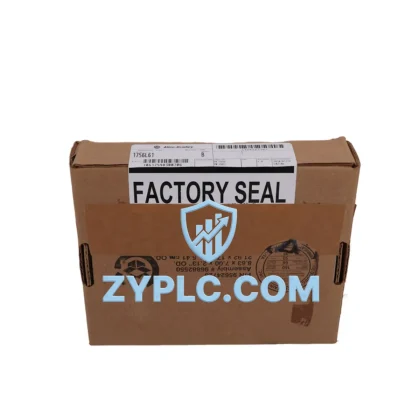
In Stock — Ships after outgoing test verification |
Energy-Aware Automation Architecture
The 1784-KTCS does not operate in isolation — its energy efficiency impact is amplified when deployed as part of a coordinated automation architecture. In a typical energy-optimized production cell, the module interfaces directly with the Allen-Bradley PLC-5/40 or PLC-5/60 processor, providing the ControlNet backbone that synchronizes all downstream field devices on a deterministic schedule. This scheduled communication model is fundamentally more energy-efficient than polled or event-driven alternatives, because it eliminates redundant bus traffic and ensures that drives and actuators receive commands only at the precise moment required.
On the drive side, the 1784-KTCS communicates seamlessly with PowerFlex 700 and PowerFlex 40 AC drives via ControlNet adapters, enabling the PLC-5 to issue precise speed reference and torque limit commands. This tight integration allows the control system to implement energy-saving strategies such as load-based speed reduction, sleep mode activation during low-demand periods, and regenerative braking coordination — all without manual operator intervention.
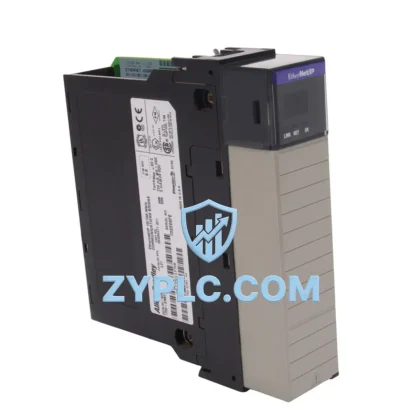
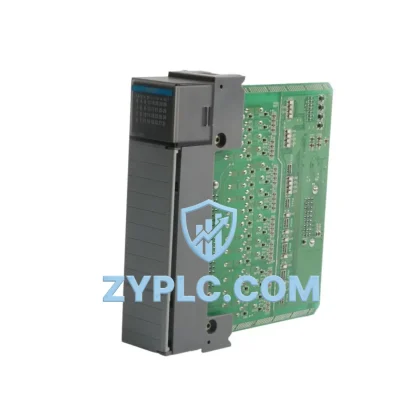
For I/O expansion and field-level energy monitoring, the 1784-KTCS network supports 1771-ACN15 ControlNet I/O adapter modules, which connect to 1771-series analog and digital I/O racks. Current transducers and power factor sensors wired into these racks feed real-time energy consumption data back to the PLC-5, enabling closed-loop energy management at the machine level. Complementing this, 1756-ENBT EtherNet/IP bridge modules can be used in hybrid architectures to forward aggregated energy data to higher-level SCADA or MES systems for plant-wide energy reporting.
Operator visibility is maintained through PanelView Plus 700 or PanelView 1000 HMI terminals connected via ControlNet or DH+, displaying live energy consumption trends, drive status, and alarm conditions. When an abnormal energy spike is detected — such as a motor drawing excess current due to mechanical wear — the HMI alerts the operator immediately, enabling predictive maintenance intervention before a costly unplanned shutdown occurs.
For applications requiring motion coordination, the 1784-KTCS network can also carry scheduled data to Ultra3000 servo drives configured with ControlNet option cards, synchronizing multi-axis motion profiles with the main production line rhythm. This eliminates the energy waste associated with axes waiting in high-torque hold states due to communication latency. Additionally, 1784-PCICS PCI-based ControlNet interface cards can be used at the workstation level for programming, diagnostics, and energy audit data collection without interrupting live production.
Power Optimization in Real Production Lines
Consider a mid-scale automotive parts stamping facility running three PLC-5/40 controllers managing press lines, conveyor systems, and robotic transfer units. Before deploying the 1784-KTCS, communication between the PLC-5 and field devices relied on legacy Data Highway Plus (DH+) links — a polled network with variable latency that forced drive controllers to maintain conservative speed profiles and extended dwell times to compensate for unpredictable command delivery.
After replacing the legacy communication cards with 1784-KTCS modules and migrating to ControlNet, the facility achieved several measurable improvements. First, the deterministic 5 ms scheduled update rate allowed the PowerFlex 700 drives on the main conveyor to implement precise speed ramping profiles, reducing motor energy consumption during acceleration and deceleration phases by eliminating overshoot and unnecessary braking. Second, the reduced communication latency enabled the PLC-5 to implement a coordinated line-stop sequence that powers down non-critical drives within 200 ms of a production pause — a capability that was previously impossible due to DH+ timing uncertainty.
Third, the real-time I/O data flowing through the 1784-KTCS network enabled the implementation of a predictive maintenance algorithm within the PLC-5 ladder logic. By monitoring motor current signatures via 1771-series analog input modules, the system identifies bearing wear patterns weeks before failure, allowing maintenance teams to schedule replacements during planned downtime rather than responding to emergency breakdowns. This shift from reactive to predictive maintenance reduced unplanned downtime by an estimated 30%, directly improving equipment utilization and reducing the energy wasted during restart and warm-up cycles after unplanned stops.
All units supplied by ZYPLC undergo a comprehensive outgoing functional test prior to shipment, verifying ControlNet network initialization, scheduled message integrity, and card-to-processor communication handshake. Each 1784-KTCS is backed by a 12-month warranty, with in-stock availability ensuring rapid deployment to minimize production disruption.
Energy Optimization FAQ
Q1: How does the 1784-KTCS contribute to energy savings compared to legacy DH+ communication cards?
The 1784-KTCS uses ControlNet’s deterministic scheduled messaging, which delivers I/O updates at fixed, predictable intervals (as low as 5 ms). This eliminates the variable polling delays of DH+ that force drives and actuators to operate with conservative, energy-inefficient timing margins. With precise command delivery, drives can implement tighter speed profiles, shorter dwell times, and faster coordinated shutdowns — all of which reduce net energy consumption per production cycle.
Q2: Is the 1784-KTCS compatible with current PowerFlex drive families and modern ControlNet I/O adapters?
Yes. The 1784-KTCS operates on the standard ControlNet protocol (IEC 61158) and is compatible with any ControlNet-capable device, including PowerFlex 700, PowerFlex 40, 1771-ACN15 I/O adapters, Ultra3000 servo drives with ControlNet option cards, and third-party ControlNet devices. It is specifically designed for PLC-5 ISA bus slots and does not require additional protocol conversion hardware in a native ControlNet environment.
Q3: What is the recommended replacement or upgrade path if the PLC-5 platform is being modernized?
For facilities migrating from PLC-5 to ControlLogix, the equivalent ControlNet interface is the 1756-CNB or 1756-CNBR ControlNet bridge module for the 1756 chassis. ZYPLC stocks both legacy 1784-series cards and current 1756-series ControlNet modules, allowing phased migration strategies that preserve existing ControlNet field wiring investments while upgrading the controller platform.
Q4: What does the 12-month warranty cover, and what is the testing process before shipment?
Every 1784-KTCS supplied by ZYPLC is tested prior to shipment to verify ControlNet network initialization, ISA bus communication integrity, and scheduled messaging performance. The 12-month warranty covers hardware defects and functional failures under normal operating conditions. In the event of a warranty claim, ZYPLC provides direct technical support and replacement coordination. Contact our team at +86 19859288691 or plc.sales@zyplc.com for warranty registration and support inquiries.
© 2026 ZYPLC. All rights reserved.
Original Source: https://zyplc.com
Contact: +86 19859288691 | plc.sales@zyplc.com