Allen-Bradley 1784-PCIC Energy-Saving ControlNet Module for Optimized 1784 Automation
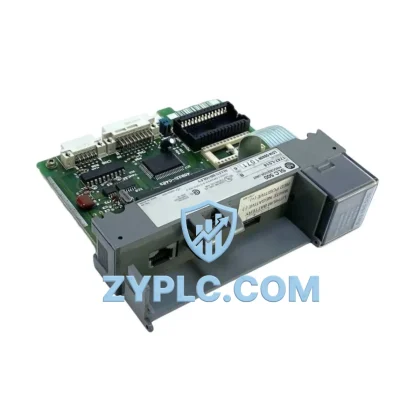
The Allen-Bradley 1784-PCIC is a PCI-bus ControlNet communication interface card engineered to deliver deterministic, high-throughput data exchange between host workstations and ControlNet-based industrial control networks. In energy-intensive manufacturing environments—where every millisecond of latency and every watt of idle draw translates directly into operational cost—the 1784-PCIC provides the low-overhead, scheduled communication backbone that keeps drives, controllers, and monitoring systems synchronized without unnecessary polling cycles or redundant data traffic.
Sourced directly from verified supply channels, each 1784-PCIC unit at ZYPLC undergoes full functional testing prior to shipment, is supplied with a 12-Month Warranty, and is available from in-stock inventory for immediate dispatch.
Efficiency Performance Table
| Parameter |
Specification / Value |
| SKU / Part Number |
1784-PCIC |
| Brand / Manufacturer |
Allen-Bradley (Rockwell Automation) |
| Series |
1784 ControlNet Interface |
| Interface Type |
PCI Bus ControlNet Adapter |
| Network Protocol |
ControlNet (IEC 61158) |
| Power Consumption |
≤ 5 W (PCI bus powered, no external supply required) |
| Operating Efficiency |
Scheduled + Unscheduled bandwidth management; minimizes idle bus traffic |
| Compatible Systems |
RSLinx Classic, RSNetWorx for ControlNet, Studio 5000 Logix Designer |
| Compatible Controllers |
ControlLogix, CompactLogix, PLC-5/C, SLC 500 (via ControlNet bridge) |
| Application Environment |
Industrial PC workstations, SCADA hosts, HMI programming stations |
| Energy-Saving Value |
Deterministic scheduling eliminates redundant polling; reduces CPU and network load |
| Operating Temperature |
0 °C to 55 °C |
| Warranty |
12-Month Warranty (ZYPLC) |
| Availability |
In Stock — Ready to Ship |
Energy-Aware Automation Architecture
The 1784-PCIC does not operate in isolation—it is the communication spine that ties together an energy-aware automation architecture. In a typical Rockwell Automation deployment, the card connects a supervisory workstation running RSLinx Classic or RSLinx Enterprise directly to the ControlNet trunk, enabling real-time tag browsing and program upload/download to ControlLogix 1756-L series processors without disrupting live production traffic.
On the drive side, PowerFlex 700 and PowerFlex 755 variable frequency drives connected to the same ControlNet segment report actual motor speed, torque demand, and energy consumption back to the host via scheduled implicit messaging. This closed-loop visibility allows engineers to identify motors running above their optimal load point and adjust drive parameters—directly reducing kWh consumption per production cycle. The 1784-PCIC’s scheduled bandwidth allocation ensures these drive feedback messages arrive at fixed, predictable intervals, eliminating the jitter that would otherwise force conservative (and wasteful) control margins.
For I/O-intensive lines, 1794 FLEX I/O ControlNet adapter modules distribute digital and analog I/O across the network, keeping field wiring short and minimizing signal conditioning losses. Analog current-loop inputs from energy transducers—such as 1408-EM3A PowerMonitor 3000 units measuring three-phase kW, kVAR, and power factor at panel level—feed directly into the ControlLogix tag database via the same ControlNet trunk the 1784-PCIC manages. This single-network architecture avoids the gateway overhead and latency penalties of bridging multiple fieldbus protocols.
At the HMI layer, PanelView Plus 7 terminals connected via EtherNet/IP to the ControlLogix backplane display live energy dashboards sourced from the same data the 1784-PCIC delivers to the workstation. Operators can see real-time power draw per production zone, compare against baseline targets, and trigger demand-response actions—such as staggering motor starts to flatten inrush current peaks—without leaving the line. Complementing this, 1756-EN2T EtherNet/IP communication modules in the ControlLogix chassis bridge ControlNet data upstream to MES and SCADA systems, enabling plant-wide energy KPI tracking.
For motion-intensive applications, Kinetix 6500 servo drives coordinated through the ControlLogix motion engine benefit from the low-latency command delivery the 1784-PCIC enables during offline programming and commissioning sessions. Precise tuning of servo gain parameters—performed via the workstation connection the 1784-PCIC provides—directly reduces mechanical overshoot, cutting cycle time and the associated energy wasted in deceleration and re-acceleration. The 1756-M02AE servo interface module in the same chassis handles real-time motion execution, while the 1784-PCIC handles the engineering workstation’s configuration and diagnostic access.
Power Optimization in Real Production Lines
In automotive body-in-white welding lines, the 1784-PCIC enables engineering teams to connect diagnostic laptops directly to the ControlNet backbone during scheduled maintenance windows. Technicians can read drive fault histories from PowerFlex 700 units, review motor thermal model data, and adjust energy-saving sleep modes—all without taking the line offline. This targeted maintenance approach, made possible by the card’s reliable host-to-network bridge, reduces unplanned downtime by ensuring drive parameters are always optimally configured before production resumes.
In food and beverage packaging lines, where conveyor motors run continuously across three shifts, the 1784-PCIC supports periodic energy audits by allowing RSLogix 5000 trend captures of motor current tags at the workstation level. Engineers correlate current draw with line speed setpoints, identify inefficient operating bands, and reprogram drive speed references to keep motors in their highest-efficiency torque range. Plants that have implemented this data-driven approach report measurable reductions in per-unit energy cost without any hardware changes to the drive or motor.
In water treatment facilities running large pump stations, the card’s ability to maintain a stable ControlNet connection even in electrically noisy environments—thanks to the coaxial or fiber ControlNet media’s inherent noise immunity—ensures that energy monitoring data from PowerMonitor units reaches the SCADA host without corruption. Accurate, uncorrupted power data is the foundation of any demand management strategy: without it, setpoint optimizations are guesswork. The 1784-PCIC eliminates that uncertainty.
Each unit shipped by ZYPLC is bench-tested for ControlNet node initialization, scheduled connection establishment, and unscheduled messaging throughput. Testing results are logged, and the card is dispatched with its 12-Month Warranty documentation. In-stock availability means lead times are measured in days, not weeks—critical when a failed communication card is holding up an entire production line.
Energy Optimization FAQ
Q1: How does the 1784-PCIC contribute to energy savings compared to a standard polling-based communication card?
ControlNet uses a producer-consumer model with scheduled implicit messaging, meaning data is transmitted at fixed, pre-allocated intervals rather than in response to continuous polling requests. This eliminates the CPU overhead and bus traffic associated with polling, reducing the host workstation’s processor load and allowing drive controllers to execute energy-optimization algorithms with lower latency. The result is tighter closed-loop control of motor speed and torque, which directly reduces energy waste at the drive level.
Q2: Is the 1784-PCIC compatible with current Rockwell Automation software and controllers?
The 1784-PCIC is supported under RSLinx Classic and RSLinx Enterprise for driver configuration, and is compatible with RSNetWorx for ControlNet for network scheduling. It works with ControlLogix, CompactLogix, and legacy PLC-5/C and SLC 500 platforms connected via ControlNet. For Studio 5000 Logix Designer users, the card provides the workstation-to-network bridge required for online program editing and tag monitoring. Always verify firmware compatibility with your specific controller revision before installation.
Q3: What is the recommended replacement or upgrade path if the 1784-PCIC is no longer available for my platform?
For applications migrating from PCI-based workstations to newer hardware, the 1784-PKTX (ISA bus) or USB-to-ControlNet adapters such as the 1784-U2CN may serve as alternatives depending on host hardware. For new deployments, Rockwell Automation’s EtherNet/IP-based communication strategy using 1756-EN2T or 1756-EN3TR modules in the controller chassis, combined with RSLinx Enterprise, provides a forward-compatible path. ZYPLC can advise on equivalent or successor part numbers based on your specific application requirements.
Q4: What does the 12-Month Warranty cover, and what is the testing process before shipment?
Every 1784-PCIC supplied by ZYPLC is functionally tested prior to dispatch: the card is initialized in a ControlNet test environment, scheduled connections are established to a reference controller node, and unscheduled messaging throughput is verified. The 12-Month Warranty covers functional failure under normal operating conditions from the date of shipment. Units that fail to initialize or maintain a stable ControlNet connection during testing are quarantined and not shipped. For warranty claims or technical support, contact ZYPLC directly at plc.sales@zyplc.com or +86 19859288691.
© 2026 ZYPLC. All rights reserved.
Original Source: https://zyplc.com
Contact: +86 19859288691 | plc.sales@zyplc.com