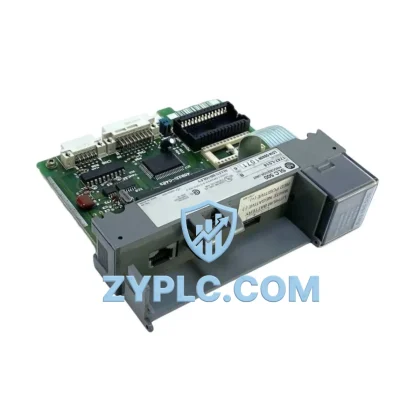
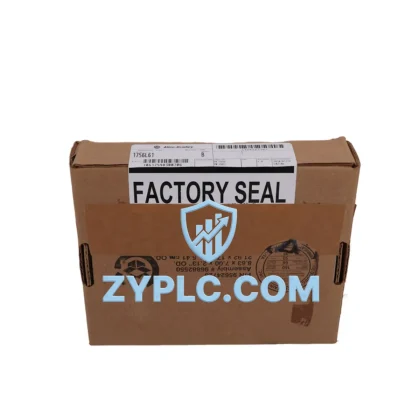
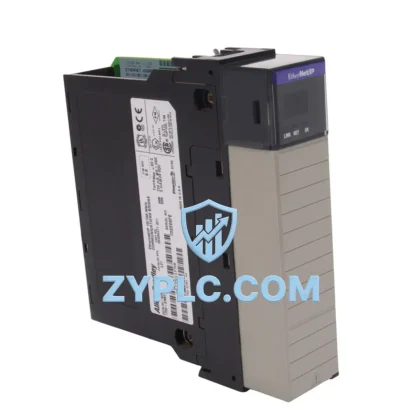
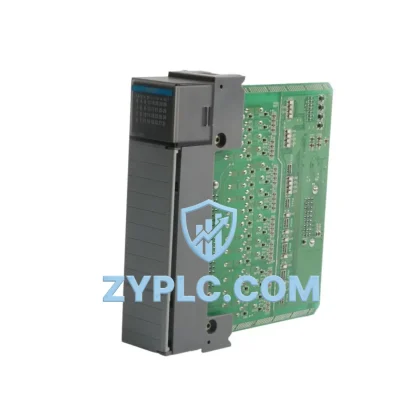
Allen-Bradley 1784-PCMK System-Ready Memory Card for PLC-5 Architecture
The Allen-Bradley 1784-PCMK PCMCIA memory card is a critical component within the Rockwell Automation PLC-5 control platform, engineered to serve as the primary program storage and transfer medium between engineering workstations and the PLC-5 processor family. In modern industrial automation environments, where control system architecture must balance reliability, scalability, and long-term maintainability, the 1784-PCMK occupies a precise and indispensable role at the intersection of the control layer and the engineering interface layer.
Understanding the 1784-PCMK requires viewing it not as a standalone peripheral, but as a functional node within a layered automation architecture. The PLC-5 platform — including processors such as the 1785-L40B, 1785-L60B, and 1785-L80B — relies on PCMCIA-format memory cards for offline program backup, firmware transfer, and rapid processor replacement during maintenance windows. The 1784-PCMK enables engineers to carry validated ladder logic programs directly to the control cabinet, eliminating dependency on live network connections during critical commissioning or emergency recovery operations.
At the control layer, the 1784-PCMK interfaces directly with PLC-5 processors mounted on 1771-series I/O chassis backplanes. These backplanes support a wide range of discrete and analog I/O modules — including the 1771-OBD digital output module, 1771-IFE analog input module, and 1771-OFE analog output module — forming the I/O layer that connects the processor to field instrumentation. The memory card ensures that the processor’s control logic remains consistent across all chassis slots, supporting deterministic scan-cycle execution even in multi-rack configurations.
From a network and communications perspective, the PLC-5 architecture commonly integrates Data Highway Plus (DH+) and Remote I/O (RIO) protocols. The 1784-PCMK supports program transfers that preserve all DH+ node addressing and RIO rack configurations embedded in the ladder logic, ensuring that communication parameters between the PLC-5 processor, 1784-KTX DH+/RIO interface cards, and remote I/O adapter modules remain intact after a processor swap. This is particularly valuable in distributed control architectures where multiple PLC-5 nodes communicate across a DH+ network segment.
At the power layer, PLC-5 systems are typically powered by 1771-P4S or 1771-P7 power supply modules housed within the 1771-A4B or 1771-A2B I/O chassis. The 1784-PCMK’s role in rapid processor restoration directly reduces system downtime, which in turn minimizes the risk of power supply thermal stress caused by repeated cold-start cycles during extended maintenance periods. Stable power architecture and reliable memory transfer are complementary disciplines in high-availability control system design.
For human-machine interface integration, PLC-5 systems frequently communicate with PanelView terminals — such as the 2711-T10C8 or 2711-K10C8 — via DH+ or DH-485 links. When a processor is replaced using the 1784-PCMK, the restored program retains all tag mappings and communication configurations required by the HMI layer, ensuring that operator displays, alarm setpoints, and process visualization screens resume normal operation without manual reconfiguration.
In terms of system redundancy and maintenance efficiency, the 1784-PCMK is an essential tool for spare processor management strategies. Facilities that maintain hot-standby or cold-standby PLC-5 processors can use the 1784-PCMK to synchronize program versions across primary and backup units, ensuring that redundancy architecture remains operationally valid. This is especially critical in process industries — including petrochemical refining, water treatment, power generation, and mining — where unplanned downtime carries significant safety and financial consequences.
From an engineering workflow perspective, the 1784-PCMK integrates seamlessly with RSLogix 5 programming software, allowing engineers to export, verify, and load programs in a controlled, auditable manner. This supports IEC 62443 cybersecurity practices by reducing the need for live network-connected programming sessions on the plant floor, a consideration increasingly important in critical infrastructure environments.
All 1784-PCMK units supplied by ZYPLC are covered by a 12-Month Warranty and are tested for Contextual Integration compatibility within PLC-5 system architectures. Our inventory is sourced from verified supply channels, and our technical team provides pre-sales architecture consultation to confirm compatibility with your specific processor model, chassis configuration, and firmware revision.
Architecture Specification Table
| Parameter |
Specification |
| System Role |
PCMCIA Program Memory Card for PLC-5 Processor |
| Compatible Processors |
PLC-5/11, PLC-5/20, PLC-5/30, PLC-5/40, PLC-5/60, PLC-5/80 |
| Form Factor |
PCMCIA Type II (PC Card) |
| Memory Function |
Program Storage, Firmware Transfer, Offline Backup |
| Communication Compatibility |
DH+, Remote I/O (RIO), DH-485 |
| Compatible Chassis |
1771-A1B, 1771-A2B, 1771-A3B1, 1771-A4B |
| Operating Temperature |
0°C to 60°C (32°F to 140°F) |
| Storage Temperature |
-40°C to 85°C |
| Electrical Interface |
PCMCIA slot on PLC-5 processor front panel |
| Programming Software |
RSLogix 5 (Rockwell Automation) |
| Country of Origin |
United States |
| Warranty |
12-Month Warranty (ZYPLC) |
Coordinated Control System Design
The 1784-PCMK does not operate in isolation — its value is realized through coordinated deployment within a complete PLC-5 control system. A typical architecture includes the 1785-L40B PLC-5/40 processor as the central control unit, mounted in a 1771-A4B 16-slot I/O chassis powered by a 1771-P4S power supply. Discrete I/O is handled by 1771-OBD 16-point output modules and 1771-IBD 16-point input modules, while analog process signals are conditioned through 1771-IFE 8-channel analog input modules.
Network connectivity is established via the 1784-KTX DH+/RIO communication interface card, which bridges the PLC-5 processor to the plant-wide Data Highway Plus network. Remote I/O drops are managed through 1771-ASB remote I/O adapter modules, extending the control architecture across multiple physical locations within the facility. Operator interaction is provided by PanelView 1000 (2711-T10C8) terminals connected via DH+ links.
Within this architecture, the 1784-PCMK serves as the program integrity guardian — ensuring that every processor in the system, whether primary or spare, carries an identical, validated control program. This eliminates version drift between installed and standby processors, a common source of commissioning errors in large-scale PLC-5 installations.
Application in Layered Automation Systems
The 1784-PCMK finds application across a broad spectrum of industrial sectors where PLC-5 systems remain the backbone of process control infrastructure. In petrochemical and refining facilities, PLC-5 processors manage compressor sequencing, valve control, and emergency shutdown logic. The 1784-PCMK enables rapid processor replacement during turnaround maintenance, reducing the critical-path duration of planned outages.
In power generation and utilities, PLC-5 systems control boiler management, turbine auxiliaries, and switchgear automation. The ability to restore a validated control program from a 1784-PCMK within minutes — rather than hours required for network-based downloads — is a significant operational advantage during forced outages. Similarly, in water and wastewater treatment facilities, where continuous process availability is a regulatory requirement, the 1784-PCMK supports the spare processor strategies mandated by asset management programs.
In mining and mineral processing, PLC-5 systems control conveyor drives, crusher sequencing, and flotation cell automation. The harsh environmental conditions in these facilities — including dust, vibration, and temperature extremes — increase the probability of processor hardware failure, making the 1784-PCMK an essential component of the site’s maintenance inventory. Metals and metallurgical processing plants similarly rely on PLC-5 architecture for furnace control, rolling mill sequencing, and quality control instrumentation, where program integrity across processor replacements is non-negotiable.
In packaging and discrete manufacturing lines, the 1784-PCMK supports rapid changeover and recipe management by enabling engineers to load application-specific programs to PLC-5 processors without network infrastructure, a capability particularly valuable in facilities with strict network security policies.
Architecture Engineering FAQ
Q1: Is the 1784-PCMK compatible with all PLC-5 processor variants, and does it support both program storage and firmware updates?
The 1784-PCMK is compatible with the full range of PLC-5 processors, including the PLC-5/11, PLC-5/20, PLC-5/30, PLC-5/40, PLC-5/60, and PLC-5/80 variants. It supports both ladder logic program storage and, depending on the processor firmware revision, firmware image transfer. Compatibility with specific firmware versions should be confirmed against the processor’s release notes in RSLogix 5. ZYPLC’s technical team can assist with compatibility verification prior to purchase.
Q2: How does the 1784-PCMK support long-term maintenance strategies in aging PLC-5 installations, and what is the recommended spare inventory practice?
For facilities operating PLC-5 systems beyond their original design life, the 1784-PCMK is a cornerstone of the spare parts strategy. We recommend maintaining at least two pre-programmed 1784-PCMK cards per critical PLC-5 node — one stored in the control cabinet and one in the site’s spare parts room — with program versions synchronized after every approved change. This practice, combined with a documented processor replacement procedure, reduces mean time to repair (MTTR) to under 30 minutes for most PLC-5 processor failures. All cards supplied by ZYPLC include a 12-Month Warranty covering manufacturing defects and read/write reliability.
Q3: What are the installation and commissioning considerations when using the 1784-PCMK for processor replacement in a live DH+ network environment?
When replacing a PLC-5 processor in a live DH+ network, the 1784-PCMK should be loaded with the validated program before the replacement processor is installed in the chassis. After installation, the processor should be placed in Program mode before the PCMCIA card is inserted, and the program should be loaded and verified before transitioning to Run mode. DH+ node address switches on the replacement processor must be set to match the original configuration before network reconnection. ZYPLC recommends performing a full I/O force check and communication status verification before returning the system to automatic operation. Our 12-Month Warranty covers the card’s performance throughout this process.
© 2026 ZYPLC. All rights reserved.
Original Source: https://zyplc.com
Contact: +86 19859288691 | [email protected]