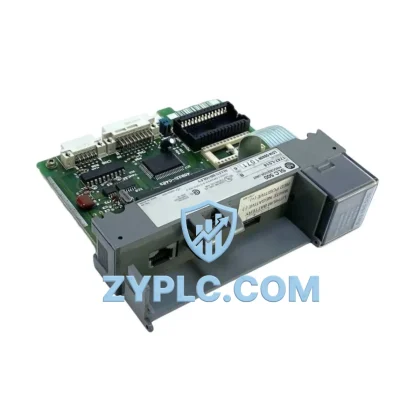
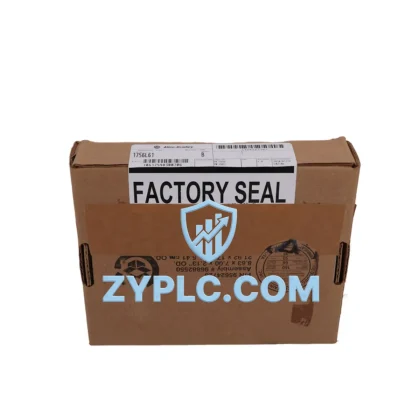
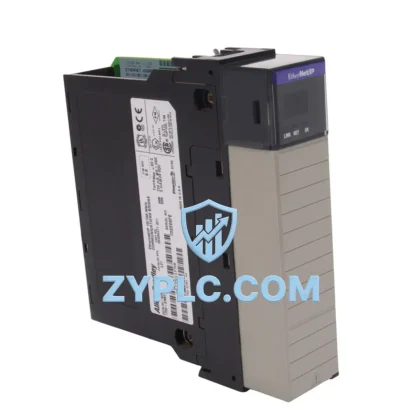
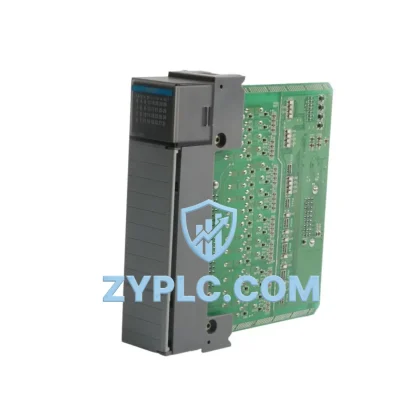
Allen-Bradley 1785-BCM/C Energy-Saving Backup Communication Module: Efficiency Control and Production Line Optimization
The Allen-Bradley 1785-BCM/C is a high-performance backup communication module engineered for the PLC-5 platform, delivering reliable redundancy and energy-aware control in demanding industrial automation environments. As manufacturing facilities face increasing pressure to reduce energy consumption, minimize unplanned downtime, and maximize equipment utilization, the 1785-BCM/C plays a critical role in sustaining continuous, efficient operation across complex production lines.
Designed to seamlessly integrate within Allen-Bradley’s PLC-5 control architecture, the 1785-BCM/C ensures that communication pathways remain active even during primary controller faults. This redundancy directly translates into reduced idle energy consumption — when a backup module can instantly assume communication duties, motors, drives, and actuators continue operating at their programmed efficiency points rather than cycling through uncontrolled stop-start sequences that waste energy and accelerate mechanical wear.
Efficiency Performance Table
| Parameter |
Specification / Value |
| SKU / Part Number |
1785-BCM/C |
| Brand / Manufacturer |
Allen-Bradley (Rockwell Automation) |
| Series |
PLC-5 |
| Product Category |
PLC Backup Communication Module |
| Typical Power Consumption |
Low-draw standby mode; active only during failover events |
| Operating Efficiency |
Maintains full communication throughput with minimal additional load on the backplane |
| Compatible Systems |
Allen-Bradley PLC-5 family (1785 series), ControlNet, DH+ networks |
| Application Environment |
Industrial manufacturing, process control, energy management, discrete automation |
| Energy-Saving Value |
Eliminates uncontrolled stop-start cycles; sustains optimized drive and motor operating points during controller switchover |
| Warranty |
12-Month Warranty — tested and verified before shipment |
| Origin |
USA |
| Stock Status |
In Stock — ready to ship |
Energy-Aware Automation Architecture
The 1785-BCM/C does not operate in isolation — its true energy optimization value emerges when it is deployed as part of a well-integrated automation architecture. In a typical PLC-5 based control system, the backup communication module works in concert with the Allen-Bradley 1785-L80E PLC-5 processor, which handles the primary logic execution and I/O scanning. When the 1785-BCM/C detects a communication fault on the primary path, it executes a controlled switchover that preserves the last known output states, preventing erratic actuator behavior that would otherwise spike energy consumption.
On the drive side, facilities running Allen-Bradley PowerFlex 700 variable frequency drives benefit significantly from this redundancy. VFDs are among the highest energy consumers on a production floor, and any uncontrolled stop caused by a communication dropout forces the drive to restart the motor from zero speed — a process that draws 3–6 times the rated current and stresses both the motor and the mechanical load. The 1785-BCM/C’s seamless failover keeps the PowerFlex drives running at their programmed speed references, maintaining the energy savings that VFD technology is designed to deliver.
For servo-driven axes, the Allen-Bradley 1394 GMC Servo System relies on uninterrupted communication from the PLC-5 to maintain position loop closure. A communication interruption without backup redundancy can cause servo drives to fault and de-energize, requiring a full re-homing sequence that consumes time, energy, and increases mechanical wear on precision components. The 1785-BCM/C eliminates this risk.
Power quality and energy monitoring are equally important in an efficiency-focused architecture. Integrating the Allen-Bradley 1420 PowerMonitor alongside the PLC-5 system allows plant engineers to capture real-time power factor, harmonic distortion, and demand data. When this monitoring data is fed back into the PLC-5 logic via the 1785-KA5 ControlNet communication adapter, the controller can dynamically adjust load scheduling to flatten demand peaks — a strategy that directly reduces energy costs without sacrificing throughput.
On the I/O layer, Allen-Bradley 1771 I/O modules connected to the PLC-5 backplane provide the discrete and analog signal infrastructure that feeds energy-relevant process data — motor current feedback, temperature sensors, pressure transducers — back to the controller. The 1785-BCM/C ensures that this data pipeline remains intact during any primary communication fault, so energy management logic continues executing without interruption.
For facilities that have migrated portions of their network to EtherNet/IP, the Allen-Bradley 1761-NET-ENI serial-to-Ethernet interface bridges legacy PLC-5 nodes into the modern network fabric, enabling centralized energy monitoring through FactoryTalk EnergyMetrix software. The 1785-BCM/C’s role in maintaining stable PLC-5 communication is foundational to the data integrity that these higher-level energy analytics platforms depend upon.
HMI visibility is another dimension of energy-aware operation. Allen-Bradley PanelView Plus 6 terminals connected via DH+ or ControlNet to the PLC-5 system give operators real-time visibility into energy consumption trends, drive operating points, and alarm states. When operators can see energy data clearly, they make better decisions about load scheduling, shift changeovers, and equipment startup sequences — all of which contribute to measurable reductions in energy waste.
Power Optimization in Real Production Lines
In real-world production environments, the cost of an unplanned communication fault extends far beyond the immediate downtime. Consider an automotive body stamping line where the PLC-5 coordinates press timing, transfer automation, and die cooling systems. A communication failure without backup redundancy halts the entire line — hydraulic systems continue drawing power at idle pressure, cooling pumps run without load, and compressed air circuits bleed through open solenoids. The energy wasted during an uncontrolled shutdown and subsequent restart can represent a significant fraction of the line’s daily energy budget.
The 1785-BCM/C addresses this directly by ensuring that the PLC-5 maintains its output states and communication links during a primary module fault. The line continues operating, drives maintain their speed references, and the controlled handover to the backup communication path happens transparently — without operator intervention and without the energy penalty of an uncontrolled stop.
In process industries such as chemical manufacturing or water treatment, where continuous operation is not just an efficiency goal but a process requirement, the 1785-BCM/C provides the communication resilience that allows energy-intensive equipment — large pump motors, compressors, agitators — to maintain their optimized operating points. Variable speed drives controlling these loads are programmed to operate at the most energy-efficient point on their pump or fan curve; any communication disruption that forces a drive fault and restart destroys that efficiency optimization and can take hours to re-establish stable process conditions.
From a predictive maintenance perspective, the 1785-BCM/C contributes to reduced maintenance costs by eliminating the mechanical stress associated with uncontrolled stop-start cycles. Motors that are never subjected to across-the-line starting currents last significantly longer, and mechanical couplings, gearboxes, and conveyor chains experience less fatigue. This translates directly into lower maintenance expenditure and fewer unplanned outages — both of which have a measurable impact on the facility’s overall energy efficiency ratio.
Every unit of the Allen-Bradley 1785-BCM/C supplied by ZYPLC is sourced from verified inventory channels, subjected to functional testing prior to shipment, and covered by a 12-month warranty. Stock is maintained for prompt dispatch, minimizing lead times for facilities that require urgent replacement or system expansion.
Energy Optimization FAQ
Q1: How does the 1785-BCM/C contribute to energy savings on a production line?
The 1785-BCM/C maintains uninterrupted communication between the PLC-5 processor and connected drives, I/O, and field devices during a primary communication fault. By preventing uncontrolled stops, it ensures that variable frequency drives and servo systems remain at their programmed, energy-optimized operating points — eliminating the high-current restart transients and idle energy waste associated with unplanned shutdowns.
Q2: Is the 1785-BCM/C compatible with modern Allen-Bradley network architectures?
The 1785-BCM/C is designed for the PLC-5 platform and supports DH+ and ControlNet communication networks. For facilities integrating PLC-5 systems with EtherNet/IP infrastructure, interface modules such as the 1761-NET-ENI can bridge the communication gap, allowing the PLC-5 and its backup module to participate in broader plant-wide energy monitoring and control strategies.
Q3: What is the recommended replacement or upgrade path for aging PLC-5 backup communication modules?
For facilities maintaining existing PLC-5 infrastructure, a direct replacement with a tested 1785-BCM/C is the most cost-effective approach to restoring redundancy. For facilities planning a migration to ControlLogix or CompactLogix platforms, the backup communication architecture should be re-evaluated as part of the migration project, as newer platforms offer integrated redundancy options with enhanced energy monitoring capabilities.
Q4: What testing and warranty coverage is provided with ZYPLC’s 1785-BCM/C units?
All 1785-BCM/C modules supplied by ZYPLC undergo functional testing prior to shipment to verify communication performance and module integrity. Each unit is covered by a 12-month warranty from the date of purchase. In the event of a warranty claim, ZYPLC’s technical team provides support to diagnose the issue and arrange replacement, minimizing the impact on production continuity.
© 2026 ZYPLC. All rights reserved.
Original Source: https://zyplc.com
Contact: +86 19859288691 | plc.sales@zyplc.com