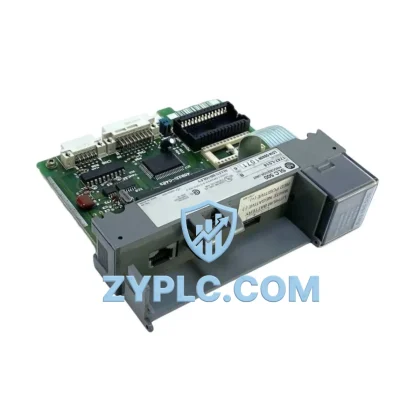
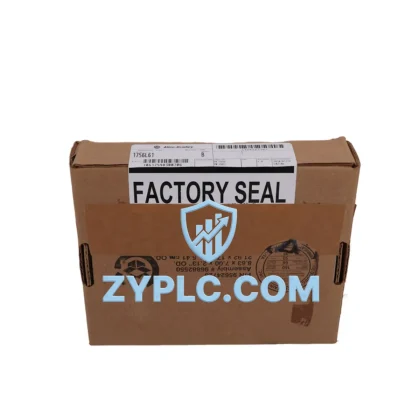
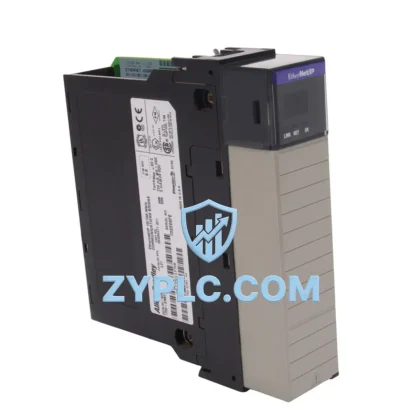
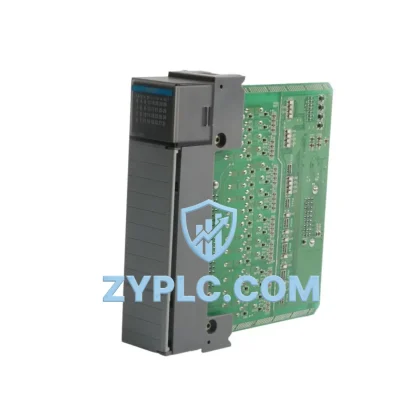
Allen-Bradley 1785-L40E/E Energy-Saving PLC for Optimized PLC-5 Automation
The Allen-Bradley 1785-L40E/E is a high-performance PLC-5/40E series programmable logic controller engineered for energy-conscious industrial automation environments. Equipped with a native EtherNet/IP communication port, this controller bridges the gap between field-level devices and enterprise-level energy management systems, enabling real-time visibility into power consumption, drive performance, and production efficiency across the entire plant floor.
In modern manufacturing, energy waste is rarely caused by a single device — it accumulates across poorly coordinated motor starts, unoptimized drive ramp profiles, idle conveyor segments, and unmonitored auxiliary loads. The 1785-L40E/E addresses this systemic challenge by serving as the central execution engine that coordinates control signals, monitors feedback loops, and enforces energy-efficient operating sequences across interconnected automation assets.
With 40 I/O capacity and deterministic scan-cycle execution, the 1785-L40E/E delivers the processing headroom needed to run complex ladder logic programs that govern variable-speed drive commands, servo positioning sequences, and power-factor correction routines simultaneously — without sacrificing cycle time or control precision.
Efficiency Performance Table
| Parameter |
Specification |
| SKU |
1785-L40E/E |
| Series |
PLC-5/40E |
| Brand |
Allen-Bradley / Rockwell Automation |
| Communication Protocol |
EtherNet/IP, DH+, Remote I/O |
| I/O Capacity |
Up to 40 I/O (expandable via remote I/O) |
| Processor Memory |
32K words user memory |
| Power Supply Compatibility |
1771-P4S, 1771-P6S series power supplies |
| Compatible Systems |
RSLogix 5, FactoryTalk View, SCADA platforms |
| Application Environment |
Discrete, process, batch, energy-intensive manufacturing |
| Energy Optimization Value |
Coordinated drive control, idle-state management, demand-side load scheduling |
| Warranty |
12-Month Warranty |
| Stock Status |
In Stock — Ships After Outgoing Test |
Energy-Aware Automation Architecture
The 1785-L40E/E operates at the heart of a layered automation architecture where energy efficiency is built into every control decision. At the drive layer, the controller issues speed reference commands to PowerFlex 700 variable frequency drives, enabling smooth motor acceleration profiles that eliminate inrush current spikes — one of the most significant sources of peak demand charges in industrial facilities. By coordinating ramp-up sequences across multiple drive axes, the 1785-L40E/E prevents simultaneous motor starts that would otherwise trigger demand penalties on the utility bill.
At the I/O layer, the controller interfaces with 1771-OBD digital output modules and 1771-IFE analog input modules to collect real-time feedback from current transformers, pressure transducers, and flow sensors installed throughout the production line. This sensor data feeds directly into energy monitoring routines embedded in the PLC program, allowing the controller to detect abnormal power draw — such as a conveyor motor running under excessive load — and trigger corrective action before the condition escalates into a fault or unplanned downtime event.
For servo-driven applications, the 1785-L40E/E coordinates with Kinetix 6000 multi-axis servo drives through the 1756-M02AE servo interface module, enabling regenerative braking energy to be captured and redistributed within the DC bus rather than dissipated as heat. This regenerative architecture is particularly valuable in applications with frequent start-stop cycles, such as packaging lines, press feeders, and robotic transfer systems.
At the network layer, the EtherNet/IP port on the 1785-L40E/E connects directly to a 1783-US8T Stratix unmanaged switch, linking the PLC to upstream FactoryTalk EnergyMetrix servers and MES platforms that aggregate energy KPIs across production cells. Operators monitoring the system through a PanelView Plus 7 HMI terminal can view live energy dashboards, set consumption thresholds, and acknowledge energy-related alarms without leaving the production floor.
For remote sites or distributed production cells, the 1785-L40E/E communicates over EtherNet/IP to 1734-AENT Point I/O adapter modules, extending digital and analog I/O to field devices — including temperature sensors on motor housings, vibration monitors on pump bearings, and power quality meters on incoming feeders — without requiring additional controller hardware at each remote location.
Power Optimization in Real Production Lines
In a typical discrete manufacturing environment, the 1785-L40E/E contributes to energy savings through three primary mechanisms: load scheduling, idle-state management, and predictive maintenance integration.
Load scheduling is implemented through time-of-use logic embedded in the PLC program. The controller monitors a real-time clock and shifts non-critical loads — such as compressed air compressors, cooling tower fans, and auxiliary conveyor segments — to off-peak utility rate windows. This demand-side management strategy can reduce peak demand charges by 10–20% without any changes to production throughput or product quality.
Idle-state management is enforced through inactivity timers linked to production order status signals received from the MES system via EtherNet/IP. When a production cell completes a batch and enters a scheduled break, the 1785-L40E/E automatically ramps down connected PowerFlex 40 drives to minimum speed, de-energizes non-essential 1771-OBD output modules, and places servo axes in a low-power hold state. Upon receipt of a production resume signal, the controller executes a coordinated restart sequence that brings all assets back to full operating speed within the defined cycle time budget.
Predictive maintenance integration is achieved by logging motor current signatures, drive fault histories, and thermal sensor readings into FactoryTalk Historian via the EtherNet/IP network. Trend analysis performed on this data allows maintenance teams to identify degrading motor insulation, misaligned couplings, and clogged filter elements before they cause unplanned stops — each of which represents not only a maintenance cost but also an energy efficiency loss, since degraded equipment consistently draws more power than healthy equipment performing the same work.
Every unit of the 1785-L40E/E supplied by ZYPLC undergoes a full functional outgoing test prior to shipment, verifying communication port integrity, I/O channel response, and program execution accuracy. Stock is maintained in climate-controlled storage to preserve component integrity, and each unit is backed by a 12-month warranty covering manufacturing defects and operational failures under normal industrial use conditions.
Energy Optimization FAQ
Q1: How does the 1785-L40E/E contribute to measurable energy savings on a production line?
The 1785-L40E/E enables energy savings through coordinated drive control, idle-state load shedding, and demand-side scheduling logic. By managing motor start sequences and integrating with variable frequency drives such as the PowerFlex 700, the controller eliminates inrush current peaks and reduces average power consumption during non-productive intervals. Customers typically report measurable reductions in peak demand charges within the first billing cycle after implementation.
Q2: Is the 1785-L40E/E compatible with existing PLC-5 programs and I/O chassis?
Yes. The 1785-L40E/E is fully compatible with the PLC-5 instruction set and existing 1771 I/O chassis configurations. Programs developed in RSLogix 5 can be loaded directly without modification, and existing 1771-series I/O modules — including analog, digital, and specialty modules — continue to operate without hardware changes. This makes the 1785-L40E/E an ideal replacement or upgrade path for aging PLC-5/40 processors already deployed in the field.
Q3: What testing is performed before the unit ships, and what does the 12-month warranty cover?
Each 1785-L40E/E unit undergoes a comprehensive outgoing functional test that includes EtherNet/IP communication verification, I/O channel continuity checks, memory integrity validation, and program execution cycle testing. The 12-month warranty covers all manufacturing defects and component failures occurring under normal operating conditions. Units that develop faults within the warranty period are repaired or replaced at no charge, with priority processing to minimize customer downtime.
Q4: Can the 1785-L40E/E be integrated with modern SCADA and energy management platforms?
Yes. The native EtherNet/IP port allows direct integration with FactoryTalk View SE, FactoryTalk EnergyMetrix, and third-party SCADA platforms that support EtherNet/IP or Modbus TCP via gateway translation. For legacy DH+ networks, the controller’s built-in DH+ port enables continued communication with existing 1785-series processors and 1747-series SLC 500 controllers during phased migration projects. This dual-network capability makes the 1785-L40E/E a practical bridge between legacy automation infrastructure and modern energy management systems.
© 2026 ZYPLC. All rights reserved.
Original Source: https://zyplc.com
Contact: +86 19859288691 | [email protected]