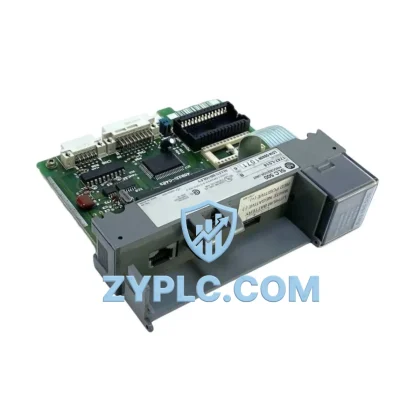
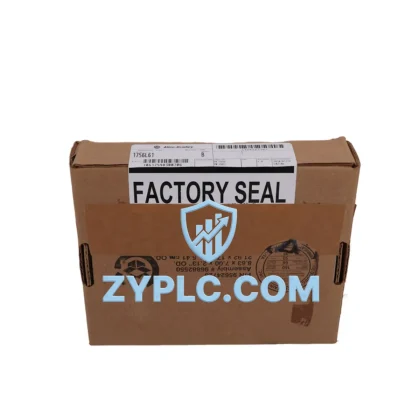
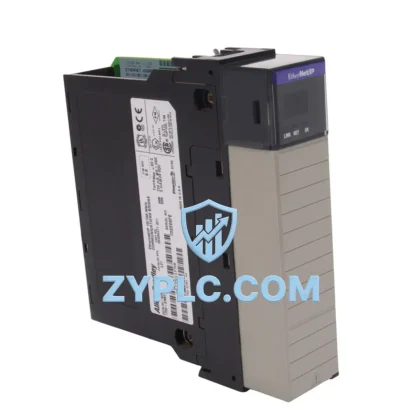
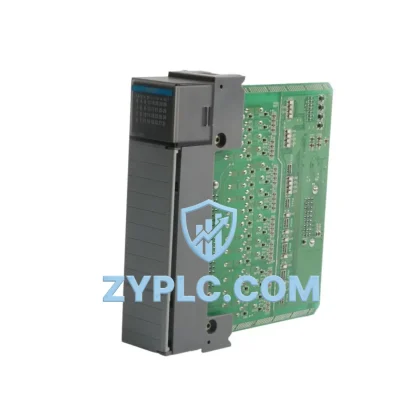
Allen-Bradley 1785-L40L Energy-Saving PLC Processor for Optimized PLC-5 Automation
The Allen-Bradley 1785-L40L is a high-performance PLC-5 series processor engineered for demanding industrial environments where energy efficiency, process reliability, and continuous uptime are non-negotiable. Designed and manufactured by Rockwell Automation, this processor delivers precise ladder logic execution, deterministic scan-cycle control, and seamless integration with a broad ecosystem of I/O modules, drives, and HMI platforms — making it a cornerstone component for factories seeking to reduce energy waste, improve equipment utilization, and lower total cost of ownership.
In modern manufacturing, energy consumption is directly tied to control system intelligence. The 1785-L40L addresses this by enabling tightly coordinated motor sequencing, load-based activation logic, and real-time process feedback — all of which contribute to measurable reductions in idle-state power draw and peak demand charges. Whether deployed in a continuous process line, a batch production cell, or a multi-axis motion application, this processor provides the computational backbone needed to run leaner, smarter, and more sustainably.
Efficiency Performance Table
| Parameter |
Specification / Value |
| SKU / Part Number |
1785-L40L |
| Brand / Manufacturer |
Allen-Bradley (Rockwell Automation) |
| Series |
PLC-5 |
| Product Category |
PLC Processor |
| Memory Capacity |
40K Words (Data + Program) |
| I/O Capacity |
Up to 3,072 I/O points |
| Communication Ports |
DH+, RS-232 (DF1), DH-485 |
| Compatible Systems |
PLC-5 Chassis, 1771 I/O, ControlLogix via bridge modules |
| Operating Voltage |
5 VDC (backplane supplied) |
| Operating Temperature |
0°C to 60°C |
| Application Environment |
Industrial automation, process control, motor management, energy monitoring |
| Energy Optimization Value |
Enables load-based sequencing, idle-state shutdown logic, and demand-side motor control |
| Condition |
Tested & Inspected, Fully Functional |
| Warranty |
12-Month Warranty |
| Origin |
USA |
| Availability |
In Stock — Ready to Ship |
Energy-Aware Automation Architecture
The 1785-L40L operates at the heart of a layered automation architecture where every connected component contributes to system-wide energy efficiency. At the drive level, the processor communicates with PowerFlex 700 and PowerFlex 40 AC variable frequency drives via Remote I/O or DeviceNet, enabling precise speed regulation that eliminates the energy losses associated with fixed-speed motor operation. By dynamically adjusting motor output to match actual load demand, the system avoids the chronic over-consumption that plagues legacy relay-based control schemes.
On the I/O side, the 1785-L40L interfaces with 1771-OBD discrete output modules and 1771-IFE analog input modules to gather real-time process signals — temperature, pressure, flow rate, and current draw — that feed directly into energy management logic programmed in the processor. This closed-loop feedback architecture allows the PLC to make millisecond-level decisions that keep equipment running within optimal efficiency bands rather than at fixed, energy-wasteful setpoints.
For power quality monitoring, the 1785-L40L integrates naturally with PowerMonitor 3000 and PowerMonitor 5000 energy metering units via the DH+ network. These meters provide granular kWh, kVAR, and power factor data that the processor can use to trigger corrective actions — such as capacitor bank switching or load shedding — before energy costs escalate. This tight coupling between measurement and control is what separates intelligent energy management from simple monitoring.
At the human-machine interface layer, operators interact with the system through PanelView 550 or PanelView 900 terminals connected via DH+ or RS-232, providing real-time visibility into energy consumption trends, alarm states, and production throughput. When paired with a 1785-ENET Ethernet interface module, the processor can also push data upstream to SCADA platforms and MES systems for enterprise-level energy reporting and OEE analysis.
For applications requiring coordinated multi-axis motion, the 1785-L40L works alongside 1771-QDC servo positioning modules and Ultra 3000 digital servo drives to deliver precise, energy-optimized motion profiles. Smooth acceleration and deceleration ramps programmed at the processor level reduce mechanical stress and regenerative energy spikes, extending drive and motor service life while lowering peak demand on the facility power grid.
Power Optimization in Real Production Lines
In real-world production environments, the 1785-L40L delivers energy savings through several interconnected mechanisms. First, its deterministic scan cycle — typically 1–10 ms depending on program complexity — ensures that control decisions are made and executed before process deviations can compound into energy-wasting overcorrections. A conveyor system that responds instantly to load changes, for example, consumes significantly less energy than one that hunts between setpoints due to sluggish controller response.
Second, the processor’s ability to execute time-of-day scheduling logic allows factories to shift high-energy operations — such as compressor cycling, oven preheating, or pump priming — to off-peak tariff windows. This demand-side management capability can reduce electricity costs by 10–25% in facilities with time-of-use utility pricing, without any changes to production output or quality.
Third, the 1785-L40L supports predictive maintenance workflows by logging equipment runtime hours, cycle counts, and fault histories directly in data table files. Maintenance teams can use this data to schedule servicing before failures occur, avoiding the energy-intensive restart sequences and production losses associated with unplanned downtime. A motor that is serviced on schedule runs more efficiently than one that is run to failure and replaced under emergency conditions.
Fourth, the processor’s structured program architecture — with separate rungs for energy monitoring, alarm management, and production sequencing — makes it straightforward to implement idle-state energy reduction routines. When a production cell is waiting for upstream material, the PLC can automatically de-energize non-essential loads such as lighting circuits, auxiliary conveyors, and cooling fans, then restore them seamlessly when production resumes. These micro-savings accumulate into significant reductions in annual energy expenditure across a multi-cell facility.
All units supplied by ZYPLC undergo a comprehensive pre-shipment test protocol that includes power-on verification, memory integrity checks, communication port testing, and I/O scan validation. Each 1785-L40L is shipped with a 12-month warranty, ensuring that your production line investment is protected from day one. Our inventory is maintained in climate-controlled storage to preserve component integrity, and same-day shipping is available for in-stock units to minimize your procurement lead time.
Energy Optimization FAQ
Q1: How does the 1785-L40L contribute to measurable energy savings on a production line?
The 1785-L40L enables energy savings through load-based motor sequencing, idle-state shutdown logic, and real-time integration with power monitoring devices such as the PowerMonitor 3000. By executing control decisions in milliseconds and supporting time-of-day scheduling, the processor helps facilities reduce peak demand charges and eliminate unnecessary energy consumption during non-production periods. Customers typically report 10–20% reductions in process energy consumption after implementing structured energy management programs on PLC-5 platforms.
Q2: Is the 1785-L40L compatible with modern drive and communication systems?
Yes. The 1785-L40L communicates natively over DH+ and RS-232 (DF1 protocol), and can be bridged to DeviceNet, ControlNet, and Ethernet/IP networks using modules such as the 1785-ENET or 1785-KE. This allows it to interface with current-generation PowerFlex drives, ControlLogix systems, and third-party SCADA platforms, making it a viable control core even in modernized or hybrid automation architectures.
Q3: What is the recommended replacement or upgrade path for the 1785-L40L?
For facilities planning a full migration, Rockwell Automation’s ControlLogix platform (1756 series) is the recommended upgrade path, offering higher processing speed, native EtherNet/IP connectivity, and expanded energy management capabilities. However, for sites where PLC-5 infrastructure is well-established and a full migration is not yet justified, the 1785-L40L remains a cost-effective, fully supported solution. ZYPLC can supply both the 1785-L40L and compatible ControlLogix migration components to support phased upgrade strategies.
Q4: What does the 12-month warranty cover, and what is the testing process before shipment?
Every 1785-L40L supplied by ZYPLC is tested prior to shipment using a standardized protocol that includes power-on verification, program memory read/write testing, DH+ and RS-232 communication validation, and full I/O scan confirmation. The 12-month warranty covers defects in materials and workmanship under normal operating conditions. In the event of a warranty claim, ZYPLC provides advance replacement or repair service to minimize production disruption. All units are traceable by serial number and test record.
© 2026 ZYPLC. All rights reserved.
Original Source: https://zyplc.com
Contact: +86 19859288691 | [email protected]