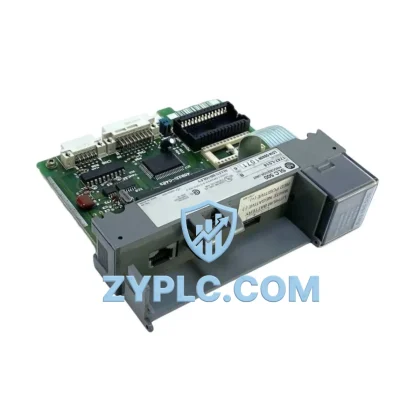
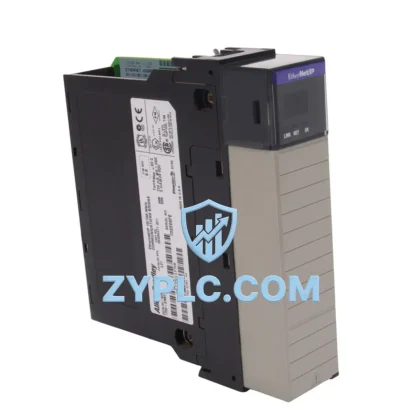
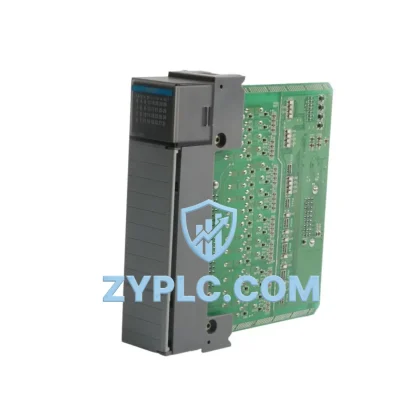
Allen-Bradley 1785-L80C System-Ready ControlNet Controller for PLC-5 Architecture
The Allen-Bradley 1785-L80C is a high-performance PLC-5/80C processor designed for demanding industrial control environments where system architecture integrity, network determinism, and long-term operational reliability are non-negotiable. As a ControlNet-enabled programmable logic controller within Rockwell Automation’s PLC-5 platform, the 1785-L80C occupies a critical position in the control layer of layered automation systems — serving as the central decision-making node that coordinates signal flow across I/O subsystems, communication networks, power distribution layers, human-machine interfaces, and field-level actuators.
In modern industrial control architectures, no controller operates in isolation. The 1785-L80C is engineered to function as the backbone of a coordinated control hierarchy, interfacing seamlessly with upstream supervisory systems and downstream field devices. Its ControlNet port enables deterministic, high-speed communication across the control backbone, ensuring that time-critical process data is exchanged with precision — a fundamental requirement in applications such as continuous process control, high-speed packaging lines, and safety-critical power distribution systems.
System engineers deploying the 1785-L80C benefit from its compatibility with the broader PLC-5 ecosystem, including chassis-based I/O expansion via 1771-series I/O modules, remote I/O adapters, and specialty function modules. This modular architecture allows control system designers to scale I/O capacity without replacing the central processor, preserving capital investment while accommodating evolving process requirements. The controller’s memory capacity and instruction set support complex ladder logic, function block, and structured text programming paradigms, enabling sophisticated control strategies across multi-loop, multi-zone, and multi-axis applications.
From a system architecture perspective, the 1785-L80C integrates naturally into redundant control topologies. When paired with a redundant chassis and a hot-standby processor configuration, the system achieves the fault tolerance demanded by critical infrastructure applications. ControlNet’s inherent support for redundant media further enhances network resilience, ensuring that a single cable fault does not interrupt process communication. This redundancy architecture is particularly valued in power generation, water treatment, and petrochemical processing environments where unplanned downtime carries significant operational and safety consequences.
The controller’s role in the I/O layer is equally significant. Through the 1771 I/O backplane, the 1785-L80C communicates with analog input modules, discrete output modules, thermocouple input cards, and high-speed counter modules, aggregating field signals into a coherent process data model. This data is then made available to SCADA systems and HMI platforms — such as Rockwell’s PanelView terminals or FactoryTalk View SE — via the ControlNet or Data Highway Plus (DH+) network, completing the vertical integration from field sensor to operator display.
For system integrators managing multi-vendor environments, the 1785-L80C’s communication capabilities extend beyond ControlNet. Its DH+ port enables peer-to-peer messaging with other PLC-5 processors, facilitating distributed control architectures where multiple controllers share process data without a centralized supervisory node. This peer communication model is widely used in large-scale manufacturing facilities where individual production cells must coordinate material flow, interlocking, and alarm management across departmental boundaries.
Long-term maintainability is a defining characteristic of the 1785-L80C’s value proposition. The PLC-5 platform’s established presence in industrial facilities worldwide means that spare parts, replacement modules, and qualified engineering expertise remain accessible. ZYPLC maintains verified stock of the 1785-L80C and associated components — including 1785-L60C, 1785-L40C, 1785-BCM, 1785-CHBM chassis modules, and 1771-ASB remote I/O adapter modules — ensuring that system operators can source replacement hardware without extended lead times. All units supplied by ZYPLC are fully tested, functionally verified, and covered by a 12-Month Warranty, providing procurement teams with the confidence required for critical infrastructure sourcing decisions.
Architecture Specification Table
| Parameter |
Specification |
| System Role |
Central PLC Processor — Control Layer |
| Platform |
Allen-Bradley PLC-5 Series |
| Model |
1785-L80C (PLC-5/80C) |
| Memory Capacity |
100K Words (Data & Program) |
| I/O Capacity |
Up to 3,072 I/O points (local + remote) |
| Communication Ports |
ControlNet (onboard), DH+ (Channel 1A) |
| ControlNet Protocol |
CTNET — Deterministic, Scheduled & Unscheduled Messaging |
| Backplane Compatibility |
1771 I/O Chassis (PLC-5 Series) |
| Power Supply Compatibility |
1771-P4S, 1771-P6S, 1771-P7 Series |
| Operating Voltage |
5 VDC (backplane supplied) |
| Operating Temperature |
0°C to 60°C |
| Relative Humidity |
5% to 95% (non-condensing) |
| Mounting |
1771 Chassis Slot — Leftmost Processor Slot |
| Programming Software |
RSLogix 5 / Rockwell Automation PLC-5 Programming |
| Certifications |
UL, CE (Class I Div 2 compatible configurations) |
| Warranty |
12-Month Warranty (ZYPLC Verified Stock) |
| Contextual Integration |
Supported — DH+, ControlNet, Remote I/O, SCADA/HMI |
Coordinated Control System Design
The 1785-L80C achieves its full architectural potential when deployed as part of a coordinated system rather than a standalone controller. In a typical PLC-5 control cabinet, the processor occupies the leftmost slot of a 1771-A4B or 1771-A3B1 chassis, with power supplied by a 1771-P4S or 1771-P6S power supply module. Adjacent slots are populated with 1771-OBD discrete output modules, 1771-IFE analog input modules, and 1771-VHSC high-speed counter modules, each contributing to the controller’s comprehensive view of the process.
At the network layer, the 1785-L80C’s ControlNet port connects to a 1786-RPA/B ControlNet repeater or directly to a 1784-KTCX15 ControlNet interface card in the engineering workstation, enabling RSLogix 5 programming, online monitoring, and firmware management without interrupting process execution. For remote I/O expansion, the 1771-ASB remote I/O adapter bridges the controller’s remote I/O scanner to distributed 1771 chassis located in field junction boxes or remote control panels, extending the system’s physical reach without additional processors.
In multi-controller architectures, the 1785-L80C communicates peer-to-peer with adjacent PLC-5 processors — such as the 1785-L60C or 1785-L40C — via DH+ messaging, coordinating interlocking logic, material transfer sequences, and alarm propagation across production zones. At the HMI layer, PanelView Plus 6 terminals or FactoryTalk View SE clients connect via ControlNet or Ethernet/IP gateways, presenting operator displays that reflect real-time process data sourced directly from the 1785-L80C’s data table. For drive coordination, the controller interfaces with PowerFlex 700 or PowerFlex 40 variable frequency drives through DeviceNet or hardwired I/O, closing the loop between process logic and mechanical execution.
Application in Layered Automation Systems
The 1785-L80C has established a proven track record across a broad spectrum of industrial applications. In power generation and distribution facilities, the controller manages generator synchronization sequences, switchgear interlocking, and load shedding logic — applications where deterministic ControlNet communication and robust processor redundancy are essential for grid stability and personnel safety.
In petrochemical and refinery environments, the 1785-L80C controls distillation column sequencing, pump station management, and emergency shutdown (ESD) pre-logic, operating continuously in high-temperature, high-vibration enclosures. Its compatibility with 1771-series intrinsically safe I/O modules makes it suitable for Zone 1 and Zone 2 hazardous area installations when properly configured.
For water and wastewater treatment plants, the controller orchestrates pump sequencing, chemical dosing control, and filtration cycle management across geographically distributed lift stations connected via ControlNet or fiber-optic remote I/O links. The system’s redundancy capability ensures uninterrupted treatment operations even during planned maintenance windows.
In mining and mineral processing applications, the 1785-L80C manages conveyor interlocking, crusher sequencing, and flotation cell control — environments characterized by heavy electrical noise, mechanical vibration, and demanding duty cycles that test the limits of control hardware. The controller’s industrial-grade design and ZYPLC’s 12-Month Warranty provide the operational assurance that mining operators require when sourcing replacement hardware for aging but mission-critical control systems.
Packaging and discrete manufacturing lines leverage the 1785-L80C’s high I/O capacity and fast scan times to coordinate multi-axis motion sequences, vision system triggers, and reject gate logic at production speeds that demand sub-millisecond response consistency. The controller’s peer messaging capability allows individual packaging cells to communicate product counts, fault states, and recipe parameters to a central line management system without operator intervention.
Architecture Engineering FAQ
Q1: Is the 1785-L80C compatible with existing 1771 I/O chassis and modules already installed in my facility?
Yes. The 1785-L80C is fully compatible with the 1771 I/O chassis family, including the 1771-A4B, 1771-A3B1, and 1771-A2B chassis configurations. All standard 1771-series I/O modules — discrete, analog, specialty, and communication — are supported without hardware modification. If your facility operates mixed-generation PLC-5 hardware, the 1785-L80C can replace earlier processors such as the 1785-L60C or 1785-L40C in the same chassis slot, provided the application program is compatible with the L80C’s memory and instruction set. ZYPLC’s technical team can assist with compatibility verification prior to procurement.
Q2: Can the 1785-L80C be integrated into a redundant control architecture, and what additional components are required?
Yes. The 1785-L80C supports hot-standby redundancy when paired with a 1785-CHBM chassis monitor module and a redundant chassis configuration. In this topology, a primary and secondary 1785-L80C processor operate in synchronized standby mode, with the 1785-BCM bumpless transfer module managing seamless switchover in the event of a primary processor fault. ControlNet’s dual-media capability further supports redundant network paths, ensuring that a single cable failure does not disrupt process communication. This redundancy architecture is recommended for all Tier 1 critical process applications. ZYPLC maintains stock of all associated redundancy components and can supply complete redundant system kits under a unified 12-Month Warranty.
Q3: What is the recommended procedure for commissioning a replacement 1785-L80C, and how does the 12-Month Warranty apply?
Commissioning a replacement 1785-L80C follows a structured procedure: (1) Back up the existing application program using RSLogix 5 and verify the backup against the current processor memory. (2) Power down the chassis and remove the existing processor from the leftmost slot. (3) Install the replacement 1785-L80C, ensuring correct chassis slot keying and backplane connector seating. (4) Power up the chassis and verify processor status indicators — the RUN and FAULT LEDs should confirm normal operation. (5) Download the verified application program via RSLogix 5 and perform a controlled online test prior to returning the system to production. All 1785-L80C units supplied by ZYPLC are pre-tested and functionally verified before shipment. The 12-Month Warranty covers manufacturing defects and functional failures under normal operating conditions, with direct technical support available throughout the warranty period. Contact ZYPLC at +86 19859288691 or plc.sales@zyplc.com for warranty claims and commissioning support.
© 2026 ZYPLC. All rights reserved.
Original Source: https://zyplc.com
Contact: +86 19859288691 | plc.sales@zyplc.com