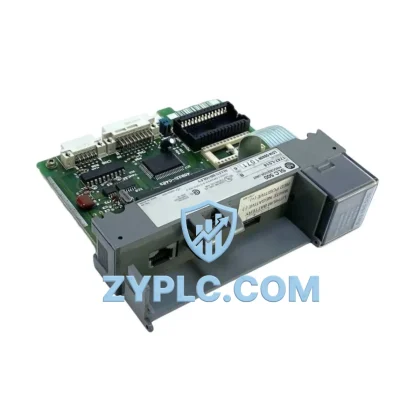
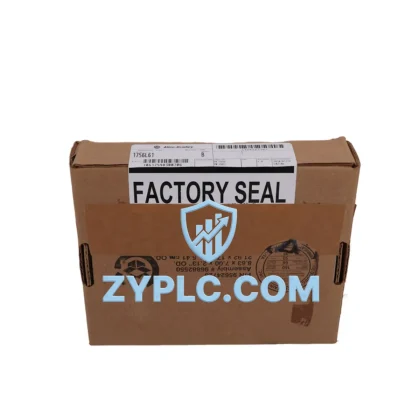
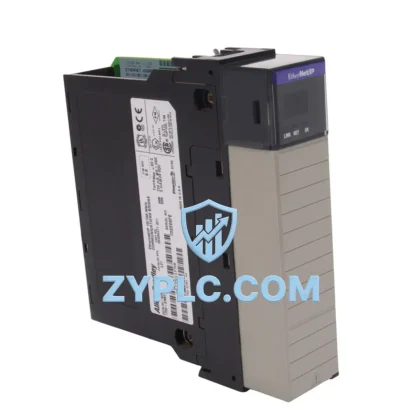
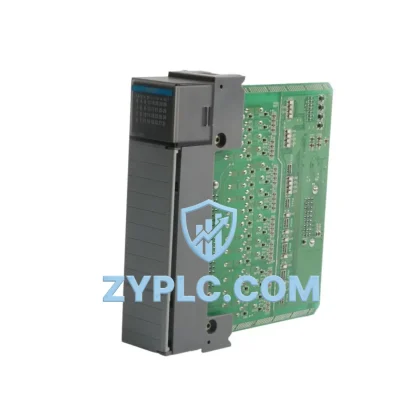
Allen-Bradley 1785-L80C15/F Energy-Saving PLC for Optimized PLC-5 Automation
The Allen-Bradley 1785-L80C15/F is a high-performance PLC-5/80 ControlNet processor module engineered for energy-conscious industrial automation environments. Designed to maximize equipment utilization while minimizing unnecessary power draw, this processor module serves as the central intelligence layer in demanding manufacturing and process control applications. Whether deployed in automotive assembly lines, chemical processing plants, or discrete manufacturing cells, the 1785-L80C15/F delivers the deterministic scan-cycle performance and network integration that modern energy-aware production systems demand.
At its core, the 1785-L80C15/F leverages ControlNet communication to synchronize real-time data exchange between field devices, I/O racks, and supervisory systems without the latency penalties that degrade energy efficiency. By tightly coupling the processor’s scan cycle to actual production demand — rather than running at fixed intervals regardless of load — facilities can reduce idle-state power consumption across the entire control architecture. When paired with Allen-Bradley 1771 I/O modules and remote I/O adapters, the system enables granular monitoring of individual machine states, allowing operators to identify and eliminate energy waste at the device level.
Efficiency Performance Table
| Parameter |
Specification / Value |
| Product SKU |
1785-L80C15/F |
| Series |
PLC-5/80 |
| Communication Protocol |
ControlNet (Coax) |
| Memory Capacity |
100K Words User Memory |
| Max I/O Points |
3,072 Digital I/O |
| Scan Cycle Efficiency |
Deterministic, demand-driven scan optimization |
| Compatible Systems |
Allen-Bradley PLC-5 chassis, 1771 I/O, ControlNet networks |
| Application Environment |
Discrete manufacturing, process control, batch automation |
| Energy Optimization Value |
Reduces idle-state polling overhead; supports load-based scan scheduling |
| Operating Temperature |
0°C to 60°C (32°F to 140°F) |
| Power Supply Compatibility |
Allen-Bradley 1771-P4S, 1771-P6S series power supplies |
| Warranty |
12-Month Warranty — Tested & Verified Before Shipment |
Energy-Aware Automation Architecture
The 1785-L80C15/F operates most effectively when integrated into a layered automation architecture that spans from field-level sensing through drive control to supervisory monitoring. In a typical energy-optimized deployment, the processor coordinates with Allen-Bradley 1336 PLUS II variable frequency drives to modulate motor speed in direct response to process demand signals — eliminating the fixed-speed operation that wastes energy during partial-load conditions. The VFD receives speed reference commands via the ControlNet backplane, enabling sub-second response to load changes without manual operator intervention.
For servo-driven axes requiring precise positioning with minimal energy overshoot, the 1785-L80C15/F interfaces with Allen-Bradley Ultra 3000 servo drives through the 1756-M02AE motion module, enabling coordinated multi-axis control that reduces mechanical stress and associated energy losses from abrupt acceleration profiles. The processor’s motion instruction set supports S-curve velocity profiling, which smooths torque transitions and lowers peak current draw — a measurable contribution to overall facility energy budgets.
Power quality and consumption monitoring is handled upstream by integrating Allen-Bradley PowerMonitor 3000 units on the main distribution panels. These meters feed real-time kWh, power factor, and harmonic distortion data back to the PLC-5 via ControlNet, enabling the 1785-L80C15/F to execute demand-response logic — shedding non-critical loads automatically when facility power consumption approaches contracted thresholds. This closed-loop energy management approach is far more effective than manual monitoring and reduces peak demand charges significantly.
At the I/O level, Allen-Bradley 1771-OFE analog output modules connected to the 1785-L80C15/F provide 4–20 mA control signals to pneumatic valve positioners and proportional control valves, enabling precise flow regulation that prevents energy waste from over-pressurization or excessive pump cycling. Complementing this, 1771-IFE analog input modules collect process variable feedback — temperature, pressure, flow — feeding the PLC’s PID control loops with the data needed to maintain setpoints at minimum energy cost.
For facilities running mixed-generation equipment, the 1785-L80C15/F supports integration with Allen-Bradley SLC 500 controllers via ControlNet peer-to-peer messaging, allowing legacy machine islands to participate in plant-wide energy optimization strategies without requiring full system replacement. This interoperability extends the useful life of existing capital equipment while enabling centralized energy visibility through a PanelView Plus 7 HMI, where operators can monitor real-time energy KPIs, production throughput, and equipment utilization rates on a single screen.
Power Optimization in Real Production Lines
In automotive body-in-white welding lines, the 1785-L80C15/F has been deployed to manage the sequencing of resistance welding controllers, conveyor drives, and robotic cell interlocks. By implementing time-based load shedding during scheduled micro-stops — tool changes, part transfers, quality inspection holds — the processor reduces the number of motors running at full speed during non-productive intervals. Facilities report measurable reductions in energy consumption per vehicle body produced, with the added benefit of reduced thermal stress on drive components, extending mean time between failures.
In water and wastewater treatment applications, the 1785-L80C15/F controls pump station sequencing based on wet-well level data from ultrasonic sensors connected through 1771-IFE modules. Rather than running pumps at constant speed, the processor calculates optimal pump combinations and speed setpoints — transmitted to 1336 PLUS II drives — to match inflow rates with minimum energy expenditure. This approach eliminates the energy penalty of constant-speed pump operation and reduces mechanical wear, lowering both operating costs and maintenance frequency.
Predictive maintenance integration is achieved by logging motor current signatures, drive fault codes, and I/O cycle counts to an Allen-Bradley FactoryTalk Historian server via the ControlNet network. The 1785-L80C15/F timestamps each data point with its internal clock, enabling trend analysis that identifies developing faults — bearing wear, insulation degradation, coupling misalignment — before they cause unplanned downtime. Early intervention not only prevents costly emergency repairs but also avoids the energy spikes associated with equipment running in degraded condition.
Every 1785-L80C15/F unit supplied by ZYPLC undergoes a comprehensive pre-shipment test protocol: functional scan-cycle verification, ControlNet port communication testing, memory integrity check, and I/O channel validation. Units are shipped with full documentation and are backed by a 12-month warranty, ensuring that your production line investment is protected from day one of installation.
Energy Optimization FAQ
Q1: How does the 1785-L80C15/F contribute to measurable energy savings on the production floor?
The processor enables demand-driven scan scheduling, closed-loop VFD speed control via ControlNet, and automated load-shedding logic during non-productive machine states. When integrated with PowerMonitor 3000 energy meters and 1336 PLUS II drives, facilities can implement real-time demand response that reduces peak energy consumption and improves overall equipment efficiency (OEE).
Q2: Is the 1785-L80C15/F compatible with modern ControlNet and EtherNet/IP infrastructure?
The 1785-L80C15/F communicates natively over ControlNet (coaxial). For integration with EtherNet/IP-based supervisory systems, a 1761-NET-ENI or 1756-ENBT bridge module can be used to translate between protocols, allowing the PLC-5 to participate in plant-wide data collection and MES connectivity without replacing the existing control architecture.
Q3: What is the recommended replacement or upgrade path for aging PLC-5/80 systems?
For facilities planning a phased migration, the 1785-L80C15/F can be maintained in service while a parallel ControlLogix 5580 system is commissioned on the same ControlNet network. Allen-Bradley’s PLC-5 to Logix migration tools support ladder logic conversion, minimizing re-engineering effort. ZYPLC can supply both the 1785-L80C15/F for immediate operational continuity and ControlLogix components for future migration planning.
Q4: What does the 12-month warranty cover, and what is the pre-shipment testing process?
All 1785-L80C15/F units are tested for scan-cycle functionality, ControlNet port integrity, user memory verification, and I/O channel response before shipment. The 12-month warranty covers hardware defects and functional failures under normal operating conditions. ZYPLC maintains verified inventory with documented test records, and replacement or repair is handled directly — no third-party RMA delays.
© 2026 ZYPLC. All rights reserved.
Original Source: https://zyplc.com
Contact: +86 19859288691 | [email protected]