Allen-Bradley 1785-ME32 System-Ready EEPROM Memory for PLC-5 Architecture: Control System Architecture and Upstream-Downstream Coordination
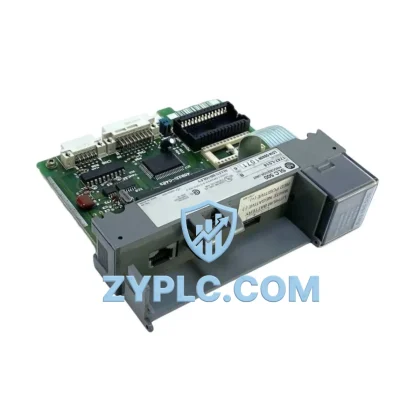
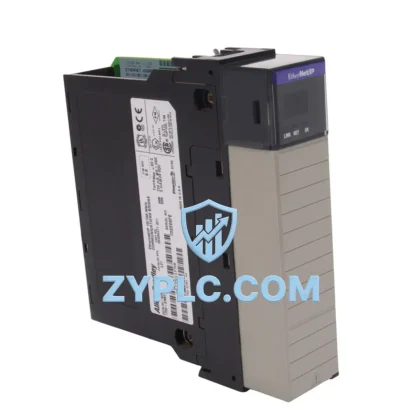
The Allen-Bradley 1785-ME32 is a 32K-word EEPROM memory cartridge engineered for seamless integration within the PLC-5 programmable controller platform. Rather than functioning as a standalone storage component, the 1785-ME32 occupies a critical position in the layered control architecture — serving as the non-volatile program repository that ensures deterministic ladder logic execution, rapid cold-start recovery, and long-term program integrity across demanding industrial environments. In distributed control topologies where system uptime is non-negotiable, the 1785-ME32 provides the memory backbone that ties together the control layer, I/O subsystem, communication network, and field device execution layer into a coherent, maintainable automation system.
Within a complete PLC-5 control architecture, the 1785-ME32 interfaces directly with the 1785-L40B, 1785-L60B, or 1785-L80B central processing units, storing the user program in EEPROM format so that the controller can restore its operational state automatically following a power interruption — without requiring manual program reload from an engineering workstation. This capability is especially valuable in remote substations, offshore platforms, and unmanned process facilities where engineering personnel access is limited. The cartridge slots into the processor module’s dedicated memory port, maintaining electrical compatibility with the full range of PLC-5 chassis configurations including the 1771-A1B, 1771-A2B, 1771-A3B1, and 1771-A4B I/O chassis families.
Architecture Specification Table
| Parameter |
Specification |
| Part Number |
1785-ME32 |
| Brand / Manufacturer |
Allen-Bradley / Rockwell Automation |
| Product Series |
PLC-5 (1785 Series) |
| System Role |
Non-volatile EEPROM Program Memory Cartridge |
| Memory Capacity |
32K Words |
| Memory Technology |
EEPROM (Electrically Erasable Programmable Read-Only Memory) |
| Compatible Processors |
1785-L11B, 1785-L20B, 1785-L40B, 1785-L60B, 1785-L80B |
| Compatible Chassis |
1771-A1B, 1771-A2B, 1771-A3B1, 1771-A4B |
| Communication Capability |
Data Highway Plus (DH+), Remote I/O (RIO) via host processor |
| Electrical Interface |
Direct cartridge slot insertion — no external power required |
| Operating Temperature |
0°C to 60°C (32°F to 140°F) |
| Storage Temperature |
-40°C to 85°C |
| Installation Environment |
Industrial control panel, DIN-rail enclosure, rack-mount cabinet |
| Program Retention |
Non-volatile; retains program without battery backup |
| Contextual Integration |
Full Contextual Integration with PLC-5 processor and 1771 I/O system |
| Warranty |
12-Month Warranty — tested, verified, and ready to deploy |
| Origin |
United States |
Coordinated Control System Design
The 1785-ME32 achieves its full value when considered within the broader PLC-5 system architecture rather than in isolation. At the control layer, the memory cartridge works in direct coordination with the 1785-L40B or 1785-L60B processor to store and execute ladder logic programs that govern the entire automation sequence. The processor reads the EEPROM contents at power-up, loading the program into RAM for real-time execution while preserving the master copy on the cartridge — a dual-layer approach that protects program integrity even under repeated power cycling.
At the I/O layer, the 1785-ME32-hosted program manages discrete and analog signal exchange through 1771-series I/O modules mounted in the 1771-A4B chassis. Typical I/O configurations include the 1771-OBD digital output module, 1771-IFE analog input module, and 1771-OFE analog output module, all of which receive their scan-cycle instructions from the program stored on the 1785-ME32. The deterministic scan time enabled by EEPROM-based program storage ensures that I/O response latency remains consistent — a critical requirement in high-speed packaging lines and precision process control loops.
At the network layer, the PLC-5 processor communicates over Data Highway Plus (DH+) using the 1784-KTX or 1784-PKTX communication interface cards, enabling peer-to-peer messaging between multiple PLC-5 nodes and supervisory SCADA systems. The program stored on the 1785-ME32 includes the MSG instructions and network configuration parameters that define how the controller participates in the DH+ network — meaning that a cartridge swap during maintenance restores not only the control logic but also the full network communication configuration. For Remote I/O (RIO) architectures, the 1771-ASB remote I/O adapter module extends the I/O scan to remote chassis, with all RIO mapping tables preserved within the 1785-ME32 program image.
At the power layer, the 1771-P4S or 1771-P7 power supply modules provide regulated DC power to the 1771 chassis backplane, ensuring stable voltage delivery to both the processor and I/O modules. The 1785-ME32 itself draws no additional power from the backplane, making it a zero-overhead addition to the system power budget. For redundant power architectures, dual 1771-P4S supplies can be configured in parallel, with the 1785-ME32 program managing the switchover logic through dedicated status bits.
At the human-machine interface layer, PanelView 550 or PanelView 900 operator terminals connect to the PLC-5 processor via DH+ or RS-232, displaying real-time process data derived from the program executing from the 1785-ME32 cartridge. Alarm management, setpoint adjustment, and production reporting functions are all driven by the program logic stored on the cartridge, reinforcing the central role of the 1785-ME32 in the overall operator experience.
Application in Layered Automation Systems
The 1785-ME32 has established a proven track record across a wide spectrum of industrial sectors where the PLC-5 platform remains the backbone of legacy and hybrid control architectures.
In power generation and electrical substation applications, the 1785-ME32 stores protection relay coordination logic, transformer tap-changer control sequences, and breaker interlock programs within PLC-5 controllers that must restart autonomously following grid disturbances. The EEPROM-based program retention eliminates the risk of program loss during extended outages, ensuring that protection functions are immediately available when power is restored.
In petrochemical and refinery environments, PLC-5 systems equipped with the 1785-ME32 manage reactor feed control, distillation column sequencing, and emergency shutdown (ESD) logic. The non-volatile memory architecture supports SIL-rated safety applications where program integrity must be guaranteed across the full plant lifecycle, including scheduled turnarounds and unplanned shutdowns.
In water and wastewater treatment facilities, the 1785-ME32 enables PLC-5 controllers to manage pump sequencing, chemical dosing, and filtration cycle control across geographically distributed lift stations and treatment plants. The ability to restore the full program from EEPROM without operator intervention is particularly valuable in unmanned remote pump stations where network connectivity may be intermittent.
In mining and mineral processing operations, PLC-5 systems with 1785-ME32 cartridges control conveyor belt sequencing, crusher interlock logic, and flotation cell management in environments characterized by high vibration, dust ingress, and temperature extremes. The rugged EEPROM technology maintains data integrity under these conditions, supporting continuous 24/7 production schedules.
In automotive and discrete manufacturing assembly lines, the 1785-ME32 stores the ladder logic programs that coordinate robotic welding cells, transfer line sequencing, and quality inspection station control. Rapid program restoration from EEPROM minimizes production downtime during controller replacement or maintenance events, directly supporting OEE improvement initiatives.
Architecture Engineering FAQ
Q1: Is the 1785-ME32 compatible with all PLC-5 processor variants, and how does it integrate with existing 1771 I/O chassis configurations?
The 1785-ME32 is compatible with the full range of PLC-5 enhanced processors including the 1785-L11B, 1785-L20B, 1785-L40B, 1785-L60B, and 1785-L80B. It inserts directly into the processor’s memory cartridge slot and is automatically recognized at power-up. The cartridge integrates transparently with all 1771-series I/O chassis configurations — the I/O mapping, module addressing, and scan-cycle parameters stored on the cartridge are fully portable across chassis sizes, enabling straightforward system expansion or processor replacement without reprogramming.
Q2: How does the 1785-ME32 support redundant architecture designs and long-term maintenance strategies in critical process control systems?
In redundant PLC-5 architectures, a spare 1785-ME32 cartridge pre-loaded with the current program image serves as an immediate hot-swap replacement, reducing mean time to repair (MTTR) to minutes rather than hours. For long-term maintenance, the EEPROM technology eliminates battery dependency, removing a common failure mode associated with RAM-backed memory systems. Program version control is maintained by storing cartridge images in the plant’s document management system, with each cartridge labeled with the program revision and commissioning date. ZYPLC recommends maintaining at least one spare 1785-ME32 per PLC-5 node as part of a proactive spare parts strategy, supported by our 12-Month Warranty coverage.
Q3: What is the installation and commissioning procedure for the 1785-ME32, and what does the 12-Month Warranty cover?
Installation requires powering down the PLC-5 chassis, inserting the 1785-ME32 into the processor’s cartridge slot until the retention latch engages, and then powering up the system. The processor automatically detects the cartridge and prompts the operator to load the program from EEPROM to RAM via the RSLogix 5 programming software or the processor’s front-panel keyswitch. Commissioning verification includes confirming program checksum integrity, validating I/O module status, and performing a communications test on the DH+ network. The 12-Month Warranty covers manufacturing defects, EEPROM data retention failures, and electrical interface faults under normal operating conditions. ZYPLC provides pre-shipment functional testing and full technical support throughout the warranty period. Contact our engineering team at [email protected] or +86 19859288691 for commissioning assistance.
© 2026 ZYPLC. All rights reserved.
Original Source: https://zyplc.com
Contact: +86 19859288691 | [email protected]