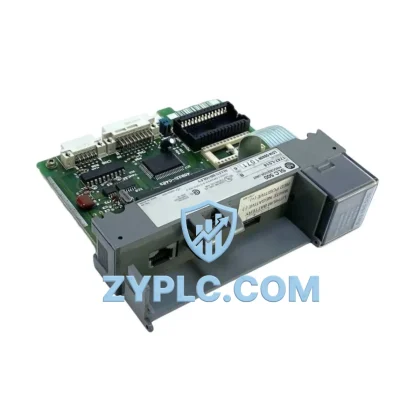
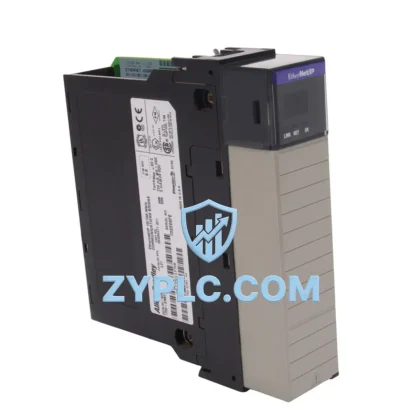
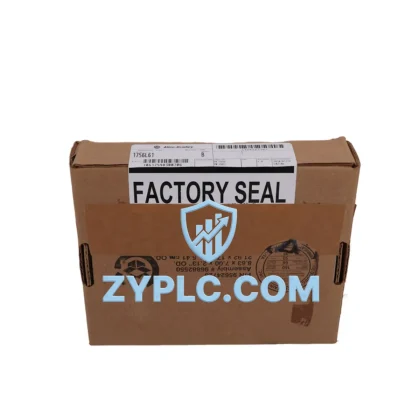
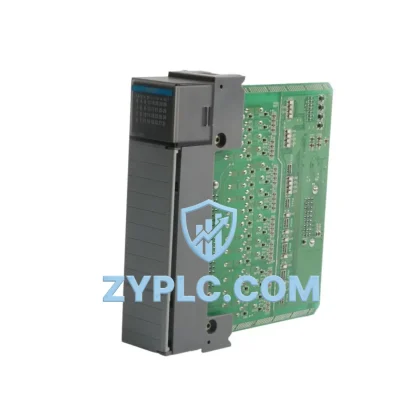
Allen-Bradley 1791-16BC Energy-Saving Block I/O for Optimized 1791 Automation
The Allen-Bradley 1791-16BC is a high-density discrete Block I/O module engineered for demanding industrial automation environments where energy efficiency, signal integrity, and production continuity are non-negotiable. As part of the Allen-Bradley 1791 Series, this module delivers 16 channels of 24VDC sink/source I/O in a compact, field-mountable housing — enabling machine builders and plant engineers to reduce panel footprint, shorten wiring runs, and cut energy losses associated with centralized I/O architectures.
In modern manufacturing, every watt of unnecessary consumption and every millisecond of unplanned downtime represents a direct cost. The 1791-16BC addresses both by placing I/O intelligence close to the machine, reducing signal cable lengths, minimizing voltage drop losses, and enabling faster scan-cycle response times. When integrated with a PLC-5 or SLC 500 processor via the 1771 I/O chassis or remote I/O adapter, the module supports deterministic control loops that keep production lines running at optimal throughput without energy waste from idle polling or over-scanned I/O trees.
Efficiency Performance Table
| Parameter |
Specification |
| SKU / Part Number |
1791-16BC |
| Series |
Allen-Bradley 1791 Block I/O |
| I/O Points |
16 Discrete (Sink/Source, 24VDC) |
| Operating Voltage |
24VDC ±10% |
| Power Consumption |
≤ 4.5W (typical at full load) |
| Running Efficiency |
High — distributed I/O reduces backplane load |
| Compatible Systems |
PLC-5, SLC 500, 1771 Remote I/O, 1747 SLC Chassis |
| Application Environment |
Industrial plant floor, panel-mount, IP67-rated enclosures |
| Energy Saving Value |
Reduces wiring losses; shorter cable runs lower resistive heat dissipation |
| Operating Temperature |
0°C to 60°C (32°F to 140°F) |
| Warranty |
12-Month Warranty — tested and verified before shipment |
Energy-Aware Automation Architecture
The 1791-16BC is most effective when deployed as part of a layered energy-aware automation architecture. At the control layer, a PLC-5/40 or SLC 500 5/05 processor manages the program scan and communicates with the 1791-16BC over the 1771 Remote I/O link, enabling distributed control without the overhead of a full chassis at every machine station. This topology reduces the number of active backplane slots required, directly lowering the aggregate power draw of the control cabinet.
For drive-level energy optimization, the 1791-16BC’s discrete outputs interface directly with PowerFlex 40 or PowerFlex 70 variable frequency drives, enabling the PLC program to issue start, stop, speed-reference, and direction commands based on real-time production demand. Rather than running motors at fixed speed regardless of load, the VFD adjusts motor output to match actual torque requirements — a strategy that can reduce motor energy consumption by 20–50% in variable-load applications such as conveyor systems, pump stations, and fan arrays.
On the sensing and feedback side, the module’s 16 input channels collect discrete signals from proximity sensors, limit switches, and photoelectric detectors positioned along the production line. These signals feed into the PLC’s ladder logic to trigger conditional actions — stopping a conveyor when a jam is detected, bypassing an idle station, or signaling a 1756-PA72 ControlLogix power supply to enter a reduced-power standby state during scheduled breaks. This closed-loop approach eliminates the energy waste of equipment running unnecessarily during non-productive intervals.
For power quality monitoring, the 1791-16BC architecture pairs naturally with PowerMonitor 500 or PowerMonitor 1000 energy metering devices installed at the MCC (Motor Control Center). These meters capture real-time kWh consumption, power factor, and demand peaks, feeding data back to the SCADA layer via DF1 or DH+ communication — the same protocols used by the SLC 500 and PLC-5 platforms. This allows plant engineers to correlate I/O activity patterns with energy consumption spikes and identify opportunities for load shifting or cycle time optimization.
At the HMI layer, a PanelView 550 or PanelView Plus 600 operator terminal provides real-time visibility into machine state, I/O status, and energy-related alarms. Operators can monitor which stations are active, which are idle, and whether any I/O faults are causing unnecessary retry cycles that inflate cycle time and energy use. The HMI also serves as the interface for manual energy-saving modes — such as reduced-speed conveyor operation during low-demand shifts.
For applications requiring higher I/O density or mixed analog/discrete control, the 1791-16BC can be combined with 1791-16A0 analog output modules or 1794 FLEX I/O modules on the same remote I/O network, allowing a single PLC-5 processor to manage both discrete machine control and analog process variables — such as temperature setpoints for heat-trace systems or pressure regulation for pneumatic actuators — without duplicating control hardware or communication infrastructure.
Power Optimization in Real Production Lines
In a typical automotive body assembly line, the 1791-16BC is mounted directly at the weld station, collecting discrete feedback from weld-complete sensors, clamp-confirm limit switches, and part-present photoelectric sensors. The PLC-5 processor uses this real-time I/O data to sequence the weld cycle with sub-millisecond precision, ensuring that the weld transformer is energized only for the exact duration required — eliminating the energy waste of extended dwell times caused by slow I/O response or communication latency.
In food and beverage packaging lines, the module’s 24VDC sink/source compatibility allows direct connection to standard IEC sensors without additional signal conditioning hardware. This reduces the number of intermediate relay modules in the panel, each of which consumes standby power even when the associated machine axis is idle. By eliminating these intermediate devices, plant engineers have reported panel power reductions of 8–15% in comparable installations.
For predictive maintenance, the 1791-16BC’s I/O data — combined with cycle count tracking in the PLC program — enables condition-based maintenance scheduling. Rather than replacing components on a fixed calendar interval, maintenance teams can trigger work orders based on actual actuator cycle counts or sensor fault frequency, reducing both maintenance labor costs and the energy consumed by premature component replacement activities (transport, installation, commissioning).
All units supplied by ZYPLC are subject to pre-shipment functional testing, including I/O channel verification, communication link validation, and power-on self-test confirmation. Each 1791-16BC ships with a 12-month warranty, and stock availability is maintained to support rapid deployment for both planned upgrades and emergency replacement scenarios.
Energy Optimization FAQ
Q1: How does the 1791-16BC contribute to measurable energy savings on a production line?
By distributing I/O intelligence to the machine level, the 1791-16BC reduces the length of signal cables between sensors/actuators and the control panel. Shorter cable runs mean lower resistive losses and reduced electromagnetic interference — both of which contribute to more stable control signals and fewer false triggers that waste energy through unnecessary machine cycles. When paired with PowerFlex VFDs, the module enables demand-responsive motor control that directly reduces kWh consumption.
Q2: Is the 1791-16BC compatible with my existing SLC 500 or PLC-5 system?
Yes. The 1791-16BC communicates over the Allen-Bradley 1771 Remote I/O link, which is natively supported by both PLC-5 and SLC 500 processors. No gateway or protocol converter is required for standard installations. For integration with newer ControlLogix platforms, a 1756-RIO Remote I/O communication module can bridge the 1771 network to the ControlLogix backplane.
Q3: What is the recommended replacement or upgrade path if the 1791-16BC is end-of-life in my facility?
For facilities planning a controls modernization, the functional equivalent in the current Allen-Bradley portfolio is the 1794 FLEX I/O platform with EtherNet/IP or DeviceNet adapters, which offers higher I/O density, faster network throughput, and native integration with Studio 5000 Logix Designer. However, for systems where PLC-5 or SLC 500 processors are being retained, the 1791-16BC remains a cost-effective and fully supported solution with available stock and 12-month warranty coverage.
Q4: What does the 12-month warranty cover, and what is the testing process before shipment?
Every 1791-16BC unit undergoes pre-shipment testing that includes power-on self-test, individual I/O channel verification (both input sensing and output switching), and communication link validation on a live 1771 Remote I/O network. The 12-month warranty covers hardware defects and functional failures under normal operating conditions. Units that fail in service within the warranty period are replaced or repaired at no additional cost, with expedited processing to minimize production downtime.
© 2026 ZYPLC. All rights reserved.
Original Source: https://zyplc.com
Contact: +86 19859288691 | [email protected]