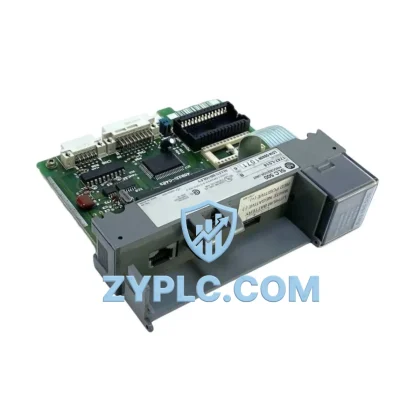
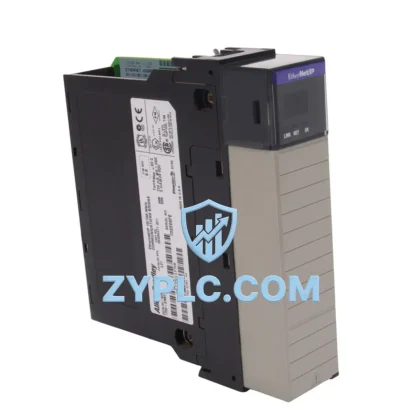
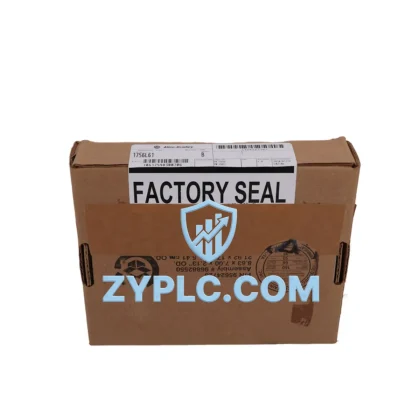
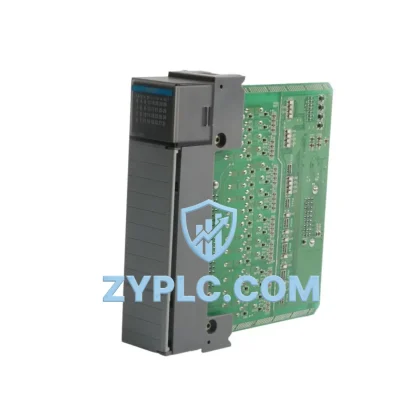
Allen-Bradley 1794-ASB/E System-Ready Remote I/O Adapter for FLEX Architecture
In a modern layered automation system, the integrity of the control architecture depends on how reliably each component communicates across the hierarchy. The Allen-Bradley 1794-ASB/E is a Remote I/O Adapter designed specifically for the FLEX I/O platform, enabling seamless integration between field-level I/O modules and the upper control layer. Whether deployed in a discrete manufacturing cell, a continuous process line, or a utility distribution system, the 1794-ASB/E serves as the critical bridge that connects distributed I/O nodes to the main control network — ensuring real-time data exchange, deterministic scan cycles, and consistent system-wide visibility.
The 1794-ASB/E operates within the Allen-Bradley Remote I/O (RIO) network, a proven communication architecture widely used across Rockwell Automation control platforms. It mounts directly onto the FLEX I/O terminal base system, supporting a wide range of I/O modules including digital input modules such as the 1794-IB16, digital output modules such as the 1794-OB16, and analog input modules such as the 1794-IE8. This modular approach allows engineers to configure the I/O subsystem precisely to the demands of each application zone, without over-provisioning hardware or compromising signal integrity.
At the control layer, the 1794-ASB/E interfaces with ControlLogix and PLC-5 platforms. In ControlLogix architectures, the 1756-L72S or similar Logix controllers manage the RIO scanner function, polling the 1794-ASB/E adapter at defined rack addresses and slot assignments. This structured addressing model simplifies system commissioning and supports predictable fault isolation during maintenance cycles. The adapter’s compatibility with established Rockwell platforms means it can be integrated into both greenfield installations and legacy system expansions without requiring a full architecture redesign.
Power distribution within the FLEX I/O node is handled by the 1794-PS13 power supply, which provides regulated 24 VDC to the I/O modules mounted on the same terminal base assembly. Stable power delivery is essential for maintaining signal accuracy across analog channels and ensuring reliable switching performance on digital outputs. The 1794-ASB/E, combined with the 1794-PS13, forms a self-contained I/O node that can be located remotely from the main control panel — reducing wiring runs, lowering installation costs, and improving cabinet organization.
Network connectivity is extended through the 1794-ACN15 ControlNet Adapter, which can be deployed in parallel architectures where ControlNet redundancy is required. In high-availability applications such as power generation, water treatment, or chemical processing, redundant communication paths ensure that a single cable or node failure does not interrupt the control loop. The 1794-ASB/E’s role in the RIO segment complements these higher-level network strategies by providing a stable, low-latency I/O interface at the field level.
For operator interaction and process visualization, the system integrates with PanelView Plus 7 HMI terminals, which display real-time I/O status, alarm conditions, and process variables sourced from the ControlLogix controller. The HMI communicates via EtherNet/IP to the controller, which in turn manages the RIO network where the 1794-ASB/E resides. This multi-layer communication architecture — from field device to I/O adapter to controller to HMI — provides full process transparency and supports rapid operator response to abnormal conditions.
Drive-level integration is achieved through PowerFlex 525 variable frequency drives, which receive speed and torque commands from the ControlLogix controller and return feedback signals including output frequency, motor current, and fault status. In coordinated motion applications, the 1794-ASB/E handles auxiliary digital I/O — such as drive enable signals, limit switch inputs, and interlock outputs — that complement the primary drive communication channel. This division of I/O responsibility keeps the control architecture clean and maintainable.
Network infrastructure is provided by the Stratix 5700 managed Ethernet switch, which segments the EtherNet/IP traffic between controllers, HMIs, and remote I/O nodes. Proper network segmentation reduces broadcast traffic, improves determinism, and supports Quality of Service (QoS) configurations that prioritize control data over diagnostic or historian traffic. The 1794-ASB/E, operating on the RIO segment, benefits from this structured network design by receiving consistent scan-cycle timing from the upstream controller.
Architecture Specification Table
| Parameter |
Specification |
| System Role |
Remote I/O Adapter — FLEX I/O Platform |
| Communication Protocol |
Allen-Bradley Remote I/O (RIO) |
| Compatible Controllers |
ControlLogix, PLC-5, SLC 500 (with RIO scanner) |
| I/O Module Capacity |
Up to 8 FLEX I/O modules per adapter |
| Network Baud Rate |
57.6K / 115.2K / 230.4K bps (selectable) |
| Power Supply Voltage |
24 VDC (via 1794-PS13 or equivalent) |
| Mounting |
DIN rail or panel mount via FLEX I/O terminal base |
| Operating Temperature |
0°C to 55°C |
| Installation Environment |
Industrial control panels, remote I/O enclosures |
| Warranty |
12-Month Warranty — tested before shipment |
Coordinated Control System Design
A complete FLEX I/O node built around the 1794-ASB/E typically includes the 1794-TB3 terminal base, which provides the physical mounting and wiring interface for each I/O module. The terminal base system allows modules to be inserted and removed without disturbing field wiring — a significant advantage during maintenance windows or module replacement in live production environments. Digital input modules such as the 1794-IB16 capture signals from pushbuttons, proximity sensors, and limit switches, while digital output modules such as the 1794-OB16 drive solenoid valves, indicator lights, and relay coils. Analog input modules such as the 1794-IE8 process 4–20 mA signals from pressure transmitters, flow meters, and temperature sensors, delivering scaled engineering values directly to the controller’s data table.
At the control layer, the 1756-L72S ControlLogix controller manages the RIO scanner, defining the rack address and slot configuration for each 1794-ASB/E node on the network. The controller’s ladder logic or function block programs reference the I/O data by rack and slot address, maintaining a consistent programming model across all remote nodes. This addressing consistency simplifies multi-node system commissioning and supports structured fault diagnostics when a node goes offline.
Power integrity across the FLEX I/O assembly is maintained by the 1794-PS13 power supply, which isolates the I/O module power from the communication circuitry — preventing noise coupling between the RIO network and the field wiring. In applications where power redundancy is required, dual power supply configurations can be implemented at the panel level, with automatic switchover protecting the I/O node from supply interruptions.
Application in Layered Automation Systems
The 1794-ASB/E is deployed across a wide range of industrial sectors where distributed I/O is essential to system architecture. In automotive manufacturing, remote I/O nodes are positioned at each assembly station, collecting signals from tooling, fixtures, and conveyors while the central ControlLogix controller coordinates the production sequence. In water treatment facilities, FLEX I/O nodes are installed at pump stations and valve manifolds distributed across the site, with the RIO network providing reliable communication back to the central SCADA system. In oil and gas processing, the adapter supports hazardous-area installations where field devices must be monitored continuously and any communication interruption triggers a safe-state response. In packaging lines, the 1794-ASB/E enables rapid I/O expansion as new stations are added to the line, without requiring changes to the main control panel or the primary network infrastructure.
Architecture Engineering FAQ
Q: Is the 1794-ASB/E compatible with ControlLogix controllers using the 1756-DHRIO module?
A: Yes. The 1756-DHRIO module provides the Remote I/O scanner function within the ControlLogix chassis, allowing the 1794-ASB/E to be addressed as a standard RIO rack. The adapter’s baud rate and rack address switches must be configured to match the scanner’s settings during commissioning.
Q: How many I/O modules can be connected to a single 1794-ASB/E adapter?
A: The 1794-ASB/E supports up to 8 FLEX I/O modules per adapter node. Each module occupies one slot in the logical rack, and the total I/O word count must remain within the scanner’s rack capacity. For larger I/O counts, additional 1794-ASB/E nodes can be added to the RIO network at separate rack addresses.
Q: What warranty and pre-shipment testing does ZYPLC provide for the 1794-ASB/E?
A: Every 1794-ASB/E unit supplied by ZYPLC is covered by a 12-Month Warranty and undergoes functional testing before shipment. Our inventory is sourced from verified supply channels, and each unit is inspected for communication integrity and module interface compatibility. For procurement inquiries, contact our team at +86 19859288691 or plc.sales@zyplc.com.
© 2026 ZYPLC. All rights reserved.
Original Source: https://zyplc.com
Contact: +86 19859288691 | plc.sales@zyplc.com