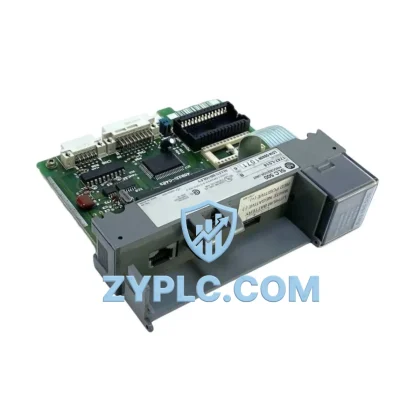
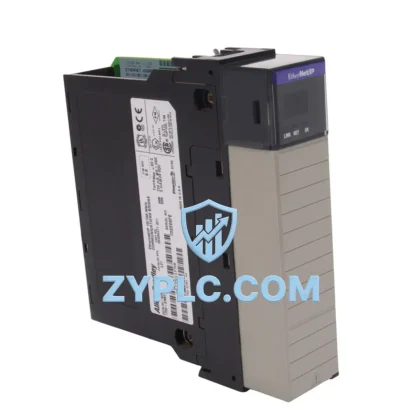
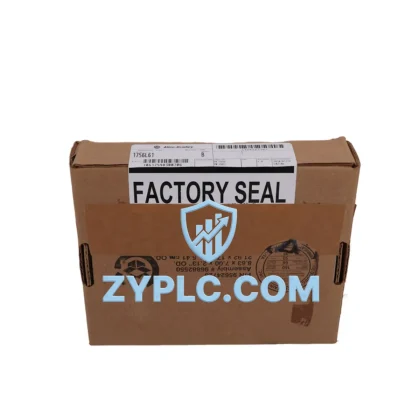
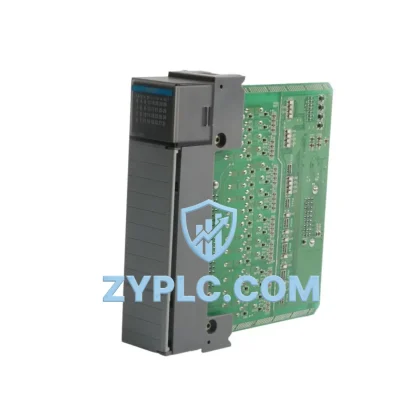
Allen-Bradley 1794-ASB System-Ready Remote I/O Adapter for FLEX I/O Architecture: Control System Coordination and Upstream-Downstream Synchronization
The Allen-Bradley 1794-ASB is a Remote I/O Adapter module designed specifically for integration within the FLEX I/O distributed I/O platform. In modern industrial automation environments, no module operates in isolation — every component must be evaluated in terms of its role within the broader control system architecture. The 1794-ASB serves as the communication bridge between a remote I/O rack and the host PLC backplane, enabling distributed signal acquisition and command delivery across geographically separated control zones. Its deployment is most effective when considered alongside the full hierarchy of control, I/O, network, power, HMI, and execution layers that define a complete automation system.
Within a layered automation architecture, the 1794-ASB occupies the I/O layer, interfacing directly with the control layer above and the field device execution layer below. It communicates upstream to Allen-Bradley PLC processors — such as the 1747-L553 SLC 5/05 or the 1756-L71 ControlLogix processor — via the Remote I/O (RIO) communication protocol, a deterministic, token-passing network that ensures reliable, cycle-consistent data exchange. This deterministic behavior is critical in process-intensive environments where signal latency or data loss can result in production downtime or safety incidents.
The 1794-ASB supports the full range of FLEX I/O modules mounted on the 1794-TB3 terminal base or equivalent wiring bases, allowing engineers to configure mixed analog and digital I/O nodes at remote locations without running individual signal cables back to the main control panel. This dramatically reduces installation costs, simplifies cable management, and improves system scalability. When paired with the 1794-IB16 digital input module, 1794-OB16 digital output module, or 1794-IE8 analog input module, the adapter enables comprehensive field signal management from a single remote node.
From a power architecture perspective, the 1794-ASB requires a stable 24 VDC supply, typically sourced from a dedicated DIN-rail power supply unit within the remote panel. Proper power distribution design — including the use of surge protection devices and redundant power feeds where applicable — ensures that the remote I/O node remains operational even under adverse electrical conditions. In high-availability applications, engineers may deploy dual power feeds to the remote rack to eliminate single points of failure at the power layer.
At the network layer, the Remote I/O protocol used by the 1794-ASB operates over a shielded twisted-pair cable with defined baud rate settings (57.6K, 115.2K, or 230.4K baud), selectable via DIP switches on the module. The baud rate must be matched to the host scanner configuration — typically the 1747-SN Remote I/O Scanner or the 1756-DHRIO ControlLogix communication module — to ensure proper rack addressing and data table mapping. Incorrect baud rate or rack address settings are among the most common commissioning errors and must be verified during initial system startup.
For HMI integration, operator interface terminals such as the PanelView Plus 7 or PanelView 800 can be configured to display real-time I/O status from the remote rack via the host PLC’s data table, providing operators with full visibility into field device states without requiring direct access to the remote panel. This supports both operational efficiency and remote diagnostics, reducing the need for on-site intervention during routine monitoring tasks.
In terms of system redundancy, the 1794-ASB can be incorporated into architectures that use redundant PLC processors — such as the 1756-L7xR ControlLogix redundancy system — where the primary and secondary processors share I/O data through the redundancy communication module. While the FLEX I/O platform itself does not natively support I/O redundancy at the module level, system-level redundancy can be achieved through careful network topology design and watchdog timer configuration at the PLC level.
Long-term maintenance of systems incorporating the 1794-ASB is simplified by the module’s LED diagnostic indicators, which provide immediate visual feedback on communication status, power health, and fault conditions. Maintenance engineers can quickly identify whether a fault originates at the adapter, the I/O module, or the network cable, reducing mean time to repair (MTTR) and minimizing unplanned downtime. Spare module inventory management is also straightforward, as the 1794-ASB is a standard catalog item with broad availability across authorized distributors and industrial supply channels.
All 1794-ASB units supplied by ZYPLC are covered by a 12-Month Warranty, ensuring that every module delivered meets original manufacturer specifications for electrical performance, communication reliability, and mechanical integrity. Each unit undergoes functional verification prior to shipment, and full traceability documentation is available upon request.
Architecture Specification Table
| Parameter |
Specification |
| Module SKU |
1794-ASB |
| Brand |
Allen-Bradley (Rockwell Automation) |
| Series |
FLEX I/O |
| System Role |
Remote I/O Adapter — I/O Layer |
| Communication Protocol |
Remote I/O (RIO), Token-Passing |
| Supported Baud Rates |
57.6K / 115.2K / 230.4K baud (DIP switch selectable) |
| Supply Voltage |
24 VDC (±10%) |
| Current Consumption |
Approx. 200 mA at 24 VDC (backplane) |
| Max I/O Modules per Rack |
Up to 8 FLEX I/O modules |
| Rack Address Configuration |
DIP switch (0–7) |
| Diagnostic Indicators |
LED: Power, Comm Active, Fault |
| Operating Temperature |
0°C to 55°C (32°F to 131°F) |
| Relative Humidity |
5% to 95% non-condensing |
| Mounting |
DIN rail or panel mount via FLEX I/O terminal base |
| Compatible Terminal Base |
1794-TB3, 1794-TB3S, 1794-TB3T |
| Enclosure Rating |
Open type — requires enclosure (IP20 equivalent) |
| Warranty |
12-Month Warranty (ZYPLC) |
| Contextual Integration |
Supported — compatible with SLC 500, ControlLogix, PLC-5 via RIO scanner |
Coordinated Control System Design
Effective deployment of the 1794-ASB requires a holistic view of the control system architecture. At the control layer, the module interfaces with host processors such as the 1747-L553 SLC 5/05 or 1756-L71 ControlLogix processor, which manage the data table mapping for all remote I/O racks. The RIO scanner function — provided by modules such as the 1747-SN Remote I/O Scanner or the 1756-DHRIO communication module — handles rack addressing and token rotation, ensuring that each remote node receives its allocated scan time within the network cycle.
At the I/O layer, the 1794-ASB serves as the host for FLEX I/O signal modules including the 1794-IB16 16-point 24 VDC digital input module, the 1794-OB16 16-point 24 VDC digital output module, and the 1794-IE8 8-channel analog input module. These modules mount directly onto FLEX I/O terminal bases — such as the 1794-TB3 — which provide the wiring interface to field devices including sensors, actuators, transmitters, and control valves.
For applications requiring analog output control — such as variable speed drive setpoint commands or control valve positioning — the 1794-OE4 analog output module can be added to the same remote rack, allowing the 1794-ASB to serve as the single communication gateway for both digital and analog signal types at the remote node. This consolidation reduces the number of network nodes required and simplifies the overall system topology.
At the power layer, the remote panel housing the 1794-ASB typically includes a dedicated 24 VDC power supply, circuit protection devices, and terminal blocks for field wiring. In safety-critical applications, a 1794-PS13 FLEX I/O power supply or equivalent unit may be used to provide isolated power to the I/O backplane, separating control power from field device power and reducing the risk of cross-contamination between circuits.
When the control system includes a PanelView Plus 7 HMI terminal, operators can monitor the status of all I/O points managed by the 1794-ASB in real time, with alarm annunciation and trend logging configured through RSView Studio or FactoryTalk View ME software. This integration closes the loop between field device status and operator awareness, supporting both reactive and predictive maintenance strategies.
Application in Layered Automation Systems
The 1794-ASB is deployed across a wide range of industrial sectors where distributed I/O architecture is required to manage geographically dispersed field devices from a centralized control system.
In manufacturing and assembly line automation, the 1794-ASB enables remote I/O nodes to be positioned at each production station, reducing cable runs and allowing modular expansion as production lines are reconfigured. In power generation and electrical substation control, the module’s deterministic RIO communication ensures that protection relay status and breaker control signals are transmitted with consistent timing, supporting grid stability and fault response requirements.
In petrochemical and refinery process control, the 1794-ASB is used in distributed control architectures where field junction boxes must interface with a central DCS or PLC system. Its compatibility with the SLC 500 and ControlLogix platforms makes it suitable for both legacy system maintenance and hybrid modernization projects. In water and wastewater treatment, remote pump stations and valve manifolds can be connected to the central SCADA system via the 1794-ASB, eliminating the need for dedicated RTUs at each remote site.
In mining and mineral processing, the module’s robust operating temperature range and DIN rail mounting make it suitable for installation in field control panels subject to vibration and temperature variation. In metallurgical and steel mill applications, the 1794-ASB supports the high I/O point counts required for furnace control, rolling mill automation, and material handling systems. In packaging and filling line automation, the module enables rapid I/O expansion as new stations are added to the production line, supporting both discrete and analog signal types within a single remote rack.
Architecture Engineering FAQ
Q1: Is the 1794-ASB compatible with both SLC 500 and ControlLogix PLC platforms?
Yes. The 1794-ASB communicates via the Remote I/O (RIO) protocol, which is supported by both the SLC 500 platform (via the 1747-SN scanner or onboard RIO port on processors such as the 1747-L553) and the ControlLogix platform (via the 1756-DHRIO communication module). When integrating with ControlLogix, the RIO network is configured as a scheduled network within RSLogix 5000, with rack address and baud rate settings matched between the 1794-ASB DIP switches and the scanner module configuration. Contextual Integration between platforms is achievable through proper scanner configuration and data table mapping.
Q2: How many FLEX I/O modules can be installed on a single 1794-ASB remote rack, and what are the expansion constraints?
The 1794-ASB supports up to 8 FLEX I/O I/O modules per remote rack, mounted on individual terminal bases connected in series. The total backplane current draw of all installed modules must not exceed the power supply capacity of the terminal base and associated power supply module. If additional I/O points are required beyond the capacity of a single rack, additional 1794-ASB adapters can be configured as separate rack addresses on the same RIO network, subject to the maximum rack count supported by the host scanner. This modular expansion approach allows the system to grow incrementally without requiring major architectural changes.
Q3: What does the 12-Month Warranty cover, and what support is available for commissioning and long-term maintenance?
All 1794-ASB units supplied by ZYPLC are covered by a 12-Month Warranty against defects in materials and workmanship, including communication failures, electrical parameter deviations, and mechanical damage attributable to manufacturing defects. Each unit is functionally tested prior to shipment. For commissioning support, ZYPLC’s technical team can provide guidance on DIP switch configuration, baud rate selection, rack addressing, and RSLogix integration. For long-term maintenance, ZYPLC maintains stock of 1794-ASB modules and compatible FLEX I/O components to support rapid replacement in the event of field failures, minimizing system downtime and supporting continuous production operations.
© 2026 ZYPLC. All rights reserved.
Original Source: https://zyplc.com
Contact: +86 19859288691 | plc.sales@zyplc.com