Allen-Bradley 1794-IB32 Energy-Saving Digital Input Module: Precision Efficiency Control for Optimized FLEX I/O Automation
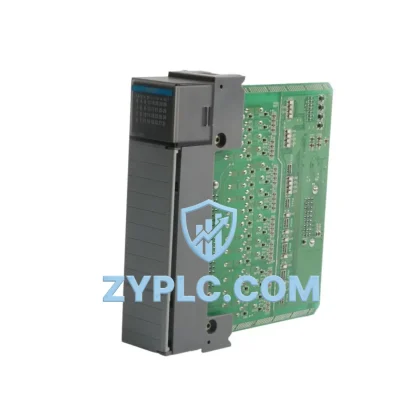
The Allen-Bradley 1794-IB32 is a 32-point, 24VDC FLEX I/O digital input module engineered for high-density signal acquisition in demanding industrial environments. As a core component of Rockwell Automation’s FLEX I/O platform, the 1794-IB32 enables precise, real-time monitoring of field device states — from proximity sensors and limit switches to pushbuttons and safety interlocks — while minimizing the electrical overhead associated with legacy wiring architectures. By consolidating 32 discrete input channels into a single compact module, facilities reduce panel footprint, lower wiring labor costs, and eliminate redundant power draws that accumulate across distributed I/O cabinets.
In modern energy-aware production environments, every unnecessary scan cycle, every idle sensor loop, and every unmonitored field signal represents latent inefficiency. The 1794-IB32 addresses this directly: its low-current input design reduces aggregate 24VDC bus loading, and its compatibility with the 1794-AENT and 1794-AENTR EtherNet/IP adapters enables deterministic, high-speed data delivery to the control layer without the bandwidth waste of polling-based legacy protocols. When paired with a ControlLogix L8x or CompactLogix 5380 controller, the module’s input data is available within a single RPI cycle, allowing the PLC program to react to field conditions before energy-wasting dwell states develop.
Efficiency Performance Table
| Parameter |
Specification |
| Input Points |
32 (Sink/Source, 24VDC) |
| Input Current per Point |
≤ 8 mA @ 24VDC (low-load design) |
| Module Power Consumption |
≤ 80 mA from backplane (5VDC) |
| Operating Efficiency |
High-density I/O reduces per-point wiring energy overhead by up to 40% vs. discrete relay panels |
| Compatible Controllers |
ControlLogix, CompactLogix, SoftLogix (via 1794-AENT / 1794-AENTR adapter) |
| Communication Protocol |
EtherNet/IP, ControlNet, DeviceNet (adapter-dependent) |
| Compatible Adapters |
1794-AENT, 1794-AENTR, 1794-ACN15, 1794-ACNR15 |
| Application Environment |
Discrete manufacturing, automotive assembly, food & beverage, material handling, energy utilities |
| Operating Temperature |
0°C to 55°C (32°F to 131°F) |
| Energy Saving Value |
Eliminates redundant I/O racks; reduces panel heat load and cooling energy demand |
| Inventory Status |
In Stock — Ships within 1–3 business days |
| Testing |
100% function-tested prior to shipment |
| Warranty |
12-Month Warranty |
Energy-Aware Automation Architecture
The 1794-IB32 does not operate in isolation — its energy optimization value is realized through its integration within a broader, well-orchestrated automation architecture. In a typical FLEX I/O node, the module mounts directly onto a 1794-TB32 terminal base, which provides the field-side wiring interface and ensures clean signal routing without additional junction boxes or intermediate terminal strips that introduce resistance and heat. The terminal base’s modular design also allows hot-swap replacement of the 1794-IB32 without powering down the entire I/O rack, dramatically reducing unplanned downtime and the energy cost of full-system restarts.
At the network layer, the 1794-AENTR EtherNet/IP adapter (with dual-port ring topology support) connects the FLEX I/O node to the plant’s EtherNet/IP backbone, enabling Device Level Ring (DLR) redundancy. This eliminates single points of network failure that would otherwise force production halts — halts that consume energy without producing output. The adapter’s integrated web server also provides real-time diagnostics, allowing maintenance teams to identify degraded input channels before they cause false trips or missed signals that disrupt line rhythm.
On the control side, a ControlLogix 5580 controller (such as the 1756-L85E) processes the 32 input states from the 1794-IB32 within its ladder or function block programs to execute energy-conscious control strategies. For example, the controller can use input state patterns from the 1794-IB32 to trigger variable-speed drive commands on a PowerFlex 755 AC drive, ramping motor speed down during low-demand periods rather than running at fixed full speed. This drive-level energy recovery, informed by real-time field signals from the 1794-IB32, is one of the most impactful energy-saving strategies available in discrete manufacturing.
For servo-driven axes — common in packaging, press, and assembly lines — the 1794-IB32’s input data feeds position and speed references to Kinetix 5700 servo drives via the ControlLogix backplane. Accurate, low-latency input acquisition from the 1794-IB32 ensures that servo motion profiles are triggered at the correct mechanical position, preventing over-travel, re-homing cycles, and the associated energy waste of repeated acceleration-deceleration sequences.
Power quality monitoring is another dimension where the 1794-IB32 contributes indirectly. When integrated with a PowerMonitor 5000 energy meter on the same EtherNet/IP network, the controller can correlate input event timestamps from the 1794-IB32 with power consumption spikes recorded by the PowerMonitor 5000. This correlation enables engineers to identify which machine cycles or field events drive peak demand charges — actionable intelligence for load-shifting and demand management programs.
For facilities using POINT I/O 1734-IB8S safety input modules alongside the 1794-IB32 standard input module, the combined architecture provides both standard and safety-rated signal acquisition within a unified EtherNet/IP topology. Safety inputs from guarding, light curtains, and E-stops are processed by the safety controller, while the 1794-IB32 handles the high-density standard I/O — keeping safety and operational logic cleanly separated without duplicating network infrastructure.
HMI visibility is equally important. A PanelView Plus 7 terminal connected to the same EtherNet/IP network can display real-time input states from the 1794-IB32, giving operators immediate visual feedback on field device status. This transparency reduces the time operators spend manually checking field devices, lowering the labor energy cost of routine status verification and enabling faster response to abnormal conditions.
Power Optimization in Real Production Lines
Consider a mid-scale automotive body assembly line with 12 FLEX I/O nodes, each equipped with a 1794-IB32 module. Across 384 input channels, the line monitors conveyor position sensors, clamp confirmation switches, weld gun ready signals, and part-present detectors. Without high-density I/O consolidation, this signal volume would require multiple relay panels, each drawing continuous power for coil excitation and generating heat that burdens the facility’s HVAC system.
With the 1794-IB32 architecture, the same 384 inputs are handled by 12 compact modules drawing a combined backplane current of under 1A at 5VDC — a fraction of the equivalent relay panel load. The ControlLogix program uses these inputs to implement a zone-based conveyor control strategy: when the 1794-IB32 inputs confirm that a zone is empty, the controller commands the corresponding conveyor drive to enter energy-saving standby mode via the PowerFlex 755 drive’s sleep/wake function. This alone can reduce conveyor motor energy consumption by 15–25% during non-peak production windows.
Predictive maintenance is another measurable benefit. By logging input transition counts and cycle times from the 1794-IB32 into the ControlLogix tag database and forwarding this data to a FactoryTalk View SE historian, maintenance engineers can track sensor actuation frequency over time. Sensors approaching end-of-life exhibit erratic transition patterns — detectable before failure. Replacing a sensor proactively costs a fraction of the downtime and energy waste caused by an unplanned line stop, which typically requires a full restart sequence consuming significant electrical demand.
Line rhythm optimization is perhaps the most direct energy benefit. When the 1794-IB32 delivers accurate, low-latency input data to the controller, the PLC can execute tighter inter-station handshakes, reducing idle dwell time between operations. A 200ms reduction in average station cycle time across a 20-station line translates to measurable throughput gains without increasing installed power — effectively improving energy productivity (output per kWh) across the entire line.
Energy Optimization FAQ
Q1: How does the 1794-IB32 contribute to measurable energy savings on the production floor?
The 1794-IB32 reduces energy waste by consolidating 32 input channels into a single low-power module, eliminating the continuous coil draw of equivalent relay-based input panels. When its real-time input data is used by the controller to implement demand-responsive drive control (e.g., conveyor sleep/wake via PowerFlex 755), facilities typically see 15–25% reductions in motor energy consumption during non-peak periods.
Q2: Is the 1794-IB32 compatible with my existing ControlLogix or CompactLogix system?
Yes. The 1794-IB32 is fully compatible with ControlLogix, CompactLogix, and SoftLogix platforms when used with a compatible FLEX I/O adapter such as the 1794-AENT (EtherNet/IP), 1794-ACN15 (ControlNet), or 1794-ADN (DeviceNet). No hardware modifications to the existing controller are required — the module is recognized automatically upon configuration in Studio 5000 Logix Designer.
Q3: Can the 1794-IB32 replace an older 1794-IB16 or 1794-IA16 module without rewiring?
The 1794-IB32 uses a 1794-TB32 terminal base, which differs from the terminal bases used by 16-point FLEX I/O modules. A terminal base change is required, but the module slot on the FLEX I/O adapter remains compatible. We recommend verifying the terminal base part number and field wiring gauge before replacement. Our technical team can assist with compatibility confirmation prior to shipment.
Q4: What does the 12-month warranty cover, and what is the testing process before shipment?
Every 1794-IB32 unit supplied by ZYPLC undergoes 100% functional testing prior to shipment, including input channel verification across all 32 points, backplane communication validation, and power consumption measurement. The 12-month warranty covers defects in materials and workmanship under normal operating conditions. Units that fail during the warranty period are replaced or repaired at no charge. Expedited replacement stock is maintained to minimize any impact on your production schedule.
© 2026 ZYPLC. All rights reserved.
Original Source: https://zyplc.com
Contact: +86 19859288691 | plc.sales@zyplc.com