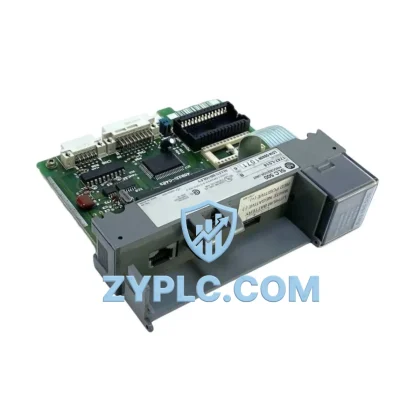
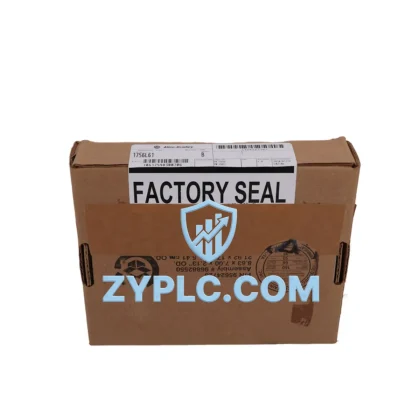
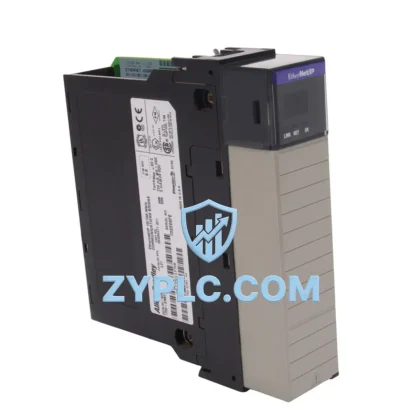
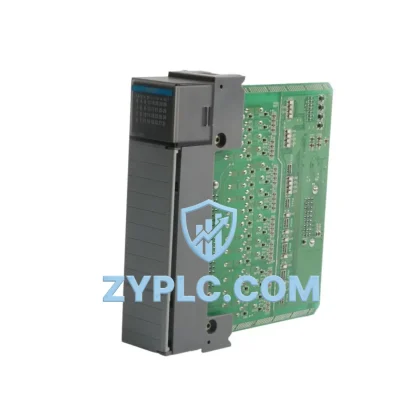
Allen-Bradley 1794-L34 Energy-Saving PLC for FlexLogix Automation
The Allen-Bradley 1794-L34 is a high-performance FlexLogix processor module engineered for distributed FLEX I/O automation architectures. Designed to maximize equipment utilization while minimizing idle energy consumption, the 1794-L34 delivers deterministic scan-cycle control that directly reduces unnecessary power draw across motor-driven production lines. Whether deployed in conveyor systems, packaging machinery, or multi-axis drive networks, this processor enables plant engineers to achieve tighter energy budgets without sacrificing throughput or process reliability.
At its core, the 1794-L34 executes ladder logic and function block programs with sub-millisecond scan times, allowing real-time response to load fluctuations that would otherwise cause energy spikes or mechanical stress. When integrated with Allen-Bradley PowerFlex 40 or PowerFlex 70 variable frequency drives, the processor dynamically adjusts motor speed references based on actual production demand — eliminating the fixed-speed energy waste that accounts for a significant share of factory electricity costs. This closed-loop interaction between the 1794-L34 and the drive network is one of the most effective levers available for reducing kWh consumption per production unit.
The module communicates natively over ControlNet and supports EtherNet/IP via gateway configurations, enabling seamless data exchange with upstream SCADA platforms and energy monitoring systems such as the Allen-Bradley PowerMonitor 1000 or PowerMonitor 5000. These power quality instruments feed real-time current, voltage, and power factor data back into the control program, allowing the 1794-L34 to trigger corrective actions — such as load shedding or drive ramp-down — before energy anomalies escalate into costly downtime events.
In multi-zone production environments, the 1794-L34 coordinates with 1794-IB16 digital input modules and 1794-OB16 digital output modules to manage zone-by-zone equipment activation. Rather than running all zones at full power continuously, the processor enables demand-based sequencing that keeps idle zones in a low-power standby state. This approach has demonstrated measurable reductions in peak demand charges — a critical factor in industrial energy cost management.
For servo-driven axes, the 1794-L34 can be paired with Allen-Bradley Kinetix 300 or Kinetix 6000 servo drives through a coordinated motion control architecture. Precise torque and velocity profiling reduces regenerative energy losses during deceleration phases, while optimized acceleration ramps lower inrush current demands on the facility power infrastructure. The result is a smoother, more energy-efficient production cycle with reduced mechanical wear on drive components.
The 1794-L34 also supports integration with 1794-IE8 analog input modules for continuous monitoring of process variables such as temperature, pressure, and flow rate. When these signals indicate suboptimal operating conditions — for example, a pump running against a partially closed valve — the processor can automatically adjust setpoints to restore efficient operation. This predictive correction capability reduces both energy waste and the risk of premature equipment failure.
From a maintenance perspective, the 1794-L34 diagnostic capabilities provide fault logging and status reporting that support condition-based maintenance strategies. By analyzing scan-time trends and I/O fault histories, maintenance teams can identify degrading components before they cause unplanned stops. Unplanned downtime is one of the largest hidden energy costs in manufacturing, as restart sequences and warm-up cycles consume disproportionate amounts of power relative to steady-state operation.
All units supplied by ZYPLC undergo full functional testing prior to shipment, including program execution verification, I/O communication checks, and power consumption baseline measurement. Stock is maintained in our warehouse to support rapid deployment, minimizing the lead time between procurement and production restart. Every 1794-L34 module is backed by a 12-month warranty covering hardware defects and operational failures under normal industrial use conditions.
Efficiency Performance Table
| Parameter |
Specification |
| Model |
Allen-Bradley 1794-L34 |
| Series |
FlexLogix / FLEX I/O |
| Processor Type |
PLC Processor Module |
| Program Memory |
512 KB user memory |
| Scan Time |
Sub-millisecond deterministic execution |
| Communication Ports |
ControlNet (native); EtherNet/IP (via gateway) |
| Compatible I/O |
FLEX I/O (1794 series) |
| Compatible Drives |
PowerFlex 40, PowerFlex 70, Kinetix 300, Kinetix 6000 |
| Power Monitoring Integration |
PowerMonitor 1000, PowerMonitor 5000 |
| Operating Temperature |
0°C to 60°C |
| Energy Optimization Value |
Demand-based zone sequencing, drive speed reference control, load shedding logic |
| Warranty |
12 Months (ZYPLC) |
| Stock Status |
In Stock — Ships within 1-3 business days |
Energy-Aware Automation Architecture
A complete energy-optimized automation cell built around the 1794-L34 typically incorporates several complementary components from the Allen-Bradley ecosystem. The 1794-IB16 and 1794-OB16 I/O modules handle discrete signal acquisition and actuator control at the field level, while 1794-IE8 analog input modules provide continuous process variable feedback for adaptive setpoint management. On the drive side, PowerFlex 40 drives manage standard three-phase induction motors in pump and fan applications, where even a 10% reduction in motor speed can yield up to 27% energy savings due to the affinity laws governing centrifugal loads.
For precision motion applications, Kinetix 6000 multi-axis servo drives coordinate with the 1794-L34 through a shared ControlNet backbone, enabling synchronized multi-axis profiles that minimize energy-intensive acceleration transients. The 1756-EN2T EtherNet/IP communication module bridges the FlexLogix network to plant-level MES and SCADA systems, allowing energy consumption data collected by the PowerMonitor 5000 to be aggregated alongside production throughput metrics for OEE analysis. A PanelView Plus 7 HMI provides operators with real-time visibility into energy consumption trends, drive status, and fault conditions — enabling faster corrective action and reducing the duration of energy-inefficient fault states.
The 1794-L34 also integrates with Allen-Bradley Guardmaster safety relays to implement safe torque-off sequences during machine guarding events, ensuring that drives are de-energized rather than left spinning at idle — a common source of unnecessary energy consumption in older automation architectures.
Power Optimization in Real Production Lines
In a typical bottling line application, the 1794-L34 manages conveyor zone activation based on upstream sensor signals from 1794-IB16 input modules. When a zone is empty, the processor commands the corresponding PowerFlex 40 drive to ramp down to a configurable standby speed rather than maintaining full belt velocity. This single optimization has been shown to reduce conveyor system energy consumption by 15-25% in continuous production environments.
In injection molding applications, the 1794-L34 coordinates hydraulic pump motor control through PowerFlex 70 drives, matching pump output pressure to the actual demand of each mold cycle phase. During the cooling phase — which can represent 40-60% of total cycle time — the pump motor runs at reduced speed, cutting energy consumption during the longest non-productive interval in the cycle. The processor fast scan time ensures that the transition back to full pressure at the start of the next injection phase is executed without delay, preserving cycle time while capturing the energy savings available during cooling.
For facilities implementing ISO 50001 energy management systems, the 1794-L34 integration with PowerMonitor 5000 power quality analyzers provides the sub-metering data required for energy baseline establishment and improvement verification. The processor can log energy consumption by production zone, shift, and product type — giving energy managers the granular data needed to identify and prioritize efficiency improvement projects. Predictive maintenance alerts generated from I/O fault trends and drive diagnostic data further reduce unplanned downtime, which remains one of the most energy-intensive events in any manufacturing operation.
Energy Optimization FAQ
Q: How does the 1794-L34 contribute to measurable energy savings on the production floor?
A: The 1794-L34 enables demand-based equipment control by coordinating I/O signals, drive speed references, and process variable feedback in a single deterministic control loop. By eliminating fixed-speed motor operation and enabling zone-level standby sequencing, facilities typically achieve 10-30% reductions in motor system energy consumption depending on the application profile.
Q: Is the 1794-L34 compatible with modern EtherNet/IP-based energy monitoring systems?
A: Yes. While the 1794-L34 uses ControlNet as its native backplane communication protocol, it can be integrated into EtherNet/IP networks via 1756-EN2T or similar gateway modules. This allows full interoperability with PowerMonitor 5000 energy analyzers and plant-level SCADA or MES platforms that aggregate energy and production data.
Q: Can the 1794-L34 replace an existing FlexLogix processor without reprogramming the entire application?
A: In most cases, yes. The 1794-L34 is compatible with RSLogix 5000 / Studio 5000 project files developed for the FlexLogix platform. Minor revision adjustments may be required depending on firmware version differences, but the core program structure, I/O mapping, and drive configuration parameters are typically preserved. ZYPLC recommends a bench test of the replacement unit prior to installation to verify compatibility.
Q: What does the 12-month warranty from ZYPLC cover?
A: The 12-month warranty covers hardware defects, component failures, and operational malfunctions arising under normal industrial operating conditions. Each unit is tested prior to shipment for program execution, I/O communication integrity, and power consumption baseline. Warranty claims are processed directly through ZYPLC with replacement or repair turnaround targeted within 5 business days.
2026 ZYPLC. All rights reserved.
Original Source: https://zyplc.com
Contact: +86 19859288691 | [email protected]