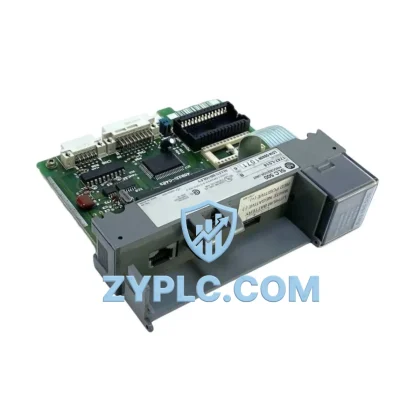
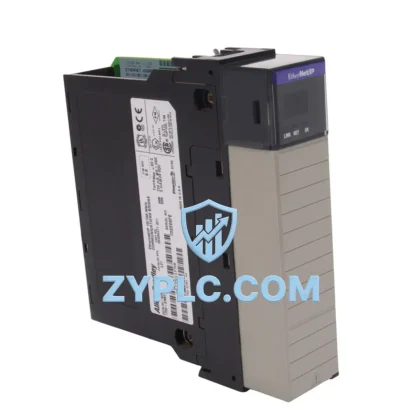
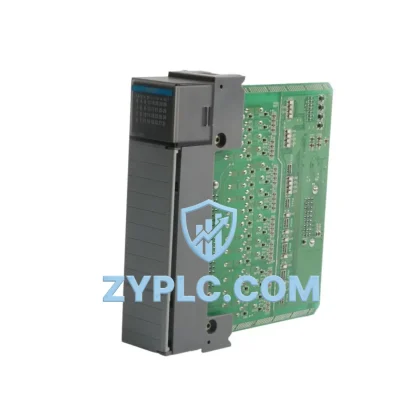
Allen-Bradley 1794-TB3 System-Ready Terminal Base for Flex I/O Architecture
The Allen-Bradley 1794-TB3 Terminal Base Unit is a foundational component within the Rockwell Automation Flex I/O platform, engineered to deliver reliable signal termination, modular I/O expansion, and seamless contextual integration across layered industrial control architectures. Rather than functioning as a standalone device, the 1794-TB3 is designed to operate as a structural node within a distributed control system — connecting field-level signals to the I/O layer, and ultimately to the control layer managed by processors such as the Allen-Bradley 1756-L85E ControlLogix CPU or the 1769-L33ER CompactLogix controller.
In modern industrial automation environments — spanning manufacturing, power distribution, petrochemical processing, water treatment, mining, metallurgy, and packaging lines — the integrity of the I/O termination layer is critical. The 1794-TB3 provides a 3-wire termination structure that supports a wide range of Flex I/O modules, including digital input modules such as the 1794-IB16, digital output modules such as the 1794-OB16, and analog signal modules such as the 1794-IE8. Each terminal base unit serves as the physical and electrical interface between the field wiring and the I/O module seated above it, ensuring signal fidelity from sensor to controller without interruption.
Within a complete control system architecture, the 1794-TB3 occupies the I/O layer — the tier responsible for acquiring process data and executing control outputs. Above this layer sits the control layer, where the CPU processes logic and issues commands. Below it lies the field device layer, where sensors, actuators, solenoids, and drives generate and receive signals. The 1794-TB3 bridges these two layers with a robust, DIN-rail-mountable form factor that supports side-by-side module expansion, enabling engineers to scale I/O capacity without redesigning the control cabinet.
System architects integrating the 1794-TB3 into a Flex I/O rack will typically pair it with the 1794-AENT or 1794-AENTR EtherNet/IP adapter to establish high-speed communication with the control layer over standard Ethernet infrastructure. For DeviceNet-based architectures, the 1794-ADN adapter provides equivalent connectivity. This communication flexibility allows the 1794-TB3-based I/O subsystem to participate in both standard and redundant network topologies, supporting ring, linear, and star configurations depending on the system’s availability requirements.
Power distribution within the Flex I/O system is managed through dedicated power supply modules such as the 1794-PS13 or external 24VDC rail-mounted power supplies, ensuring that each terminal base and its associated I/O module receives stable, conditioned power. The 1794-TB3’s design accommodates field-side and logic-side power separation, a critical feature in safety-sensitive applications where field wiring faults must not propagate to the control network.
From a system redundancy perspective, the 1794-TB3 supports deployment in architectures where I/O subsystems are duplicated across independent racks, each connected to a redundant controller pair such as the 1756-SB ControlLogix redundancy module. This configuration ensures that a single point of failure in the I/O layer does not interrupt process control — a requirement in continuous process industries such as oil refining, chemical production, and power generation.
Engineering teams commissioning systems with the 1794-TB3 benefit from its tool-free module insertion and removal, which reduces installation time and minimizes the risk of wiring errors during initial setup or field replacement. The terminal base’s clearly labeled wiring points and color-coded terminal blocks further accelerate commissioning and simplify troubleshooting during maintenance cycles. Long-term, the 1794-TB3’s compatibility with the broader 1794 Flex I/O ecosystem ensures that spare parts, replacement modules, and system expansions remain available and interchangeable across the installed base.
ZYPLC maintains verified stock of the 1794-TB3 and related Flex I/O components, with all units tested prior to shipment and covered by a 12-Month Warranty. Our technical team supports system architects and procurement engineers with compatibility verification, cross-reference assistance, and application-specific configuration guidance.
Architecture Specification Table
| System Role |
Flex I/O Terminal Base Unit — I/O Layer Node |
| SKU / Part Number |
1794-TB3 |
| Brand / Manufacturer |
Allen-Bradley / Rockwell Automation |
| Series |
1794 Flex I/O |
| Termination Type |
3-Wire Field Termination |
| Compatible I/O Modules |
1794-IB16, 1794-OB16, 1794-IE8, 1794-OE4, and other 1794 series modules |
| Communication Compatibility |
EtherNet/IP (via 1794-AENT/AENTR), DeviceNet (via 1794-ADN), ControlNet (via 1794-ACN) |
| Operating Voltage |
24VDC (logic and field side) |
| Mounting |
DIN Rail (35mm) |
| Operating Temperature |
0°C to 55°C |
| Installation Environment |
Industrial control panels, distributed I/O enclosures, process control cabinets |
| Contextual Integration |
Full compatibility with ControlLogix, CompactLogix, and SoftLogix platforms |
| Warranty |
12-Month Warranty (ZYPLC verified stock) |
Coordinated Control System Design
The 1794-TB3 achieves its full value when integrated within a coordinated control system rather than deployed in isolation. A typical Flex I/O architecture built around the 1794-TB3 includes the following coordinated components:
At the control layer, the Allen-Bradley 1756-L85E ControlLogix CPU or 1769-L33ER CompactLogix controller executes the control program and communicates with the I/O subsystem over EtherNet/IP. The 1794-AENTR EtherNet/IP adapter connects the Flex I/O rack to the control network, supporting Device Level Ring (DLR) topology for network-level redundancy. For legacy installations, the 1794-ADN DeviceNet adapter provides equivalent connectivity over DeviceNet.
Within the I/O rack, the 1794-TB3 terminal bases are populated with application-specific modules: the 1794-IB16 16-point digital input module for discrete sensor signals, the 1794-OB16 16-point digital output module for actuator control, and the 1794-IE8 8-channel analog input module for process variable acquisition. Power to the rack is supplied by the 1794-PS13 power supply module, which provides isolated 24VDC to both the logic and field sides of the terminal bases.
At the human-machine interface layer, the Allen-Bradley PanelView Plus 7 HMI communicates with the ControlLogix CPU over EtherNet/IP, providing operators with real-time process visualization and alarm management. The 1756-EN2TR EtherNet/IP communication module within the ControlLogix chassis supports dual-port ring topology, ensuring that network faults do not interrupt HMI-to-controller communication.
This coordinated architecture — spanning CPU, adapter, terminal base, I/O modules, power supply, and HMI — delivers a system with high signal integrity, deterministic communication, and the modular expandability required for long-term operational flexibility.
Application in Layered Automation Systems
The 1794-TB3 is deployed across a wide range of industrial sectors where distributed I/O architecture is essential to system performance and maintainability.
In discrete manufacturing environments such as automotive assembly and electronics production, the 1794-TB3 provides the I/O termination backbone for conveyor control, robotic cell integration, and quality inspection systems. Its modular design allows production engineers to add or reconfigure I/O points without rewiring the entire control cabinet, reducing changeover time and minimizing production downtime.
In power distribution and electrical substation applications, the 1794-TB3 supports the acquisition of protection relay status signals, circuit breaker position feedback, and transformer monitoring data. Its ability to separate field-side and logic-side power is particularly valuable in high-voltage environments where electrical isolation is a safety requirement.
In petrochemical and refinery process control systems, the 1794-TB3 is integrated into distributed control architectures where I/O subsystems are located close to field devices — often in hazardous area enclosures — while the control layer remains in a centralized control room. The EtherNet/IP connectivity of the Flex I/O platform ensures that signal latency between field and controller remains within the deterministic bounds required for closed-loop process control.
In water and wastewater treatment facilities, the 1794-TB3 supports pump control, valve positioning, flow measurement, and level monitoring across geographically distributed pump stations. Its DIN-rail mounting and compact form factor make it well-suited for installation in space-constrained field enclosures.
In mining and metallurgical operations, the 1794-TB3 is used in conveyor drive control, crusher monitoring, and ore processing systems where environmental conditions — including dust, vibration, and temperature extremes — demand robust, industrial-grade I/O hardware.
Architecture Engineering FAQ
Q1: Is the 1794-TB3 compatible with all 1794 Flex I/O modules, and can it be mixed with other terminal base variants in the same rack?
The 1794-TB3 is compatible with the full range of 1794 series I/O modules, including digital, analog, and specialty modules. Within a single Flex I/O rack, different terminal base variants — such as the 1794-TB3, 1794-TB3S, and 1794-TB3G — can be mixed to accommodate different field wiring configurations. However, the adapter module at the head of the rack must be selected to match the communication protocol of the control network (EtherNet/IP, DeviceNet, or ControlNet), and all terminal bases in the rack must be compatible with the selected adapter’s power distribution architecture.
Q2: How does the 1794-TB3 support system redundancy, and what additional components are required for a redundant I/O architecture?
The 1794-TB3 itself is a passive termination component and does not contain active redundancy logic. System-level redundancy is achieved by deploying duplicate Flex I/O racks — each with its own adapter, terminal bases, and I/O modules — connected to a redundant controller pair such as the 1756-L8SP ControlLogix redundancy controller with the 1756-SB redundancy module. The redundancy module manages controller switchover in the event of a primary controller fault, ensuring that the I/O subsystem continues to operate without interruption. For network-level redundancy, the 1794-AENTR adapter supports DLR topology, providing automatic network recovery in the event of a single cable fault.
Q3: What does the 12-Month Warranty cover, and how does ZYPLC support long-term maintenance and spare parts availability for the 1794-TB3?
ZYPLC’s 12-Month Warranty covers the 1794-TB3 against manufacturing defects and functional failures under normal operating conditions. All units are tested and verified prior to shipment. For long-term maintenance, ZYPLC maintains ongoing stock of the 1794-TB3 and related Flex I/O components, enabling rapid replacement of failed units without extended lead times. Our technical team provides cross-reference support, compatibility verification, and application guidance to help maintenance engineers identify the correct replacement components and minimize system downtime. Contact us at plc.sales@zyplc.com or +86 19859288691 for availability and technical assistance.
© 2026 ZYPLC. All rights reserved.
Original Source: https://zyplc.com
Contact: +86 19859288691 | plc.sales@zyplc.com