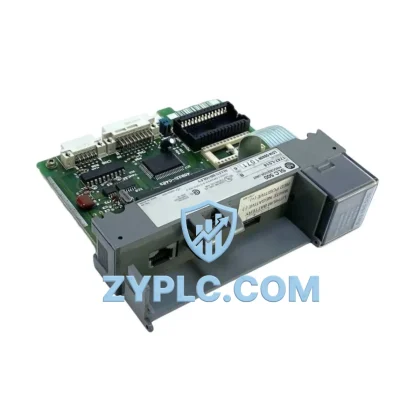
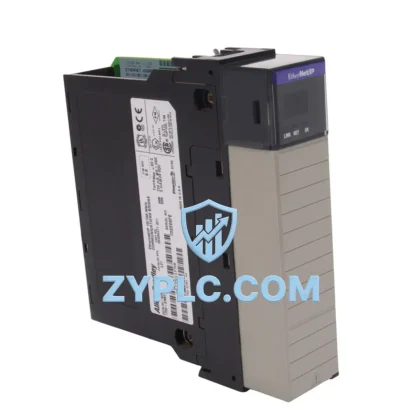
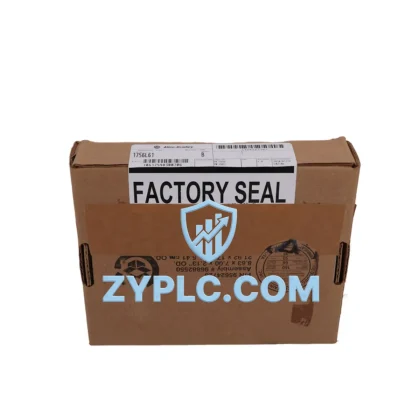
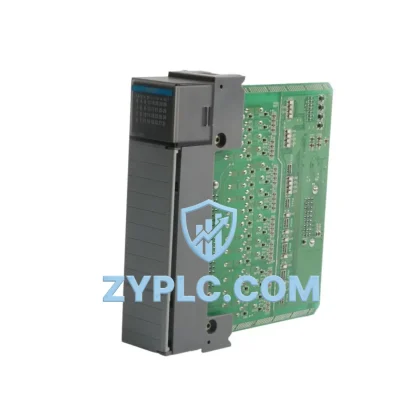
Allen-Bradley 1794-TB3K Energy-Saving Terminal Base for FLEX I/O Automation
The Allen-Bradley 1794-TB3K is a high-efficiency terminal base module engineered for the FLEX I/O platform, delivering precision I/O signal routing that directly supports energy-optimized production environments. In modern manufacturing, every watt of unnecessary consumption and every millisecond of unplanned downtime represents a measurable cost. The 1794-TB3K addresses this by providing a stable, low-resistance wiring interface that minimizes signal loss, reduces heat generation at the I/O layer, and ensures consistent data integrity between field devices and the control system — all of which are foundational to an energy-aware automation architecture.
Designed to accept FLEX I/O adapter and I/O modules, the 1794-TB3K integrates seamlessly into ControlLogix and CompactLogix control platforms. When paired with a 1794-AENT Ethernet/IP adapter, the terminal base becomes part of a real-time data backbone that feeds energy consumption data, motor status, and process variables directly to the controller — enabling closed-loop energy management at the field level. This is not passive wiring infrastructure; it is an active participant in the efficiency chain.
Efficiency Performance Table
| Parameter |
Specification / Value |
| SKU / Part Number |
1794-TB3K |
| Brand |
Allen-Bradley (Rockwell Automation) |
| Series |
FLEX I/O |
| Module Type |
Terminal Base Module |
| Wiring Capacity |
Up to 3-wire field device connections per terminal |
| Operating Voltage |
Compatible with 24V DC FLEX I/O power bus |
| Signal Integrity |
Low-resistance terminal design minimizes voltage drop |
| Compatible Systems |
ControlLogix, CompactLogix, FLEX I/O adapters (1794-AENT, 1794-ACN15) |
| Application Environment |
Industrial panel, DIN rail, process control, motor drive systems |
| Energy Optimization Value |
Reduces wiring errors, signal noise, and I/O-layer heat dissipation |
| Origin |
USA |
| Warranty |
12-Month Warranty |
| Stock Status |
In Stock — Ships After Outgoing Test |
Energy-Aware Automation Architecture
The 1794-TB3K does not operate in isolation — its value is realized within a coordinated automation architecture where every component contributes to system-wide efficiency. In a typical energy-optimized production cell, the terminal base serves as the physical interface layer between field sensors, actuators, and the I/O modules that report to the controller.
Consider a motor control application where a PowerFlex 525 variable frequency drive is managing a conveyor motor. The drive receives speed reference signals from a CompactLogix L33ER controller via EtherNet/IP. The 1794-TB3K, mounted on a DIN rail adjacent to the drive panel, hosts a 1794-IB16 digital input module that reads proximity sensor states — detecting part presence, conveyor jam conditions, and cycle completion signals. This real-time feedback allows the controller to modulate the PowerFlex 525 output frequency dynamically, reducing motor speed during low-demand intervals and cutting energy consumption by 20–40% compared to fixed-speed operation.
In parallel, a 1794-OB16 digital output module seated on an adjacent 1794-TB3K terminal base controls solenoid valves and pilot lights, while a 1794-IE8 analog input module monitors 4–20 mA signals from pressure transmitters and flow meters. These analog readings feed into energy monitoring logic within the ControlLogix program, where Studio 5000 Logix Designer ladder routines calculate real-time power consumption per production zone. When consumption exceeds a defined threshold, the controller triggers load-shedding routines — temporarily reducing non-critical actuator cycles and adjusting the PowerFlex 755 drives on secondary motors to economy mode.
For facilities running Profibus or DeviceNet legacy infrastructure alongside modern EtherNet/IP networks, the 1794-TB3K supports adapter modules such as the 1794-ACN15 ControlNet adapter, enabling the FLEX I/O node to participate in deterministic, time-synchronized control loops. This is particularly valuable in press lines and injection molding machines where cycle time consistency directly impacts energy efficiency — a 50ms deviation in cycle timing can translate to measurable increases in hydraulic pump energy consumption over a production shift.
At the HMI layer, a PanelView Plus 7 terminal displays real-time energy dashboards sourced from the same data tags that the 1794-TB3K I/O modules populate. Operators can monitor kilowatt-hour consumption per shift, identify anomalous current draws that may indicate bearing wear or mechanical resistance, and initiate energy-saving operating modes without interrupting production. This closed-loop visibility — from field terminal base to HMI display — is the foundation of predictive maintenance and energy optimization in modern industrial facilities.
Power Optimization in Real Production Lines
In food and beverage processing plants, the 1794-TB3K is commonly deployed in washdown-rated panels where FLEX I/O modules monitor fill-level sensors, conveyor speed encoders, and temperature transmitters across multiple production lines. By consolidating I/O at the terminal base level and communicating via EtherNet/IP to a ControlLogix controller, the plant reduces the number of discrete wiring runs — each eliminated cable run reduces panel heat load, lowers the demand on panel air conditioning systems, and decreases the probability of wiring-induced signal faults that trigger unplanned stops.
In automotive body welding lines, the 1794-TB3K hosts analog output modules that provide reference signals to servo amplifiers controlling weld gun positioning. Precise positioning reduces weld cycle time variance, which in turn reduces the idle current draw of the welding transformer between cycles. Over a three-shift operation, this optimization can reduce transformer energy consumption by several percentage points — a meaningful saving at industrial scale.
For water treatment and pumping stations, the terminal base supports 1794-IE8 analog input modules reading 4–20 mA signals from flow meters and pressure sensors. These signals feed PID control loops in the CompactLogix controller that regulate pump speed via PowerFlex 4M or PowerFlex 40 drives. Maintaining pump operation at the optimal point on the pump curve — rather than throttling with control valves — can reduce pump energy consumption by 30–50% while extending impeller and seal life, directly reducing maintenance costs and unplanned downtime.
Every unit shipped from ZYPLC undergoes outgoing functional testing to verify terminal continuity, module seating integrity, and bus communication before dispatch. Combined with a 12-month warranty, this ensures that the 1794-TB3K arrives ready to integrate into your production environment without commissioning delays.
Energy Optimization FAQ
Q1: How does the 1794-TB3K contribute to measurable energy savings on the production line?
The 1794-TB3K itself is a passive wiring interface, but its role in enabling accurate, low-latency I/O data collection is what makes energy optimization possible. By providing reliable signal paths for sensors monitoring motor current, conveyor speed, and process variables, it allows the controller to execute energy-saving logic — such as variable speed drive modulation, load shedding, and idle-state power reduction — with confidence in the data quality. Inaccurate or intermittent I/O signals caused by poor terminal connections are a common source of inefficient control behavior.
Q2: Is the 1794-TB3K compatible with both legacy and modern Rockwell Automation control platforms?
Yes. The 1794-TB3K is compatible with the full range of FLEX I/O adapter modules, including the 1794-AENT (EtherNet/IP), 1794-ACN15 (ControlNet), and 1794-ADN (DeviceNet) adapters. This makes it suitable for integration into both legacy PLC-5 and SLC 500 migration projects and new ControlLogix or CompactLogix deployments. Its backward compatibility reduces the need for complete panel rewiring during system upgrades, lowering project cost and downtime.
Q3: What is the recommended replacement or upgrade path if the 1794-TB3K is end-of-life in my application?
For applications requiring higher I/O density or integrated safety functions, Rockwell Automation’s POINT I/O platform (1734 series) with corresponding terminal bases offers a migration path with smaller form factor and enhanced diagnostics. However, for existing FLEX I/O installations, the 1794-TB3K remains the correct and supported terminal base. ZYPLC maintains stock of both current and legacy FLEX I/O components to support ongoing maintenance and expansion needs.
Q4: What testing is performed before shipment, and what does the 12-month warranty cover?
Each 1794-TB3K unit undergoes outgoing inspection including terminal continuity verification, physical inspection for connector damage, and module bus interface testing. The 12-month warranty covers manufacturing defects and functional failures under normal operating conditions. Units that fail in service within the warranty period are replaced or refunded. ZYPLC’s technical team is available to assist with installation verification and troubleshooting to ensure warranty claims are resolved efficiently.
© 2026 ZYPLC. All rights reserved.
Original Source: https://zyplc.com
Contact: +86 19859288691 | plc.sales@zyplc.com