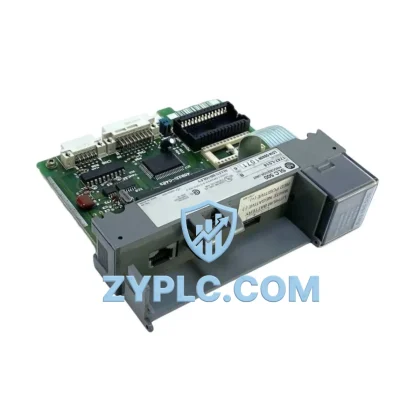
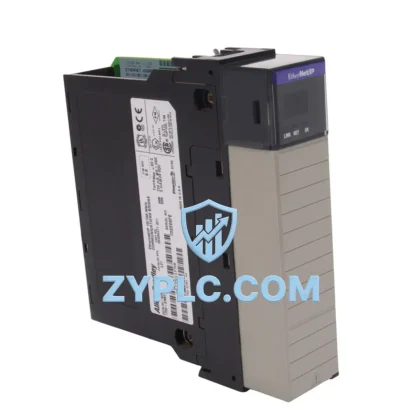
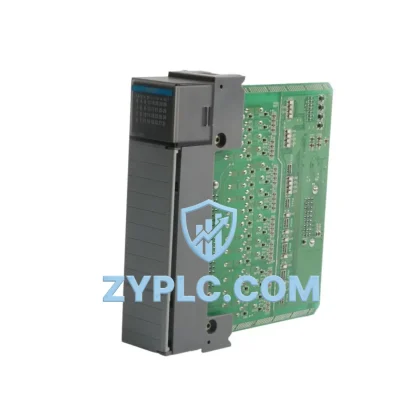
Allen-Bradley 1794-TBN Energy-Saving Terminal Base FLEX I/O: Precision I/O Control for Optimized Line Efficiency
The Allen-Bradley 1794-TBN is a high-efficiency terminal base unit designed for the FLEX I/O platform, engineered to deliver reliable, low-overhead I/O expansion in demanding industrial automation environments. As a foundational component in distributed control architectures, the 1794-TBN enables precise signal routing between field devices and control modules while minimizing wiring complexity, panel footprint, and associated energy overhead. For facilities focused on reducing idle power consumption, improving equipment utilization rates, and tightening production cycle times, the 1794-TBN represents a structurally sound investment in long-term operational efficiency.
In modern manufacturing lines, every node in the control network contributes to — or detracts from — overall energy performance. The 1794-TBN’s compact DIN-rail mounting design reduces installation labor and supports modular I/O expansion without requiring additional power supply infrastructure for low-density configurations. When integrated with Allen-Bradley FLEX I/O adapter modules such as the 1794-AENT (EtherNet/IP adapter) or the 1794-ADN (DeviceNet adapter), the terminal base forms a complete, communication-ready I/O node that feeds real-time field data directly into the control layer — enabling faster response cycles and reducing the latency that leads to energy-wasting overruns in automated sequences.
Efficiency Performance Table
| Parameter |
Specification / Value |
| SKU / Part Number |
1794-TBN |
| Brand / Series |
Allen-Bradley / FLEX I/O |
| Module Type |
Terminal Base Unit (Wiring Base) |
| Power Consumption |
Passive wiring base — no active power draw; minimizes system overhead |
| Operating Efficiency |
Supports full I/O module throughput with zero signal degradation |
| Compatible Systems |
Allen-Bradley FLEX I/O (1794 series), ControlLogix, CompactLogix, SLC 500 via adapter |
| Communication Protocols |
EtherNet/IP, DeviceNet, ControlNet, PROFIBUS (via adapter selection) |
| Application Environment |
Discrete/analog I/O expansion, distributed control panels, machine-level automation |
| Energy Optimization Value |
Reduces wiring errors, shortens commissioning time, lowers rework energy cost |
| Mounting |
DIN rail, compact form factor for high-density panel layouts |
| Origin |
United States |
| Warranty |
12-Month Warranty — tested before shipment, full functional verification |
Energy-Aware Automation Architecture
The 1794-TBN does not operate in isolation — its energy efficiency value is realized through its role within a broader, well-integrated automation architecture. In a typical FLEX I/O deployment, the terminal base accepts I/O modules such as the 1794-IB16 (16-point 24VDC digital input module) or the 1794-OB16 (16-point digital output module), which together handle discrete signal acquisition and actuation across the production line. These modules, seated directly onto the 1794-TBN, eliminate the need for intermediate terminal blocks and reduce the copper wiring mass — a measurable factor in panel heat generation and cooling load.
At the drive and motion layer, the 1794-TBN-based I/O nodes interface with Allen-Bradley PowerFlex 525 and PowerFlex 755 variable frequency drives through the control system, enabling closed-loop speed regulation on conveyor motors, pump drives, and fan systems. This integration allows the PLC — typically a CompactLogix L33ER or ControlLogix L73 — to dynamically adjust motor output based on real-time demand signals captured through the FLEX I/O network, directly reducing energy consumption during partial-load operating conditions.
For power quality monitoring and energy metering, the FLEX I/O network can be extended with analog input modules such as the 1794-IE8 to capture current transformer (CT) signals from motor feeders, enabling the controller to calculate real-time kW consumption per machine zone. This data feeds into energy dashboards via the 1794-AENT EtherNet/IP adapter, making the 1794-TBN a critical node in plant-wide energy monitoring architectures. When paired with Rockwell Automation’s FactoryTalk Energy Metrics software, the granular I/O data collected through the FLEX I/O platform supports ISO 50001-aligned energy performance tracking at the machine level.
HMI visibility is equally important in energy-aware systems. Operators using a PanelView Plus 7 terminal connected to the ControlLogix backplane can monitor I/O status, drive states, and energy consumption trends in real time, enabling faster intervention when equipment begins operating outside its efficient range. The 1794-TBN’s role in delivering clean, reliable I/O data ensures that HMI displays reflect accurate field conditions — a prerequisite for effective energy management decisions on the plant floor.
Power Optimization in Real Production Lines
In real production environments, energy waste rarely comes from a single source. It accumulates through inefficient motor control, excessive idle time, undetected sensor faults, and slow fault recovery. The 1794-TBN addresses several of these vectors by providing a stable, low-latency I/O interface that keeps the control system accurately informed of field conditions at all times.
Consider a bottling line where conveyor speed must be synchronized with filling station throughput. With FLEX I/O nodes built on 1794-TBN bases distributed along the line, the CompactLogix controller receives continuous position and speed feedback from proximity sensors and encoder interfaces. This allows the PLC to implement demand-based conveyor speed control through the PowerFlex 525 drives — running motors at 60–70% speed during low-throughput periods rather than at fixed full speed. In documented applications, this type of variable-speed integration reduces conveyor motor energy consumption by 20–35% compared to fixed-speed operation.
The 1794-TBN also contributes to reduced downtime energy costs. Unplanned stops are among the most energy-intensive events in manufacturing — machines continue drawing standby power while production halts, and restart sequences consume surge current. By providing reliable I/O connectivity that supports predictive maintenance data collection (vibration analog signals, temperature inputs via 1794-IE8 analog modules), the FLEX I/O platform enables condition-based maintenance scheduling. Maintenance teams can address developing faults during planned windows rather than reacting to failures, keeping equipment utilization rates high and eliminating the energy penalty of unplanned restarts.
Wiring integrity is another underappreciated energy factor. Loose or corroded terminal connections introduce resistance, generate heat, and cause intermittent faults that trigger unnecessary machine stops. The 1794-TBN’s captive screw terminal design and module-locking mechanism ensure consistent, vibration-resistant connections that maintain signal integrity over the full service life of the installation — reducing the frequency of fault-induced production interruptions and the associated energy waste.
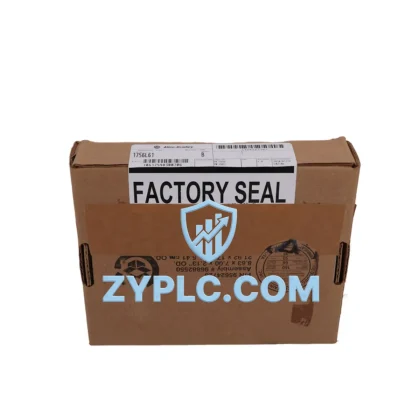
Every unit shipped from ZYPLC undergoes full functional testing prior to dispatch. Stock availability is maintained to support rapid deployment, and all 1794-TBN units are covered by a 12-month warranty, ensuring that your automation investment is protected from day one of commissioning.
Energy Optimization FAQ
Q1: How does the 1794-TBN contribute to energy savings in a FLEX I/O system?
The 1794-TBN itself is a passive wiring base with no active power consumption. Its energy contribution comes from enabling accurate, low-latency I/O data collection that allows the control system to implement demand-based motor control, reduce idle energy draw, and support predictive maintenance — all of which reduce total facility energy consumption over time.
Q2: Is the 1794-TBN compatible with both ControlLogix and CompactLogix platforms?
Yes. The 1794-TBN is compatible with any control platform that supports FLEX I/O adapters, including ControlLogix, CompactLogix, and SLC 500 systems. Compatibility is determined by the adapter module selected (e.g., 1794-AENT for EtherNet/IP, 1794-ADN for DeviceNet), not by the terminal base itself.
Q3: What is the recommended replacement or upgrade path for aging FLEX I/O terminal bases?
For direct replacement, the 1794-TBN is a drop-in substitute for existing FLEX I/O wiring bases of the same form factor. If upgrading from an older DeviceNet-based system to EtherNet/IP, the terminal base remains unchanged — only the adapter module (e.g., replacing 1794-ADN with 1794-AENT) needs to be updated, preserving the existing field wiring investment.
Q4: What testing and warranty coverage does ZYPLC provide for the 1794-TBN?
All 1794-TBN units supplied by ZYPLC are tested for mechanical integrity and electrical continuity before shipment. Each unit is covered by a 12-month warranty from the date of purchase. In the event of a verified product defect within the warranty period, ZYPLC will arrange replacement or repair. Contact our team at [email protected] or +86 19859288691 for warranty claims and technical support.
© 2026 ZYPLC. All rights reserved.
Original Source: https://zyplc.com
Contact: +86 19859288691 | [email protected]