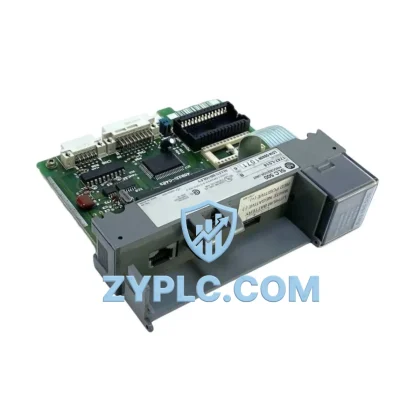
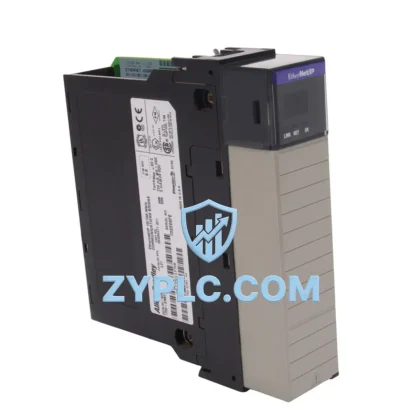
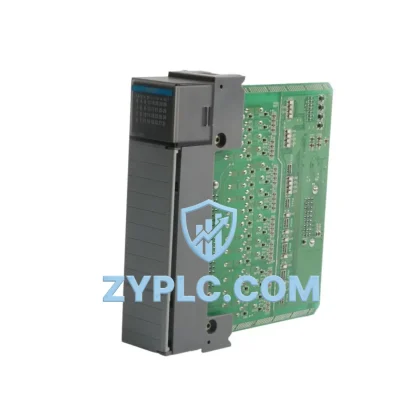
Allen-Bradley 1794-TBNF System-Ready Fused Terminal Base for FLEX I/O Architecture: Control System Architecture and Upstream-Downstream Coordination
The Allen-Bradley 1794-TBNF is a fused terminal base module engineered for deployment within the FLEX I/O distributed I/O platform, a modular, rack-based architecture widely adopted across manufacturing, power distribution, petrochemical processing, water treatment, mining, metallurgy, and packaging automation environments. Rather than functioning as a standalone component, the 1794-TBNF occupies a precise and critical position within a layered control system hierarchy — serving as the physical and electrical interface between field wiring and the I/O adapter or module seated above it. Its fused design adds an additional layer of circuit protection at the terminal level, reducing the risk of cascading faults propagating upward into the control backplane or CPU subsystem.
In a complete FLEX I/O control architecture, the 1794-TBNF integrates directly with I/O modules such as the 1794-IB16 (16-point 24VDC digital input), 1794-OB16 (16-point 24VDC digital output), and 1794-IE8 (8-channel analog input), all of which mount onto the terminal base and rely on it for both signal routing and power distribution. The terminal base connects to the FLEX I/O adapter — typically the 1794-AENT (EtherNet/IP adapter) or 1794-ADN (DeviceNet adapter) — which bridges the I/O layer to the network communication layer and ultimately to the programmable logic controller. This architecture ensures that field signals are cleanly conditioned, fused, and transmitted with minimal latency to the control layer.
Architecture Specification Table
| Parameter |
Specification |
| Model / SKU |
1794-TBNF |
| Brand |
Allen-Bradley (Rockwell Automation) |
| Series |
FLEX I/O (1794 Series) |
| System Role |
Fused Terminal Base — I/O Layer Interface |
| Module Compatibility |
FLEX I/O I/O Modules (1794 Series) |
| Fuse Protection |
Individual field-side fusing per terminal group |
| Wiring Method |
Screw-type field wiring terminals |
| Communication Interface |
Via FLEX I/O Adapter (EtherNet/IP, DeviceNet, ControlNet, PROFIBUS) |
| Backplane Compatibility |
FLEX I/O Backplane (1794 Series) |
| Operating Temperature |
0°C to 55°C (32°F to 131°F) |
| Storage Temperature |
-40°C to 85°C (-40°F to 185°F) |
| Relative Humidity |
5% to 95% non-condensing |
| Mounting |
DIN rail or panel mount via FLEX I/O backplane |
| Installation Environment |
Industrial control panels, distributed I/O enclosures |
| Contextual Integration |
Full Contextual Integration with FLEX I/O platform |
| Warranty |
12-Month Warranty |
| Origin |
United States |
Coordinated Control System Design
The 1794-TBNF is most effectively understood within the context of a complete, coordinated control system rather than as an isolated component. In a typical FLEX I/O deployment, the control architecture begins at the CPU layer, where a ControlLogix processor such as the 1756-L73 or a CompactLogix controller such as the 1769-L33ER executes the application logic and manages all I/O data exchange. The CPU communicates downward through a network infrastructure — commonly EtherNet/IP via managed industrial switches — to the FLEX I/O adapter mounted at the head of the I/O bank.
The 1794-AENT EtherNet/IP adapter serves as the network gateway for the FLEX I/O bank, translating EtherNet/IP packets into the internal FLEX I/O backplane protocol and distributing I/O data to each module in the bank. The 1794-TBNF terminal base is mounted on this backplane, providing the physical seat for the I/O module above it and the field wiring connection points below. The fused terminal design of the 1794-TBNF means that each field circuit is individually protected, preventing a short circuit or overload on one field device from affecting adjacent circuits or the backplane power rail.
Power distribution within the FLEX I/O bank is managed through the 1794-PS13 or 1794-PS3 power supply modules, which supply regulated 24VDC to the backplane and, through the terminal base, to the field devices. The 1794-TBNF’s fuse holders allow maintenance technicians to replace individual fuses without disturbing the wiring or removing the I/O module, significantly reducing mean time to repair (MTTR) during field fault events.
At the human-machine interface layer, PanelView Plus terminals — such as the 2711P-T10C21D8S — connect to the same EtherNet/IP network, providing operators with real-time visibility into the I/O status, alarm conditions, and process variables managed by the FLEX I/O bank. This end-to-end integration, from the 1794-TBNF field terminal through the adapter, network, CPU, and HMI, exemplifies the Contextual Integration philosophy that underpins modern Rockwell Automation system architecture.
For redundant architectures, the FLEX I/O platform supports dual-adapter configurations using the 1794-AENTR redundant EtherNet/IP adapter, allowing the I/O bank — including all 1794-TBNF terminal bases — to remain online during a primary adapter failure. This redundancy capability is essential in continuous process industries such as petrochemical refining, power generation, and water treatment, where unplanned downtime carries significant operational and safety consequences.
Application in Layered Automation Systems
The 1794-TBNF finds application across a broad spectrum of industrial automation environments. In discrete manufacturing, it is commonly deployed in assembly line control panels where digital I/O modules interface with proximity sensors, solenoid valves, motor starters, and safety relays. The fused terminal design provides an additional layer of protection for these field devices, which are often subject to mechanical stress, vibration, and electrical noise.
In power distribution and electrical substation automation, the 1794-TBNF supports the connection of status inputs from circuit breakers, disconnect switches, and protection relays to the FLEX I/O system, enabling SCADA integration and remote monitoring. The module’s robust operating temperature range and DIN rail mounting make it well-suited for installation in outdoor or semi-outdoor switchgear enclosures.
In petrochemical and oil and gas processing facilities, the 1794-TBNF is used within distributed control architectures where FLEX I/O banks are installed in field junction boxes or marshalling cabinets, reducing the length of individual field cable runs and simplifying system commissioning. The fused terminal base allows process engineers to isolate individual field loops during maintenance without interrupting adjacent control circuits.
Water and wastewater treatment plants benefit from the 1794-TBNF’s compatibility with the full FLEX I/O module range, enabling the integration of analog sensors (flow, level, pressure, pH) alongside digital control outputs (pump starters, valve actuators, chemical dosing systems) within a single, cohesive I/O architecture. Mining and metallurgical operations similarly leverage the FLEX I/O platform’s distributed architecture to manage I/O across large physical footprints, with the 1794-TBNF providing reliable field termination at each remote I/O station.
Packaging and material handling automation systems use the 1794-TBNF in high-density I/O configurations, where multiple terminal bases are mounted on a single FLEX I/O backplane to support the large number of digital I/O points required by conveyor systems, robotic pick-and-place stations, and vision inspection systems. The module’s compact form factor and standardized wiring layout simplify panel design and reduce engineering time during system integration.
Architecture Engineering FAQ
Q1: Is the 1794-TBNF compatible with all FLEX I/O modules, and can it be mixed with non-fused terminal bases on the same backplane?
The 1794-TBNF is designed for use with the full range of 1794 Series FLEX I/O I/O modules, including digital input, digital output, analog input, analog output, and specialty modules. It can be mixed with non-fused terminal bases such as the 1794-TB3 or 1794-TB32 on the same FLEX I/O backplane, allowing engineers to apply fused termination selectively to circuits that require additional protection while using standard terminal bases elsewhere. The adapter and backplane do not distinguish between terminal base types; module assignment is determined by the I/O configuration in the Logix Designer application.
Q2: How does the 1794-TBNF support long-term maintenance and reduce system downtime in production environments?
The fused terminal design of the 1794-TBNF allows maintenance technicians to replace individual field circuit fuses without removing the I/O module or disconnecting field wiring, minimizing intervention time during fault events. The standardized screw-type terminal layout and clearly labeled fuse positions simplify troubleshooting and reduce the risk of wiring errors during maintenance. Combined with the FLEX I/O platform’s hot-swap capability — which allows I/O modules to be replaced without powering down the backplane — the 1794-TBNF contributes to a low-MTTR maintenance strategy that is essential for high-availability production environments. All units supplied by ZYPLC are covered by a 12-Month Warranty, ensuring replacement support for any manufacturing defects identified during the warranty period.
Q3: What communication protocols are supported when the 1794-TBNF is used within a FLEX I/O architecture, and how does this affect system integration?
The 1794-TBNF itself is a passive terminal base and does not contain communication electronics; protocol support is determined by the FLEX I/O adapter selected for the bank. The 1794 Series supports adapters for EtherNet/IP (1794-AENT, 1794-AENTR), DeviceNet (1794-ADN), ControlNet (1794-ACN15), and PROFIBUS DP (1794-APB), providing broad compatibility with existing plant network infrastructures. This flexibility allows the same 1794-TBNF terminal base to be used across multiple communication architectures, protecting the field wiring investment when network upgrades are performed. Integration with Rockwell Automation’s Studio 5000 Logix Designer and FactoryTalk View platforms ensures seamless Contextual Integration across the control, network, and HMI layers.
© 2026 ZYPLC. All rights reserved.
Original Source: https://zyplc.com
Contact: +86 19859288691 | [email protected]