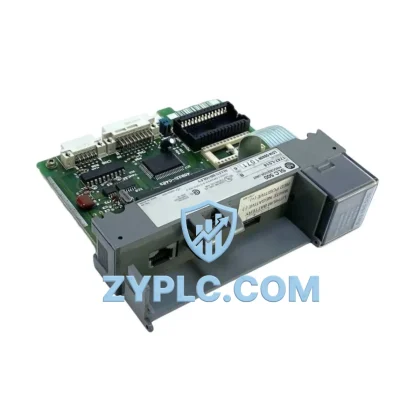
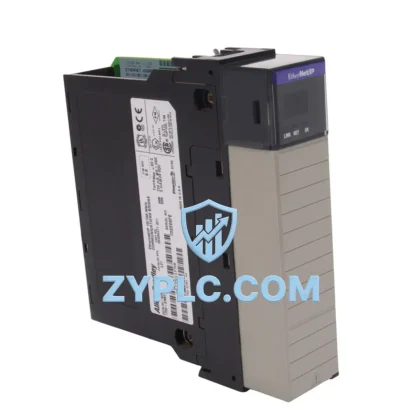
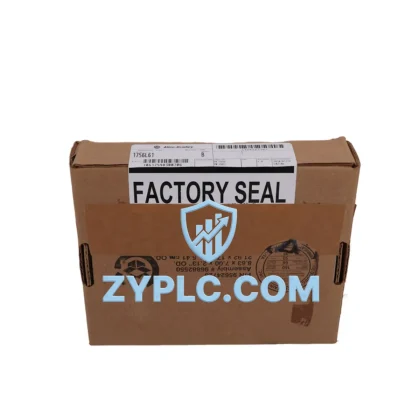
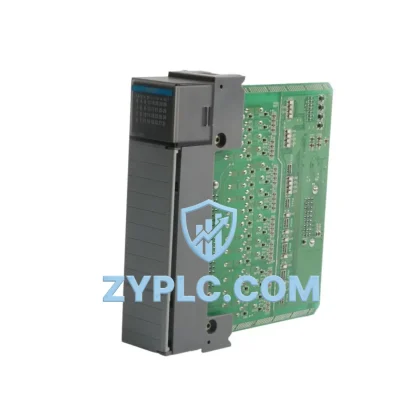
Allen-Bradley 1797-BIC Energy-Saving Bus Isolator for FLEX I/O Automation
The Allen-Bradley 1797-BIC is a high-performance Bus Isolator Module engineered for the FLEX I/O platform, delivering precise segment isolation that directly contributes to energy-efficient industrial automation architectures. In modern manufacturing environments where every watt of consumed power translates to operational cost, the 1797-BIC plays a critical role in partitioning I/O segments, preventing fault propagation, and enabling selective power cycling of field device zones — all of which reduce unnecessary energy draw across the control network.
Designed for seamless integration into Allen-Bradley FLEX I/O backplane assemblies, the 1797-BIC allows engineers to isolate individual I/O segments from the main backplane bus without interrupting the broader control system. This capability is essential in high-density production lines where different machine zones operate on independent duty cycles. By isolating idle segments, facilities can reduce standby power consumption, extend the service life of connected field devices, and maintain tighter control over energy budgets at the zone level.
The 1797-BIC supports 24V DC bus power and is compatible with the full range of FLEX I/O adapter modules, including the 1794-AENT Ethernet/IP adapter and the 1794-ADN DeviceNet adapter, enabling integration into both legacy and modern communication architectures. When paired with a 1794-ACN15 ControlNet adapter, the module participates in deterministic, time-synchronized control loops that minimize cycle time variability — a key factor in optimizing production line throughput and reducing energy waste from idle motor run time.
All units supplied by ZYPLC are sourced from verified supply channels, subjected to full functional testing prior to shipment, and covered by a 12-month warranty. Stock is maintained on-hand to support rapid deployment and minimize production downtime.
Efficiency Performance Table
| Parameter |
Specification |
| Model / SKU |
1797-BIC |
| Brand / Series |
Allen-Bradley / FLEX I/O |
| Module Type |
Bus Isolator Module |
| Bus Voltage |
24V DC |
| Power Consumption |
Low standby draw; enables zone-level power isolation |
| Operating Efficiency |
Supports selective segment de-energization to reduce idle consumption |
| Compatible Systems |
FLEX I/O backplane, 1794-AENT, 1794-ADN, 1794-ACN15, ControlLogix, CompactLogix |
| Application Environment |
Industrial automation, discrete manufacturing, process control, energy management |
| Energy Saving Value |
Reduces unnecessary bus power draw by isolating inactive I/O segments |
| Operating Temperature |
0°C to 55°C (32°F to 131°F) |
| Origin |
United States |
| Warranty |
12-Month Warranty (ZYPLC) |
| Stock Status |
In Stock — Ready to Ship |
Energy-Aware Automation Architecture
The 1797-BIC is most effective when deployed as part of a layered, energy-aware control architecture. In a typical FLEX I/O installation, the module sits between the adapter and downstream I/O modules, acting as a controlled gateway for both data and bus power. When the upstream controller — such as a ControlLogix L7x series PLC or a CompactLogix 5380 — determines that a production zone is idle, it can command the 1797-BIC to isolate that segment, cutting bus power to connected 1794-IB16 digital input modules and 1794-OB16 digital output modules without affecting the rest of the backplane.
This architecture integrates naturally with PowerFlex 525 and PowerFlex 755 variable frequency drives, which regulate motor speed and torque in response to real-time load demand. When the 1797-BIC isolates an I/O segment associated with a conveyor or pump zone, the corresponding PowerFlex drive can be commanded to coast-to-stop or enter sleep mode, eliminating the energy penalty of running motors at minimum speed during low-demand periods. The result is a measurable reduction in kWh consumption per production shift.
For energy monitoring and reporting, the 1797-BIC architecture pairs effectively with the PowerMonitor 5000 series, which captures real-time power quality data — voltage, current, power factor, and harmonic distortion — at the panel level. Data collected by the PowerMonitor 5000 is transmitted over EtherNet/IP to the plant historian or SCADA system, providing the visibility needed to correlate I/O segment isolation events with actual energy savings. This closed-loop feedback enables continuous improvement of energy management strategies without requiring manual intervention.
At the HMI layer, a PanelView Plus 7 terminal provides operators with real-time visibility into segment status, drive states, and power consumption trends. Alarm management configured through Studio 5000 Logix Designer ensures that any unexpected isolation event — such as a field device fault triggering an unplanned segment shutdown — is immediately surfaced to the operator, preventing silent energy anomalies from going undetected. The 1756-EN2T EtherNet/IP communication module bridges the ControlLogix backplane to the plant network, ensuring that all energy and status data flows seamlessly to supervisory systems.
Power Optimization in Real Production Lines
In automotive body-in-white welding lines, where dozens of FLEX I/O nodes control weld guns, clamps, and transfer mechanisms, the 1797-BIC enables zone-by-zone power management synchronized with the production schedule. During planned micro-stops — tool changes, part loading, or quality inspection holds — the PLC can isolate non-critical I/O segments via the 1797-BIC, reducing the number of energized field devices and lowering the aggregate current draw on the 24V DC power supply rail. Over a three-shift operation, this approach can yield significant reductions in standby power consumption without any impact on cycle time when production resumes.
In food and beverage processing facilities, where hygiene zones require frequent washdown cycles, the 1797-BIC allows the control system to safely de-energize I/O segments in washdown areas while maintaining full control over adjacent production zones. This eliminates the need to shut down entire control panels during cleaning, reducing both energy consumption and restart time. The module’s ability to isolate segments without interrupting the backplane communication bus means that the PLC continues to monitor system health and log data throughout the washdown period.
Predictive maintenance strategies also benefit from the 1797-BIC’s segment isolation capability. By periodically cycling power to individual I/O segments under controlled conditions and monitoring the response of connected field devices, maintenance teams can identify degraded sensors, failing actuators, or deteriorating wiring before they cause unplanned downtime. This proactive approach reduces emergency maintenance costs, extends the mean time between failures of connected equipment, and supports the overall goal of maximizing overall equipment effectiveness (OEE) while minimizing energy waste from inefficient or malfunctioning devices.
ZYPLC maintains ready stock of the 1797-BIC to support urgent replacement needs. All units undergo outgoing functional testing to verify bus isolation performance, communication integrity, and power handling before shipment. The 12-month warranty covers manufacturing defects and ensures that customers have recourse in the event of premature failure.
Energy Optimization FAQ
Q1: How does the 1797-BIC contribute to measurable energy savings in a FLEX I/O system?
The 1797-BIC enables the PLC to selectively de-energize I/O segments during idle periods, reducing the number of field devices drawing standby current from the 24V DC bus. In installations with multiple FLEX I/O nodes, isolating even a subset of segments during planned downtime can produce a meaningful reduction in total panel power consumption over a full production day.
Q2: Is the 1797-BIC compatible with both ControlLogix and CompactLogix platforms?
Yes. The 1797-BIC is a backplane-level module within the FLEX I/O system and is compatible with any controller platform that supports FLEX I/O adapters, including ControlLogix, CompactLogix, and SoftLogix systems communicating via EtherNet/IP, ControlNet, or DeviceNet adapters.
Q3: What is the recommended replacement procedure when substituting a failed 1797-BIC in a live system?
The recommended approach is to isolate the affected I/O segment at the adapter level before removing the 1797-BIC, then install the replacement module and verify bus continuity before re-enabling the segment. ZYPLC provides tested replacement units with full functional verification, and the 12-month warranty covers the replacement unit from the date of shipment.
Q4: What testing does ZYPLC perform on the 1797-BIC before shipment?
Each 1797-BIC unit undergoes functional testing that verifies bus isolation switching, backplane communication pass-through, and 24V DC power handling under load. Units that do not meet specification are quarantined and not shipped. All shipped units are covered by a 12-month warranty from the date of delivery.
© 2026 ZYPLC. All rights reserved.
Original Source: https://zyplc.com
Contact: +86 19859288691 | [email protected]