Allen-Bradley 20-COMM-D System-Ready ControlNet Adapter for PowerFlex Architecture: Control System Architecture and Upstream-Downstream Coordination
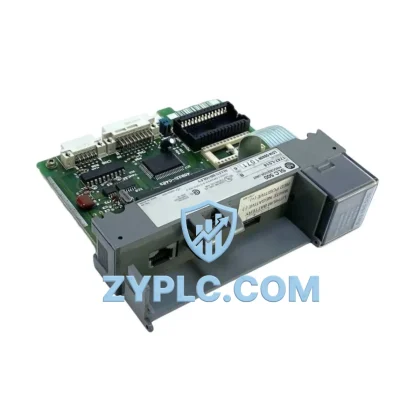
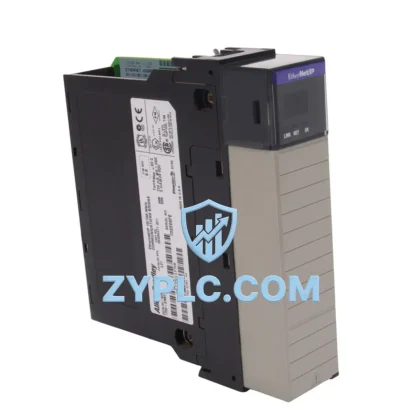
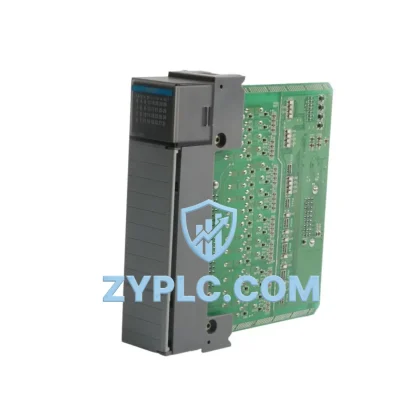
The Allen-Bradley 20-COMM-D is a ControlNet-to-DPI communication adapter engineered to serve as the network interface layer between PowerFlex variable frequency drives and plant-wide ControlNet infrastructure. In modern industrial automation, the reliability of a drive system is not determined by the drive alone — it is defined by how seamlessly the drive communicates with the control layer above it, the I/O layer beside it, and the supervisory systems that monitor it. The 20-COMM-D occupies a critical position in this architecture, enabling deterministic, high-speed data exchange between the PowerFlex drive platform and the broader ControlNet backbone that ties together programmable logic controllers, remote I/O racks, and distributed control nodes.
Designed for direct insertion into the peripheral port of PowerFlex 700, PowerFlex 750-Series, and PowerFlex 400 drives, the 20-COMM-D provides a standardized ControlNet node address, supports both scheduled and unscheduled messaging, and allows full parameter read/write access from the control layer without interrupting drive operation. This capability is essential in systems where drive configuration, diagnostics, and real-time speed or torque references must be managed centrally — whether from a ControlLogix L7x controller, a CompactLogix L3x platform, or a redundant controller pair operating in a hot-standby configuration.
Architecture Specification Table
| Parameter |
Specification |
| System Role |
ControlNet-to-DPI Drive Communication Adapter |
| Compatible Drives |
PowerFlex 400, PowerFlex 700, PowerFlex 750-Series |
| Network Protocol |
ControlNet (IEEE 1784-CNB) |
| Interface |
DPI (Drive Peripheral Interface) — peripheral port mount |
| Node Addressing |
Configurable via rotary switches (1–99) |
| Messaging Support |
Scheduled (cyclic) and Unscheduled (acyclic) ControlNet messaging |
| Data Rate |
5 Mbps (ControlNet standard) |
| I/O Assembly |
Supports multiple I/O assembly instances for speed reference, feedback, and status |
| Power Supply |
Powered via DPI peripheral port (no external supply required) |
| Operating Temperature |
0°C to 50°C (32°F to 122°F) |
| Storage Temperature |
-40°C to 85°C |
| Relative Humidity |
5% to 95% non-condensing |
| Enclosure Rating |
IP20 (panel-mount installation) |
| Dimensions |
Compact peripheral module form factor |
| Certifications |
UL, CE, ControlNet International Conformance Tested |
| Warranty |
12-Month Warranty — covers hardware defects and communication failures |
Coordinated Control System Design
The 20-COMM-D does not function in isolation. Its value is realized only when it is integrated into a coherent, layered control architecture where each component plays a defined role. In a typical PowerFlex-based motor control center (MCC) or variable speed drive panel, the 20-COMM-D connects the drive to a ControlNet trunk cable that also carries signals from a 1756-CNB or 1756-CNBR ControlNet Bridge module installed in a ControlLogix chassis. This bridge module serves as the ControlNet scanner, managing scheduled connections to all drive nodes on the network and ensuring deterministic data delivery within the configured network update time (NUT).
On the controller side, a 1756-L74 or 1756-L75 ControlLogix processor executes the motion and process logic, issuing speed references and reading drive status through the ControlNet connection established by the 20-COMM-D. For applications requiring high availability, a 1756-SRM ControlLogix System Redundancy Module paired with a secondary controller chassis ensures that a controller failover does not interrupt drive communication — the 20-COMM-D maintains its ControlNet node presence and continues executing the last commanded reference until the redundant controller resumes control.
At the I/O layer, 1794-ACNR15 FLEX I/O ControlNet Adapter modules may share the same ControlNet segment, providing distributed analog and digital I/O for process sensors, limit switches, and valve positioners. This co-existence on a single ControlNet segment simplifies cabinet wiring, reduces the number of network segments required, and allows the same controller scan task to address both drive control and field I/O within a unified program structure.
For human-machine interface integration, a PanelView Plus 7 terminal connected via EtherNet/IP to the ControlLogix backplane can display real-time drive parameters — output frequency, motor current, fault codes — sourced directly from the 20-COMM-D’s data tables. This eliminates the need for separate drive display panels and centralizes operator interaction at the HMI level. In facilities using FactoryTalk View SE as the SCADA layer, the same drive data is available for trending, alarming, and historical logging without additional hardware.
Power distribution to the drive enclosure typically involves a 1606-XLP power supply for 24VDC control circuit loads, while the drive itself draws from the main AC bus through a coordinated motor protection circuit breaker or fused disconnect. The 20-COMM-D’s DPI-powered design means it draws no additional current from the 24VDC rail, simplifying power budget calculations for the control cabinet. In multi-drive panels, 20-750-DNET-F3 or 20-COMM-E EtherNet/IP adapters may be used on adjacent drives where ControlNet is not required, allowing mixed-protocol architectures within the same MCC lineup while maintaining a common PowerFlex drive platform.
Application in Layered Automation Systems
The 20-COMM-D is deployed across a wide range of process and discrete manufacturing environments where ControlNet remains the backbone communication protocol. In water and wastewater treatment facilities, PowerFlex 700 drives equipped with 20-COMM-D adapters control pump stations, aeration blowers, and sludge handling conveyors. The deterministic nature of ControlNet scheduled messaging ensures that speed references are delivered within the NUT regardless of unscheduled traffic, which is critical for maintaining precise flow rates in dosing and filtration processes.
In oil and gas upstream and midstream applications, the 20-COMM-D supports compressor drive control in hazardous-area panels where the drive is mounted in a purged and pressurized enclosure and the ControlNet cable exits through a conduit seal. The adapter’s ability to support unscheduled explicit messaging allows maintenance engineers to read and write drive parameters remotely from a laptop running RSLogix 5000 or Studio 5000 Logix Designer, without requiring physical access to the drive keypad.
In mining and mineral processing operations, conveyor systems and crusher drives using PowerFlex 750-Series units rely on the 20-COMM-D to integrate with site-wide ControlNet networks that may span hundreds of meters using coaxial RG-6 cable with repeaters. The adapter’s conformance-tested ControlNet implementation ensures interoperability with third-party ControlNet devices on the same segment, including network analyzers and protocol bridges used during commissioning.
In automotive and general manufacturing assembly lines, the 20-COMM-D enables coordinated multi-axis speed control where multiple PowerFlex drives must respond to a common speed reference broadcast from the controller. Scheduled ControlNet connections allow all drives to receive their references within the same NUT, ensuring synchronized conveyor speeds across transfer lines and reducing product accumulation at buffer zones.
For power generation and utilities, the 20-COMM-D supports cooling tower fan drives, boiler feed pump drives, and auxiliary motor control in substations where ControlNet was specified as the plant standard during original construction. Maintaining the original communication protocol avoids costly network migration projects and allows the existing ControlLogix infrastructure to continue managing drive assets without software reconfiguration.
Architecture Engineering FAQ
Q1: Can the 20-COMM-D coexist with other ControlNet devices on the same network segment, and what is the maximum number of nodes supported?
Yes. The 20-COMM-D is a fully conformance-tested ControlNet device and can coexist with any other ControlNet-compliant node on the same segment, including 1756-CNB bridge modules, 1794-ACNR15 FLEX I/O adapters, and third-party ControlNet devices. ControlNet supports up to 99 nodes per segment (addresses 1–99), and the 20-COMM-D’s node address is set via onboard rotary switches before installation. Each drive with a 20-COMM-D installed occupies one node address. Network design should account for the total number of scheduled connections and the NUT required to service all nodes within the controller’s scan cycle.
Q2: Is the 20-COMM-D compatible with both ControlLogix and CompactLogix controllers, and does it support redundant controller configurations?
The 20-COMM-D is compatible with any ControlNet scanner module that supports standard ControlNet scheduled and unscheduled connections, including the 1756-CNB and 1756-CNBR modules used with ControlLogix, and the 1769-SDN or external ControlNet scanner solutions used with CompactLogix platforms. For redundant controller systems using the 1756-SRM module, the 20-COMM-D maintains its ControlNet node and connection state during a controller switchover, provided the redundancy configuration is correctly set up in Studio 5000. The drive will continue executing the last commanded reference during the switchover interval, which is typically less than one second in a properly configured redundant system.
Q3: What does the 12-Month Warranty cover, and what support is available for commissioning and long-term maintenance?
The 12-Month Warranty covers all hardware defects in materials and workmanship, including communication failures attributable to the adapter hardware, connector integrity, and onboard electronics. It does not cover damage resulting from incorrect installation, overvoltage events, or incompatible drive firmware versions. For commissioning support, our technical team can assist with RSNetWorx for ControlNet network scheduling, Studio 5000 add-on profile (AOP) configuration, and I/O assembly instance selection. For long-term maintenance, we recommend maintaining a spare 20-COMM-D adapter in the site’s critical spares inventory, as drive communication adapters are subject to wear from repeated insertion cycles and environmental exposure. Our inventory is maintained to support rapid replacement orders, and our team can advise on firmware compatibility between the 20-COMM-D and the installed PowerFlex drive firmware revision.
© 2026 ZYPLC. All rights reserved.
Original Source: https://zyplc.com
Contact: +86 19859288691 | plc.sales@zyplc.com