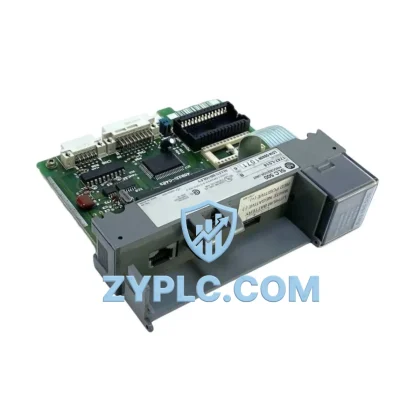
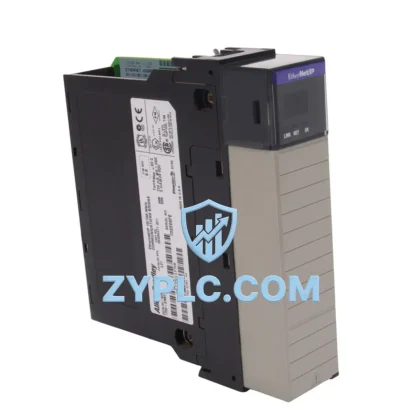
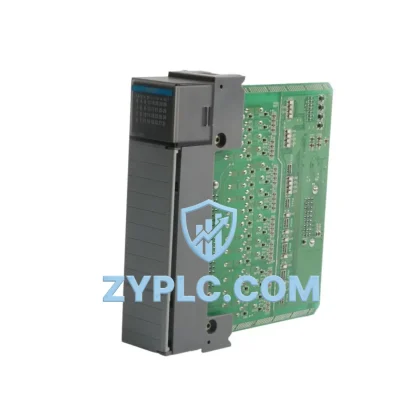
Allen-Bradley 2080-SERIALISOL System-Ready Serial Isolated Module for Micro800 Architecture
In modern industrial control system design, every layer of the automation hierarchy must communicate with precision, reliability, and electrical integrity. The Allen-Bradley 2080-SERIALISOL is a serial isolated plug-in module engineered specifically for the Micro800 controller platform, providing galvanically isolated RS-232/RS-485 serial communication that protects both the controller and field devices from ground loops, voltage differentials, and electrical noise common in demanding industrial environments. As a system-ready component, the 2080-SERIALISOL integrates seamlessly into the Micro800 architecture, enabling engineers to extend legacy serial device connectivity without compromising the electrical safety or signal fidelity of the broader control system.
The Micro800 platform, anchored by controllers such as the 2080-LC30-48QWB and the 2080-LC50-48QWB, is designed around a modular plug-in architecture that allows system architects to tailor each controller node to its specific application requirements. The 2080-SERIALISOL occupies one of the available plug-in slots on these controllers, delivering isolated serial communication capability directly at the CPU level without requiring an external gateway or additional panel space. This tight integration reduces wiring complexity, minimizes potential failure points, and ensures that serial communication latency remains deterministic — a critical requirement in process control and machine automation applications.
Architecture Specification Table
| Parameter |
Specification |
| System Role |
Serial Isolated Plug-In Communication Module |
| Compatible Platform |
Allen-Bradley Micro800 Series (Micro830, Micro850, Micro870) |
| Communication Interfaces |
RS-232 / RS-485 (isolated) |
| Isolation Voltage |
500 V DC galvanic isolation |
| Baud Rate Support |
Up to 115,200 bps |
| Protocols Supported |
Modbus RTU, ASCII, CIP Serial, custom serial protocols |
| Installation Type |
Plug-in module (no DIN rail mounting required) |
| Operating Temperature |
0°C to 55°C (32°F to 131°F) |
| Storage Temperature |
-40°C to 85°C |
| Power Consumption |
Supplied via controller plug-in bus |
| Certifications |
UL, CE, RoHS compliant |
| Warranty |
12-Month Warranty (ZYPLC) |
Coordinated Control System Design
The 2080-SERIALISOL does not operate in isolation — it is one node in a carefully coordinated control architecture. In a typical Micro800-based system, the 2080-LC50-48QWB serves as the primary CPU, managing program execution, I/O scanning, and network communication. Analog input expansion is handled by modules such as the 2080-IF4 (4-channel analog input) and the 2085-IF8 (8-channel analog input for the Micro850 expansion bus), while analog output control is managed by the 2080-OF2. Discrete I/O expansion is commonly achieved through the 2080-IQ4OB4 mixed I/O plug-in module, which adds four digital inputs and four digital outputs directly to the controller.
Power integrity across the system is maintained by the 2080-PS120-240VAC power supply, which provides stable 24 V DC power to the controller and its connected modules. System configuration and program backup are supported by the 2080-MEMBAK-RTC memory backup and real-time clock module, ensuring that controller programs and time-stamped data logs are preserved through power interruptions. For applications requiring field-level parameter adjustment, the 2080-TRIMPOT6 analog trim pot module provides six independent analog input channels that can be used for setpoint adjustment without HMI interaction.
When the application demands DeviceNet connectivity for integration with legacy Allen-Bradley drive networks or distributed I/O, the 2080-DNET20 DeviceNet scanner module extends the Micro800 platform into established fieldbus architectures. The 2080-SERIALISOL complements these communication options by providing isolated serial connectivity for devices such as barcode readers, weigh scales, variable frequency drives with RS-485 interfaces, and third-party sensors that communicate via Modbus RTU — all without introducing ground loop interference that could corrupt data or damage connected equipment.
Application in Layered Automation Systems
The 2080-SERIALISOL finds application across a broad range of industrial sectors where serial communication with electrical isolation is a non-negotiable requirement. In water and wastewater treatment facilities, the module enables Micro800 controllers to communicate with flow meters, pH analyzers, and dissolved oxygen sensors over isolated RS-485 networks, preventing ground potential differences between field instruments and the control panel from causing measurement errors or equipment damage. In power distribution substations, the isolated serial interface allows the Micro800 to interface with protection relays and energy meters using Modbus RTU, maintaining signal integrity in environments with significant electrical noise.
In pharmaceutical and food processing applications, the 2080-SERIALISOL supports communication with checkweighers, metal detectors, and serialization printers over isolated serial links, ensuring that the control system maintains data integrity even when connected to equipment powered from different electrical circuits. In mining and mineral processing operations, where long cable runs between the control room and field devices are common, the RS-485 isolation provided by the 2080-SERIALISOL protects the Micro800 controller from transient voltages induced by heavy machinery starting and stopping on shared power infrastructure. In packaging and material handling lines, the module enables integration of legacy serial devices into modern Micro800-based machine controllers, extending the useful life of existing field equipment while maintaining system reliability.
Architecture Engineering FAQ
Q1: Is the 2080-SERIALISOL compatible with both Micro830 and Micro850 controllers, and does it occupy a dedicated plug-in slot?
A: Yes, the 2080-SERIALISOL is compatible with all Micro800 series controllers that support plug-in modules, including the Micro830 (2080-LC30 series) and Micro850 (2080-LC50 series). It occupies one plug-in slot on the left side of the controller. The number of available plug-in slots varies by controller model — the Micro850 supports up to three plug-in modules, allowing the 2080-SERIALISOL to coexist with other plug-ins such as the 2080-MEMBAK-RTC or 2080-TRIMPOT6 in the same system.
Q2: Can the 2080-SERIALISOL be used for Modbus RTU master communication with multiple field devices on an RS-485 network?
A: Yes. When configured for RS-485 operation, the 2080-SERIALISOL supports multi-drop serial networks, allowing the Micro800 controller to act as a Modbus RTU master communicating with up to 32 slave devices on a single RS-485 bus. The galvanic isolation ensures that ground potential differences between devices on the network do not cause communication errors or hardware damage. Configuration is performed through the Connected Components Workbench (CCW) programming environment, where baud rate, parity, stop bits, and protocol selection are set to match the requirements of the connected field devices.
Q3: What does the 12-Month Warranty cover, and how does ZYPLC support long-term maintenance and spare parts availability for the 2080-SERIALISOL?
A: The 12-Month Warranty provided by ZYPLC covers manufacturing defects and functional failures under normal operating conditions for a period of twelve months from the date of shipment. ZYPLC maintains dedicated inventory of the 2080-SERIALISOL and related Micro800 plug-in modules to support both immediate project requirements and long-term maintenance strategies. For system architects planning multi-year maintenance contracts, ZYPLC can provide volume pricing and reserved stock arrangements to ensure that replacement modules are available when needed, minimizing unplanned downtime in critical production environments.
© 2026 ZYPLC. All rights reserved.
Original Source: https://zyplc.com
Contact: +86 19859288691 | plc.sales@zyplc.com