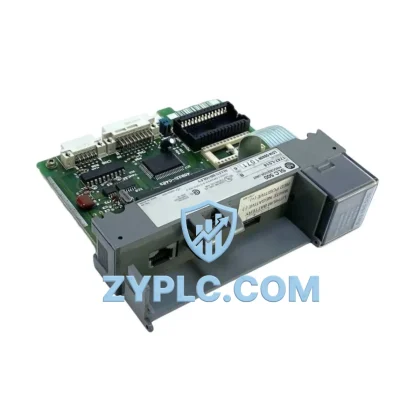
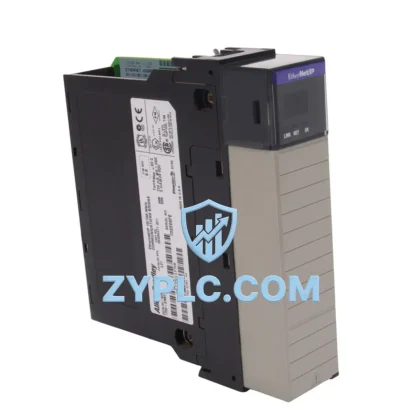
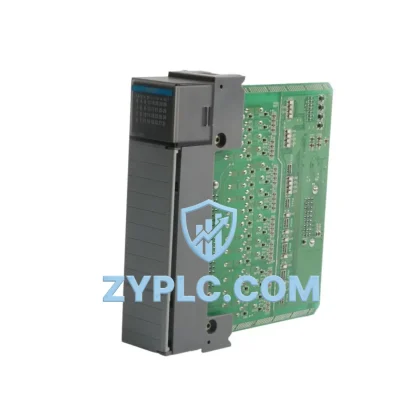
Allen-Bradley 2198-S160-ERS3 System-Ready Servo Drive for Kinetix 5700 Architecture
The Allen-Bradley 2198-S160-ERS3 is a high-performance servo drive module engineered for seamless integration within the Kinetix 5700 multi-axis servo drive system. Designed to operate as a coordinated node within a broader Rockwell Automation control architecture, this drive delivers 160A continuous output current and is built to support demanding motion control applications across manufacturing, energy, and process industries. Rather than functioning as a standalone unit, the 2198-S160-ERS3 is conceived as a system-level component — one that derives its full value from its position within a layered automation hierarchy that spans the control layer, I/O layer, network layer, power layer, HMI layer, and execution layer.
In modern industrial automation, the servo drive is not merely a power conversion device — it is an active participant in the control architecture. The 2198-S160-ERS3 communicates upstream with the ControlLogix or CompactLogix controller platform via EtherNet/IP, receiving coordinated motion commands and returning real-time feedback on position, velocity, torque, and fault status. This bidirectional data exchange ensures that the drive remains synchronized with the broader machine logic, enabling precise multi-axis coordination, electronic camming, and gearing functions that are essential in high-throughput production environments.
Within the Kinetix 5700 shared DC bus architecture, the 2198-S160-ERS3 operates alongside the 2198-P031 or 2198-P070 shared DC bus power supply, which provides a common DC rail to multiple inverter modules. This bus-sharing topology significantly reduces energy consumption by enabling regenerative energy from decelerating axes to be redistributed to accelerating axes within the same bus segment. The result is a measurable reduction in peak demand from the AC supply and improved overall system efficiency — a critical consideration in large-scale servo systems with many simultaneous axes of motion.
At the network layer, the drive’s integrated EtherNet/IP port supports CIP Motion protocol, enabling deterministic motion control over standard Ethernet infrastructure. This eliminates the need for dedicated motion networks and simplifies cabinet wiring. When paired with a 1783-US8T or similar Stratix managed switch, the network topology can be configured for ring redundancy, ensuring that a single cable fault does not interrupt machine operation. The 2198-S160-ERS3 also supports integrated safety functions compliant with SIL 2 / PLd, including Safe Torque Off (STO) and Safe Stop 1 (SS1), which interface directly with the GuardLogix safety controller without requiring external safety relays.
From a power and electrical standpoint, the 2198-S160-ERS3 accepts a DC bus input from the shared bus supply and delivers three-phase AC output to the servo motor. The drive is compatible with the MPL, MPM, and VPL series servo motors from Rockwell Automation, and the motor feedback interface supports multi-turn absolute encoders, enabling accurate position retention across power cycles without homing routines. The drive’s thermal management system includes an integrated heatsink and fan assembly, and the module is rated for operation in environments up to 50°C ambient with appropriate derating.
At the I/O and signal layer, the 2198-S160-ERS3 provides dedicated digital inputs for hardware enable, drive fault reset, and registration inputs for high-speed position capture. These signals interface with the 1756-IB16 or 1756-OB16 digital I/O modules in the ControlLogix chassis, or with the 5069-IB16 CompactLogix I/O modules in more compact system configurations. The integration of these I/O signals into the Logix controller’s task structure ensures that motion events and machine I/O are processed within the same deterministic scan cycle, eliminating timing mismatches that can cause synchronization errors in high-speed applications.
For human-machine interface integration, the drive’s status and diagnostic data are accessible through the Studio 5000 Logix Designer software environment, which provides a unified programming and commissioning platform for the entire control system. Operators can monitor drive status, tune servo loops, and configure motion profiles from the same software used to program the PLC logic. This unified environment reduces commissioning time and simplifies long-term maintenance, as engineers do not need to switch between multiple software tools to diagnose system faults. The PanelView Plus 7 HMI can be configured to display real-time drive diagnostics, alarm histories, and axis performance trends, giving operators immediate visibility into system health.
In terms of system redundancy and reliability, the Kinetix 5700 architecture supports axis-level fault isolation, meaning that a fault on one drive module does not propagate to adjacent axes on the same bus segment. The 2198-S160-ERS3 includes comprehensive onboard diagnostics, including overcurrent protection, overvoltage detection, encoder fault monitoring, and thermal overload protection. These diagnostics are reported to the Logix controller via the EtherNet/IP connection and can be used to trigger automated fault recovery sequences or maintenance alerts, reducing unplanned downtime and extending the operational life of the system.
From a supply chain and lifecycle perspective, the 2198-S160-ERS3 is a current-generation product within the Kinetix 5700 platform, which is actively supported by Rockwell Automation with firmware updates, spare parts availability, and technical documentation. Maintaining a strategic inventory of this module — alongside compatible components such as the 2198-CAPMOD-2240 capacitor module, 2198-TBUS-CONN bus bar connectors, and 2198-H040-ERS4 companion drive modules — ensures that production lines can be restored quickly in the event of a drive failure, minimizing the financial impact of unplanned downtime.
All units supplied by ZYPLC are covered by a 12-Month Warranty and undergo full functional testing prior to shipment. Our inventory management and Contextual Integration support services ensure that the 2198-S160-ERS3 you receive is fully compatible with your existing Kinetix 5700 system architecture, with documentation and configuration guidance available upon request.
Architecture Specification Table
| Parameter |
Specification |
| System Role |
Multi-Axis Inverter Module — Kinetix 5700 Shared DC Bus Architecture |
| Continuous Output Current |
160A RMS |
| DC Bus Input Voltage |
375–680 VDC (from shared bus supply) |
| Output Frequency Range |
0–400 Hz |
| Communication Protocol |
EtherNet/IP (CIP Motion) |
| Safety Rating |
SIL 2 / PLd — Safe Torque Off (STO), Safe Stop 1 (SS1) |
| Motor Compatibility |
MPL, MPM, VPL Series (Rockwell Automation) |
| Feedback Interface |
Multi-turn Absolute Encoder (Hiperface DSL / EnDat compatible) |
| Ambient Operating Temperature |
0°C to 50°C (with derating above 40°C) |
| Enclosure Rating |
IP20 (panel mount, control cabinet installation) |
| Programming Environment |
Studio 5000 Logix Designer |
| Firmware Series |
ERS3 (Enhanced Redundancy Series 3) |
| Warranty |
12-Month Warranty (ZYPLC) |
Coordinated Control System Design
The 2198-S160-ERS3 achieves its full performance potential only when integrated within a properly designed Kinetix 5700 system architecture. A typical multi-axis installation begins with the 1756-L85E ControlLogix controller or 5069-L320ERS2 CompactLogix controller, which serves as the motion coordinator, executing the motion program and issuing coordinated axis commands over EtherNet/IP. The controller communicates with the drive through a 1783-US8T Stratix 2000 managed switch, which provides the deterministic network infrastructure required for CIP Motion.
Power is supplied to the DC bus by the 2198-P070 Kinetix 5700 shared DC bus power supply, which rectifies the incoming three-phase AC supply and maintains a regulated DC bus voltage for all inverter modules on the segment. The 2198-CAPMOD-2240 capacitor module is installed adjacent to the power supply to provide additional bus capacitance, improving transient response and reducing voltage ripple during rapid acceleration and deceleration cycles.
Motor feedback is provided by the servo motor’s integrated multi-turn absolute encoder, which connects to the drive’s feedback port via a 2090-CFBM7DF-CEAFxx motor feedback cable. The motor power connection uses a 2090-CSBM1DF-14AAxx servo motor power cable, both of which are specified to maintain signal integrity and EMC compliance within the cabinet and along the cable tray to the motor.
For safety integration, the drive’s STO inputs connect to the 1791DS-IB12 GuardLink safety I/O module, which is managed by the 1756-L8SP GuardLogix safety controller. This architecture ensures that safety functions are executed within the safety task of the Logix controller, with full diagnostic coverage and safety integrity level compliance. The 2198-TBUS-CONN DC bus bar connector links adjacent drive modules on the shared bus, completing the power distribution architecture within the control cabinet.
Application in Layered Automation Systems
The 2198-S160-ERS3 is deployed across a wide range of industrial sectors where high-torque, high-precision servo motion is required within a coordinated multi-axis system. In automotive manufacturing, the drive is used in body-in-white welding lines, press transfer systems, and robotic cell servo axes, where synchronization between multiple axes must be maintained within microseconds to ensure weld quality and part positioning accuracy. The Kinetix 5700 architecture’s shared DC bus topology is particularly well-suited to these applications, as the regenerative energy from press return strokes is captured and reused by the transfer axes, reducing energy costs significantly.
In packaging and converting applications, the 2198-S160-ERS3 drives the primary infeed, cross-seal, and film advance axes of horizontal flow wrappers and vertical form-fill-seal machines. The drive’s high bandwidth current loop and low-latency EtherNet/IP communication enable the precise tension control and registration accuracy required for high-speed film processing. In power generation and energy applications, the drive is used in turbine test stands and generator excitation systems, where the ability to operate in torque control mode with high dynamic response is essential.
In petrochemical and process industries, the 2198-S160-ERS3 is integrated into compressor control systems and pump drive applications where variable speed operation and precise flow control are required. The drive’s SIL 2 safety functions provide the process safety integrity required by IEC 61511 for safety instrumented systems in hazardous areas. In mining and minerals processing, the drive is used in conveyor drive systems and mill drive applications, where the high continuous current rating of 160A supports the sustained torque demands of heavy-load applications.
Architecture Engineering FAQ
Q1: Is the 2198-S160-ERS3 compatible with both ControlLogix and CompactLogix platforms, and what firmware version is required?
The 2198-S160-ERS3 is compatible with both the ControlLogix (1756-Lxx) and CompactLogix (5069-Lxx) controller platforms, provided the controller is running firmware version 32.00 or later and the Studio 5000 Logix Designer project is configured with the corresponding Kinetix 5700 Add-On Profile (AOP). The ERS3 firmware series on the drive must match the AOP version installed in the programming software. ZYPLC recommends verifying firmware compatibility before installation and can provide configuration guidance as part of our Contextual Integration support service.
Q2: Can the 2198-S160-ERS3 be installed on an existing Kinetix 5700 shared DC bus segment alongside earlier ERS2 firmware drives?
Mixed ERS2 and ERS3 firmware drives can coexist on the same shared DC bus segment, but all drives on the segment must be running compatible firmware versions as specified in Rockwell Automation publication 2198-UM002. The bus power supply firmware must also be updated to support ERS3 drives. ZYPLC recommends a full firmware audit of the existing system before adding the 2198-S160-ERS3 to an established bus segment, and our technical team can assist with compatibility verification and upgrade planning.
Q3: What does the 12-Month Warranty cover, and what is the process for warranty claims?
The 12-Month Warranty provided by ZYPLC covers manufacturing defects, functional failures under normal operating conditions, and component failures that occur within 12 months of the shipment date. The warranty does not cover damage resulting from incorrect installation, overvoltage events, environmental contamination, or unauthorized modification. To initiate a warranty claim, contact ZYPLC at [email protected] or +86 19859288691 with the order reference number, a description of the fault, and any available diagnostic data from the Studio 5000 fault log. ZYPLC will arrange for inspection and, where applicable, replacement or repair of the defective unit.
© 2026 ZYPLC. All rights reserved.
Original Source: https://zyplc.com
Contact: +86 19859288691 | [email protected]