Allen-Bradley 5069-L340ERMS2 System-Ready Safety Controller: Control System Architecture and Upstream-Downstream Coordination
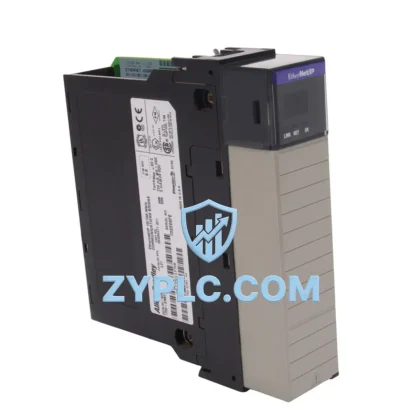
The Allen-Bradley 5069-L340ERMS2 is a high-performance safety CPU module engineered for deployment within the Compact GuardLogix 5380 control platform. Designed to serve as the central decision-making node in safety-rated automation architectures, this controller integrates seamlessly across the control layer, I/O layer, network layer, power layer, HMI layer, and execution layer — delivering a unified, scalable, and redundancy-capable system backbone for demanding industrial environments.
In modern industrial control system design, the CPU is not an isolated component — it is the architectural anchor. The 5069-L340ERMS2 fulfills this role by coordinating real-time safety logic execution with deterministic communication across all system tiers. Whether deployed in a standalone safety island or as part of a distributed multi-rack architecture, this controller provides the processing headroom, memory capacity, and protocol support required for complex, multi-zone safety applications.
The 5069-L340ERMS2 supports dual-port EtherNet/IP with Device Level Ring (DLR) topology, enabling fault-tolerant network communication without additional switching hardware. This capability is critical in architectures where network continuity directly impacts safety integrity. When paired with 5069-AEN2TR EtherNet/IP adapter modules, the controller can extend its I/O reach across distributed Compact 5000 I/O racks, maintaining deterministic scan times even as the system scales.
From a power architecture perspective, the 5069-L340ERMS2 operates within the Compact 5000 chassis ecosystem, requiring coordinated power delivery from 5069-PA4 or 5069-PB4 power supply modules. Proper power budgeting across the backplane is essential during system commissioning, particularly in high-density I/O configurations where multiple 5069-IB16 digital input modules, 5069-OB16 digital output modules, and 5069-IF8 analog input modules are installed in the same rack. The controller’s backplane communication architecture ensures that all installed modules are polled within the configured RPI (Requested Packet Interval), maintaining system responsiveness under full load.
Safety I/O integration is a defining strength of the 5069-L340ERMS2. The controller natively supports CIP Safety protocol, enabling direct communication with safety-rated field devices including safety light curtains, emergency stop relays, safety gate switches, and two-hand control stations — all without requiring a separate safety gateway. This eliminates latency introduced by protocol translation layers and simplifies the overall safety architecture. For applications requiring hardwired safety outputs, the controller coordinates with 5069-OBV8S safety output modules to drive safety-rated actuators and contactors.
At the HMI layer, the 5069-L340ERMS2 communicates natively with PanelView Plus 7 terminals via EtherNet/IP, providing operators with real-time visibility into safety zone status, fault diagnostics, and system health indicators. This integration supports rapid fault acknowledgment and reduces mean time to repair (MTTR) in production environments. For remote monitoring and SCADA integration, the controller’s EtherNet/IP connectivity supports standard OPC-UA and FactoryTalk Historian data collection, enabling enterprise-level visibility without additional middleware.
The 5069-L340ERMS2 is SIL 2 / PLe certified, making it suitable for safety applications across a broad range of regulated industries. Its architecture supports up to 2MB of safety task memory and standard task memory, with project organization managed through Studio 5000 Logix Designer — the same development environment used across the entire Allen-Bradley Logix 5000 controller family. This commonality reduces engineering overhead, simplifies cross-project code reuse, and accelerates commissioning timelines for multi-site deployments.
All units supplied by ZYPLC are covered by a 12-Month Warranty, with full Contextual Integration support to assist engineers in verifying compatibility, configuring system parameters, and resolving architecture-level questions prior to installation.
Architecture Specification Table
| Parameter |
Specification |
| System Role |
Safety CPU / Primary Controller |
| Platform |
Compact GuardLogix 5380 (Compact 5000) |
| SKU / Catalog Number |
5069-L340ERMS2 |
| Safety Rating |
SIL 2 (IEC 62061), PLe / Cat. 4 (ISO 13849-1) |
| Standard Task Memory |
4MB |
| Safety Task Memory |
2MB |
| Communication Ports |
Dual-port EtherNet/IP (DLR capable) |
| Supported Protocols |
EtherNet/IP, CIP Safety, CIP Sync, DLR |
| Programming Software |
Studio 5000 Logix Designer v32+ |
| Power Supply Compatibility |
5069-PA4, 5069-PB4 |
| Operating Temperature |
0°C to 60°C |
| Mounting |
Compact 5000 I/O chassis / DIN rail |
| Certifications |
UL, CE, cUL, TÜV |
| Warranty |
12-Month Warranty (ZYPLC) |
Coordinated Control System Design
The 5069-L340ERMS2 achieves its full architectural potential when deployed as part of a coordinated Compact GuardLogix 5380 system. A complete, production-ready architecture typically includes the following coordinated components:
At the power layer, the 5069-PA4 AC power supply provides stable backplane power, while the 5069-PB4 DC variant supports 24VDC panel architectures common in European and Asian installations. Proper power sequencing between these modules and the CPU ensures clean startup behavior and prevents nuisance faults during system initialization.
At the I/O layer, the 5069-IB16 16-channel digital input module and 5069-OB16 16-channel digital output module form the standard discrete I/O backbone. For process control applications requiring analog signal conditioning, the 5069-IF8 8-channel analog input module provides 4–20mA and 0–10V signal acquisition with high-resolution conversion. Safety I/O is handled by the 5069-OBV8S safety output module, which interfaces directly with safety-rated actuators under CIP Safety supervision from the 5069-L340ERMS2.
At the network layer, the 5069-AEN2TR EtherNet/IP adapter extends the controller’s I/O reach to remote Compact 5000 racks, supporting DLR ring topology for network fault tolerance. For legacy device integration, a 1783-ETAP EtherNet/IP tap or a 1756-EN2TR ControlLogix communication module can bridge older DeviceNet or ControlNet segments into the unified EtherNet/IP architecture managed by the 5069-L340ERMS2.
At the HMI layer, PanelView Plus 7 terminals connect via EtherNet/IP to provide operator interface functionality, while FactoryTalk View SE enables supervisory-level visualization across multiple controller nodes. This layered HMI architecture ensures that operators at both the machine level and the control room level have consistent, real-time access to system status.
At the execution layer, variable frequency drives (VFDs) such as the PowerFlex 525 or PowerFlex 755 receive speed and torque commands via EtherNet/IP from the 5069-L340ERMS2, enabling closed-loop motion coordination without dedicated motion controllers in standard conveyor and pump applications.
Application in Layered Automation Systems
Manufacturing & Assembly Lines: In automotive and electronics assembly, the 5069-L340ERMS2 manages multi-zone safety logic across robotic work cells, conveyor interlocks, and collaborative robot (cobot) safety boundaries. Its SIL 2 / PLe rating satisfies the safety integrity requirements of ISO 10218-2 robot cell design standards.
Power Generation & Utilities: In power plant auxiliary systems and substation automation, the controller’s dual-port EtherNet/IP with DLR topology provides the network redundancy required for continuous operation. Safety logic for turbine overspeed protection, emergency shutdown (ESD) sequences, and fire and gas detection integration can be consolidated within a single 5069-L340ERMS2 project.
Oil, Gas & Petrochemical: The controller supports SIL 2 safety instrumented functions (SIFs) for process shutdown, pressure relief, and burner management systems (BMS). Its ability to execute standard and safety tasks within a single CPU simplifies the architecture of BPCS/SIS integrated systems in refinery and upstream processing environments.
Water & Wastewater Treatment: In municipal water treatment facilities, the 5069-L340ERMS2 coordinates pump station control, chemical dosing interlocks, and UV disinfection system safety logic. Its compact form factor and wide operating temperature range make it suitable for both indoor control rooms and outdoor weatherproof enclosures.
Mining & Metals: In conveyor drive systems, crusher control panels, and hoisting applications, the controller’s robust architecture and CIP Safety integration support the high-availability requirements of continuous mining operations. Coordinated control with PowerFlex VFDs enables smooth belt speed ramping and regenerative braking management.
Packaging & Material Handling: High-speed packaging lines benefit from the controller’s deterministic scan time and tight integration with servo drives and vision systems via EtherNet/IP. Safety zone management for guarding, light curtains, and area scanners is handled natively within the 5069-L340ERMS2 safety task.
Architecture Engineering FAQ
Q1: Is the 5069-L340ERMS2 compatible with existing Compact 5000 I/O modules already installed in our facility?
Yes. The 5069-L340ERMS2 is fully compatible with the entire Compact 5000 I/O module family, including standard digital, analog, and safety I/O modules. Existing 5069-series I/O modules can be reused without hardware modification. Firmware compatibility should be verified in Studio 5000 Logix Designer prior to project download, and ZYPLC’s Contextual Integration support team can assist with compatibility verification at no additional charge within the 12-Month Warranty period.
Q2: Can the 5069-L340ERMS2 replace a 5069-L330ERMS2 in an existing architecture without redesigning the safety application?
In most cases, yes. The 5069-L340ERMS2 offers increased memory capacity compared to the 5069-L330ERMS2, making it a direct upgrade path for applications that have outgrown their current memory allocation. The safety task structure, I/O configuration, and network topology remain compatible. A full project validation and SIL verification review is recommended after any CPU substitution, and ZYPLC’s engineering support team can provide guidance on the validation process as part of the 12-Month Warranty service.
Q3: What is the recommended commissioning procedure for integrating the 5069-L340ERMS2 into a new Compact GuardLogix 5380 system?
Commissioning should follow a structured sequence: (1) verify power supply sizing and backplane power budget using Rockwell’s Chassis Power Estimator tool; (2) configure EtherNet/IP network topology and assign static IP addresses to all nodes; (3) download the Studio 5000 project and verify I/O module status in the controller’s I/O tree; (4) execute safety function proof tests for all CIP Safety devices; (5) perform a full Factory Acceptance Test (FAT) prior to site installation. ZYPLC provides pre-shipment functional verification for all units, and our Contextual Integration support covers architecture-level commissioning questions throughout the 12-Month Warranty period.
© 2026 ZYPLC. All rights reserved.
Original Source: https://zyplc.com
Contact: +86 19859288691 | plc.sales@zyplc.com