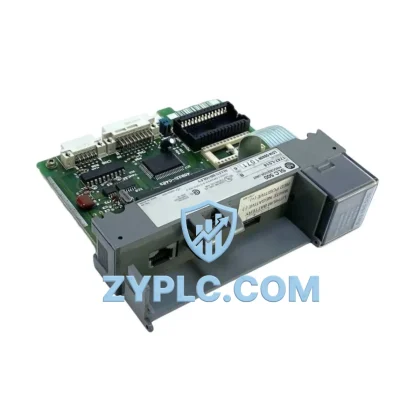
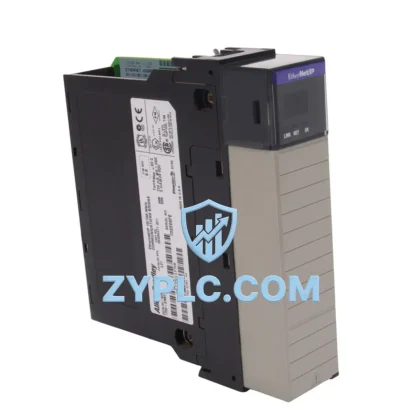
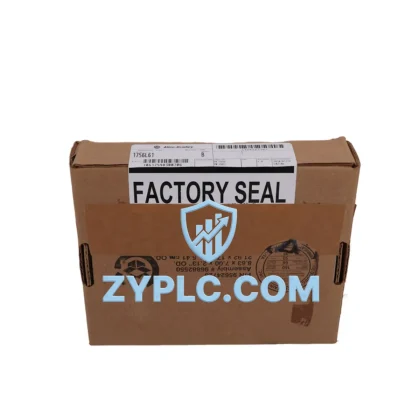
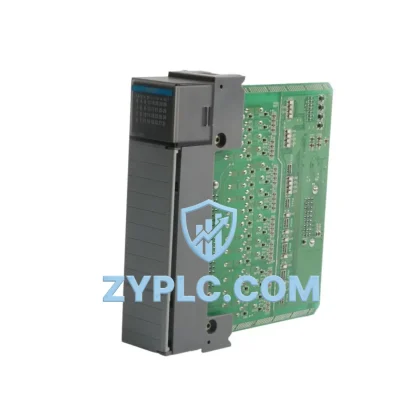
Allen-Bradley 80190-100-01-R System-Ready Fiber Optic Board for PowerFlex Architecture: Control System Coordination and Upstream-Downstream Synchronization
The Allen-Bradley 80190-100-01-R is a fiber optic communication board engineered for seamless integration within Rockwell Automation’s PowerFlex drive architecture and broader PLC-based control system environments. Rather than functioning as a standalone peripheral, this module occupies a critical position within the layered automation hierarchy — bridging the communication gap between the control layer, drive execution layer, and supervisory network infrastructure. Its role in maintaining signal integrity, reducing electromagnetic interference, and enabling high-speed deterministic data exchange makes it an indispensable component in demanding industrial environments including power generation, petrochemical processing, metal forming, water treatment, and continuous manufacturing lines.
In a fully integrated control system, the 80190-100-01-R operates as the optical communication backbone between the PowerFlex 700 or PowerFlex 755 variable frequency drive and the upstream PLC-5 or ControlLogix L-series processor. By converting electrical signals to optical pulses, the board eliminates ground loop interference and ensures that command signals — speed references, torque limits, enable/disable commands — are transmitted with zero signal degradation across long cable runs typical in large-scale plant layouts. This is particularly valuable in high-voltage environments such as motor control centers (MCCs) and switchgear rooms where copper-based communication is susceptible to noise-induced faults.
From a system architecture perspective, the 80190-100-01-R supports the control layer’s ability to maintain real-time closed-loop feedback with the execution layer. When paired with a 1756-L73 ControlLogix processor or a legacy PLC-5/40 controller, the fiber optic board enables the CPU to issue motion commands and receive drive status data — including fault codes, output frequency, DC bus voltage, and current draw — at scan rates compatible with high-performance process control. This bidirectional data flow is essential for implementing coordinated multi-drive systems, where the synchronization of multiple PowerFlex units across a common fiber ring topology ensures consistent product throughput and eliminates mechanical stress caused by speed mismatches.
Architecture Specification Table
| Parameter |
Specification |
| Part Number |
80190-100-01-R |
| Brand / Manufacturer |
Allen-Bradley / Rockwell Automation |
| Product Series |
PowerFlex Drive Communication Accessories |
| System Role |
Fiber Optic Communication Interface Board |
| Compatible Drives |
PowerFlex 700, PowerFlex 755, PowerFlex 70 |
| Compatible Controllers |
PLC-5, ControlLogix (1756 series), SLC 500 |
| Communication Medium |
Fiber Optic (optical signal transmission) |
| Signal Type |
Digital optical pulse, EMI-immune |
| Topology Support |
Point-to-point, Fiber Ring (multi-drive) |
| Electrical Isolation |
Full galvanic isolation via optical medium |
| Installation Environment |
Control cabinet / drive enclosure, DIN rail compatible |
| Operating Temperature |
0°C to +55°C (standard industrial range) |
| Certifications |
UL, CE (Rockwell Automation platform standard) |
| Warranty |
12-Month Warranty — tested, verified, ready to ship |
| Contextual Integration |
Fully supports Contextual Integration within PowerFlex and PLC-5 architectures |
| Origin |
United States |
Coordinated Control System Design
The 80190-100-01-R achieves its full value when considered within the context of a complete Rockwell Automation control architecture. At the control layer, a 1756-L73 ControlLogix processor or PLC-5/40 controller serves as the system brain, executing ladder logic and function block programs that govern drive behavior. The fiber optic board connects this controller to the PowerFlex drive’s internal communication port, replacing the conventional copper DSI or DPI cable with an optical link that is immune to the high-frequency electrical noise generated by the drive’s IGBT switching circuitry.
At the I/O layer, 1756-IB16 digital input modules and 1756-OF8 analog output modules within the ControlLogix chassis provide the process variable inputs — pressure transmitter signals, flow meter readings, temperature sensor outputs — that the controller uses to calculate drive speed references. These references are then transmitted via the 80190-100-01-R to the PowerFlex drive, closing the control loop between field instrumentation and the motor execution layer.
For network communication, the system typically incorporates a 1756-EN2T EtherNet/IP communication module within the ControlLogix backplane, enabling the SCADA or DCS supervisory layer to monitor drive performance data in real time. In legacy installations, a 1784-PKTX Data Highway Plus communication card may bridge the PLC-5 controller to the plant-wide DH+ network, while the 80190-100-01-R handles the local drive communication independently of the network backbone.
Power supply integrity is maintained through a 1756-PA75 ControlLogix power supply module, which provides regulated 24VDC backplane power to the processor and communication modules. At the drive level, the PowerFlex 700 or 755 unit draws three-phase AC power through a dedicated motor control center bucket, with an upstream 140M motor protection circuit breaker providing overload and short-circuit protection. The 80190-100-01-R board itself draws minimal power from the drive’s internal auxiliary supply, ensuring that its installation does not affect the drive’s power budget.
In redundant architecture designs, dual fiber optic boards may be installed across primary and secondary drive controllers, with a 1756-RM2 ControlLogix redundancy module managing controller switchover. This configuration ensures that a single point of failure in the communication path does not interrupt drive operation — a critical requirement in continuous process industries such as petrochemical refining and power generation where unplanned downtime carries significant financial and safety consequences.
Human-machine interface integration is achieved through a PanelView Plus 7 terminal connected to the ControlLogix system via EtherNet/IP, providing operators with real-time drive status visualization, fault history, and manual speed override capability. The fiber optic communication path established by the 80190-100-01-R ensures that the drive data displayed on the HMI accurately reflects actual drive conditions without the latency or data corruption that can occur on electrically noisy copper communication links.
Application in Layered Automation Systems
Manufacturing and Discrete Production Lines: In automotive assembly and metal stamping facilities, the 80190-100-01-R enables precise coordination of conveyor drive systems, where multiple PowerFlex 755 drives must maintain synchronized belt speeds to prevent product accumulation or gaps. The fiber optic communication path ensures that speed reference updates from the ControlLogix controller reach each drive simultaneously, eliminating the timing skew that can cause mechanical misalignment in high-speed production environments.
Power Generation and Utilities: In thermal power plants and hydroelectric facilities, the board supports the integration of large PowerFlex drives controlling boiler feed pumps, cooling water pumps, and induced draft fans. The galvanic isolation provided by the fiber optic medium is essential in these environments, where ground potential differences between the control room and the motor control center can reach hundreds of volts, making copper communication cables a reliability liability.
Petrochemical and Refinery Applications: Process control systems in oil refineries and chemical plants rely on the 80190-100-01-R to maintain communication integrity between PLC-5 controllers and PowerFlex drives operating in classified hazardous areas. The optical isolation eliminates the risk of spark ignition through communication cable ground faults, supporting compliance with IEC 60079 hazardous area installation standards.
Water and Wastewater Treatment: Municipal water treatment facilities use the board to integrate PowerFlex drives controlling submersible pump stations and aeration blowers into SCADA-monitored control systems. The long-distance fiber optic cable capability — supporting runs of several hundred meters without signal repeaters — is particularly valuable in geographically distributed pump station networks.
Mining and Mineral Processing: In underground mining operations and surface mineral processing plants, the 80190-100-01-R supports the integration of high-power PowerFlex drives controlling conveyor systems, crushers, and ball mills. The board’s immunity to the severe electromagnetic interference generated by high-current mining equipment ensures reliable drive communication in environments where copper-based systems frequently experience communication faults.
Architecture Engineering FAQ
Q1: Is the 80190-100-01-R compatible with both PLC-5 and ControlLogix controller platforms, and does it require different firmware configurations for each?
The 80190-100-01-R is designed to interface with Rockwell Automation’s PowerFlex drive communication port and is compatible with both PLC-5 and ControlLogix controller architectures when used with the appropriate drive programming and controller communication configuration. The board itself does not require platform-specific firmware — compatibility is managed through the drive’s parameter configuration and the controller’s I/O tree setup. For ControlLogix systems, the drive is typically added as a generic Ethernet or DPI device in the I/O configuration, while PLC-5 systems use the corresponding block transfer or channel configuration. Our technical team can provide application-specific configuration guidance as part of the 12-Month Warranty support package.
Q2: Can the 80190-100-01-R be used in a fiber ring topology with multiple PowerFlex drives, and what are the architecture limitations?
Yes, the 80190-100-01-R supports fiber ring topologies where multiple PowerFlex drives are daisy-chained via fiber optic cables, with the ring terminating at the controller’s fiber communication port. This topology is commonly used in multi-drive conveyor systems and pump station arrays where a single controller must communicate with several drives simultaneously. The maximum number of drives per ring and the minimum scan time per node depend on the specific PowerFlex drive model and controller configuration. For large ring topologies, it is recommended to segment the network into multiple smaller rings to maintain acceptable scan rates and fault isolation capability.
Q3: What does the 12-Month Warranty cover, and how does ZYPLC support long-term maintenance and spare parts availability for the 80190-100-01-R?
The 12-Month Warranty covers the 80190-100-01-R against manufacturing defects and functional failures under normal operating conditions. Each unit is tested prior to shipment to verify optical signal transmission integrity and electrical isolation performance. ZYPLC maintains inventory of the 80190-100-01-R and compatible PowerFlex communication accessories to support both immediate replacement needs and planned maintenance programs. For facilities operating critical continuous processes, we recommend maintaining at least one spare board per fiber ring segment to minimize potential downtime. Our sales and technical team is available at +86 19859288691 or [email protected] to discuss long-term supply agreements and system integration support.
© 2026 ZYPLC. All rights reserved.
Original Source: https://zyplc.com
Contact: +86 19859288691 | [email protected]