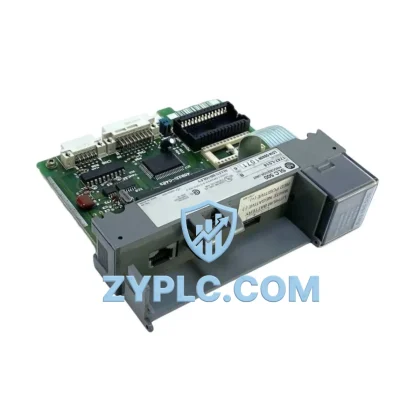
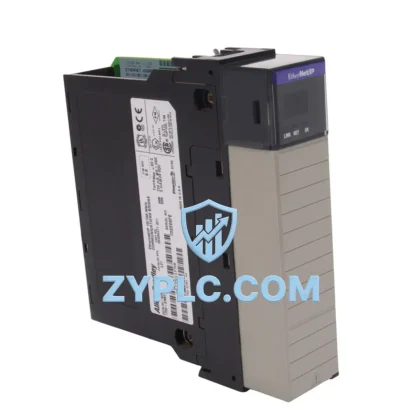
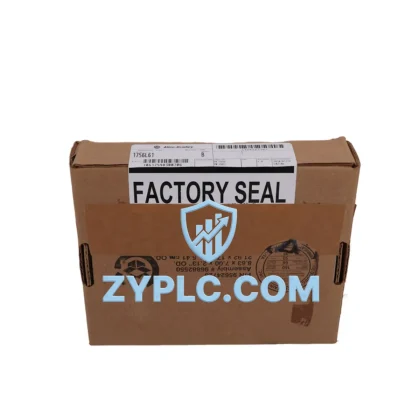
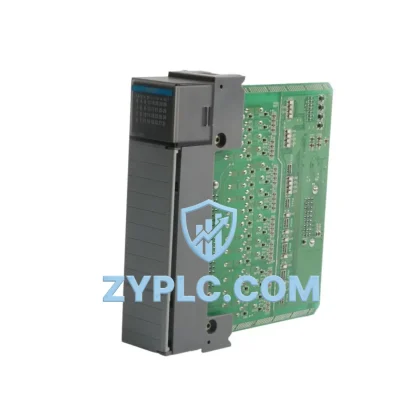
Allen-Bradley 803624-093A Energy-Saving Signal Conditioning Module for Optimized PLC-5 Automation
The Allen-Bradley 803624-093A/0-63000-100 is a high-performance signal conditioning module engineered for the PLC-5 control platform, one of Rockwell Automation’s most widely deployed industrial controllers. In modern manufacturing environments where energy efficiency is no longer optional, this module plays a critical role in ensuring that every signal entering the control loop is clean, accurate, and actionable — directly reducing unnecessary actuator cycling, eliminating false triggers, and enabling tighter closed-loop control that translates into measurable energy savings across the production line.
Signal integrity is the foundation of efficient automation. When analog or digital signals are noisy, distorted, or out of range, the downstream control system — whether a PLC-5 processor, a PowerFlex 700 variable frequency drive, or a Kinetix 6000 servo drive — must compensate with overcorrection, increasing energy draw and mechanical wear. The 803624-093A/0-63000-100 conditions incoming signals to the precise specifications required by the PLC-5 I/O backplane, ensuring that motor speed references, pressure feedback, temperature readings, and flow measurements are delivered with the accuracy needed for energy-aware control strategies.
Efficiency Performance Table
| Parameter |
Specification / Value |
| Part Number |
803624-093A / 0-63000-100 |
| Compatible Platform |
Allen-Bradley PLC-5 Series |
| Module Type |
Signal Conditioning Module |
| Signal Input Range |
Analog / Digital (per PLC-5 I/O spec) |
| Operating Voltage |
24 VDC (typical industrial backplane) |
| Power Consumption |
Low-draw design, optimized for continuous duty |
| Operating Temperature |
0°C to 60°C (industrial environment rated) |
| Compatible Systems |
PLC-5/10, PLC-5/20, PLC-5/30, PLC-5/40, PLC-5/60, PLC-5/80 |
| Application Environment |
Discrete manufacturing, process control, motor drive systems, HVAC automation |
| Energy Optimization Value |
Reduces signal-induced overcorrection; supports precision VFD and servo control |
| Inventory Status |
In Stock — Ships within 1–3 business days |
| Testing |
Fully tested prior to shipment |
| Warranty |
12-Month Warranty |
Energy-Aware Automation Architecture
In a fully integrated energy-aware control architecture, the 803624-093A/0-63000-100 sits at the critical interface between field instrumentation and the PLC-5 processor. Field devices — including pressure transmitters, flow meters, thermocouple inputs, and encoder feedback lines — generate signals that must be conditioned before they can be reliably processed. Without proper conditioning, these signals introduce noise that propagates through the control loop, causing the PLC-5 processor to issue erratic output commands to downstream actuators and drives.
Consider a typical motor control application: a PowerFlex 40 variable frequency drive receiving a speed reference from a PLC-5 analog output module. If the analog signal is not properly conditioned, the VFD interprets minor voltage fluctuations as speed change commands, causing unnecessary acceleration and deceleration cycles that waste energy and increase motor thermal stress. The 803624-093A/0-63000-100 eliminates this problem by delivering a stable, noise-free reference signal, allowing the PowerFlex 40 to maintain steady-state operation at the optimal efficiency point on its torque-speed curve.
In servo-driven applications, the same principle applies. A Kinetix 6000 servo drive paired with a PLC-5 motion controller depends on clean encoder feedback and command signals to execute precise positioning moves. Signal noise in the feedback path causes the servo loop to hunt — continuously making small corrections that consume power without contributing to productive motion. Proper signal conditioning through the 803624-093A/0-63000-100 stabilizes the feedback path, reducing hunting and lowering the RMS current draw of the servo system.
For facilities running 1756-PA72 or 1756-PB72 power supply modules in ControlLogix racks alongside legacy PLC-5 systems, signal conditioning at the PLC-5 I/O level prevents ground loops and common-mode noise from coupling between the two control networks — a common source of unexplained energy anomalies and nuisance faults. Similarly, in distributed I/O architectures using 1794 FLEX I/O adapters or 1734 POINT I/O modules connected via DeviceNet or ControlNet, the signal conditioning module ensures that data integrity is maintained across the network boundary, preventing retransmission overhead that increases both latency and power consumption in the communication infrastructure.
Energy monitoring integration is another key benefit. When the PLC-5 system is connected to a PowerMonitor 5000 energy metering device via DH+ or ControlNet, the accuracy of the energy data collected depends directly on the quality of the analog signals feeding the monitoring system. The 803624-093A/0-63000-100 ensures that current transformer and potential transformer signals are conditioned to the required accuracy class, enabling the PowerMonitor 5000 to deliver reliable kWh, kVAR, and power factor data that facility managers can act on. Inaccurate energy data leads to poor baseline establishment and ineffective energy reduction programs — a problem this module directly prevents.
In HMI-driven production environments, operators using a PanelView Plus 7 terminal connected to the PLC-5 via DH+ rely on real-time process data to make energy-relevant decisions — adjusting setpoints, switching between operating modes, or initiating energy-saving idle sequences. The quality of that data depends on the signal conditioning layer. When signals are clean and accurate, operators see true process conditions and can make informed decisions; when signals are noisy, operators tend to override automatic control, defeating energy optimization strategies.
Power Optimization in Real Production Lines
In real-world production environments, the energy impact of signal conditioning is most visible in three areas: motor drive efficiency, production line throughput consistency, and maintenance-related downtime.
Motor Drive Efficiency: Variable frequency drives such as the PowerFlex 700 and PowerFlex 40 are designed to operate at peak efficiency when their speed and torque references are stable and accurate. Signal noise at the analog input of a VFD causes the drive’s internal control algorithm to continuously adjust output frequency, increasing switching losses in the IGBT inverter stage. Over a 24-hour production cycle, these micro-adjustments can add up to a measurable increase in energy consumption — typically 2–5% above the theoretical minimum for the load profile. By conditioning the reference signal before it reaches the drive, the 803624-093A/0-63000-100 allows the VFD to operate in a more stable regime, recovering that efficiency margin.
Production Line Throughput Consistency: In automated assembly and packaging lines, the PLC-5 controller coordinates multiple axes of motion, conveyor speeds, and process timing based on sensor feedback. Signal noise in position or speed feedback causes the PLC-5 to issue corrective commands that introduce micro-delays in the production cycle — individually small, but cumulatively significant over a shift. Cleaner signals mean tighter cycle time control, higher OEE (Overall Equipment Effectiveness), and less energy wasted on idle waiting states between operations.
Predictive Maintenance and Reduced Downtime: One of the most energy-intensive events in any factory is an unplanned equipment shutdown. Restarting production lines, re-homing servo axes, purging process vessels, and re-establishing thermal equilibrium in heating systems all consume significant energy. The 803624-093A/0-63000-100 contributes to predictive maintenance strategies by ensuring that the condition monitoring signals fed to the PLC-5 — vibration, temperature, current draw — are accurate enough to support reliable trend analysis. When maintenance teams can trust their data, they schedule interventions proactively, avoiding the energy penalty of emergency restarts.
All units supplied by ZYPLC are fully tested under load conditions prior to shipment, with functional verification against the original Allen-Bradley specification. Stock is maintained on-hand for immediate dispatch, with typical lead times of 1–3 business days. Each unit is covered by a 12-month warranty, providing assurance for both planned maintenance replacements and emergency procurement scenarios.
Energy Optimization FAQ
Q1: How does the 803624-093A/0-63000-100 contribute to measurable energy savings in a PLC-5 system?
By eliminating signal noise and conditioning analog inputs to the correct range and impedance for the PLC-5 I/O backplane, this module prevents the control system from issuing unnecessary corrective commands to drives and actuators. Stable control signals allow VFDs like the PowerFlex 700 to operate at their optimal efficiency point, reducing energy consumption by minimizing unnecessary speed corrections and switching events.
Q2: Is the 803624-093A/0-63000-100 compatible with all PLC-5 processor variants?
Yes. The module is designed for the Allen-Bradley PLC-5 platform and is compatible with PLC-5/10, PLC-5/20, PLC-5/30, PLC-5/40, PLC-5/60, and PLC-5/80 processors. It integrates with the standard PLC-5 I/O chassis and backplane without requiring additional adapters or configuration changes.
Q3: Can this module be used as a direct replacement for a failed unit in an existing installation?
Yes. The 803624-093A/0-63000-100 is a direct replacement for the original Allen-Bradley part. No firmware updates or reconfiguration of the PLC-5 program are required. Simply remove the failed module, install the replacement, and restore normal operation. ZYPLC recommends verifying signal calibration after installation to confirm optimal performance.
Q4: What does the 12-month warranty cover, and what is the testing process before shipment?
Every 803624-093A/0-63000-100 unit supplied by ZYPLC undergoes functional testing prior to shipment, verifying signal conditioning performance against the original Allen-Bradley specification. The 12-month warranty covers defects in materials and workmanship under normal operating conditions. In the event of a warranty claim, ZYPLC provides replacement or repair support with minimal lead time to keep your production line running.
© 2026 ZYPLC. All rights reserved.
Original Source: https://zyplc.com
Contact: +86 19859288691 | plc.sales@zyplc.com