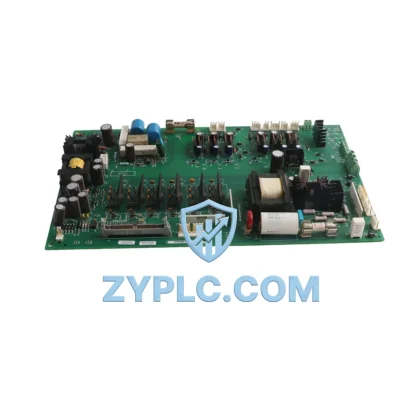
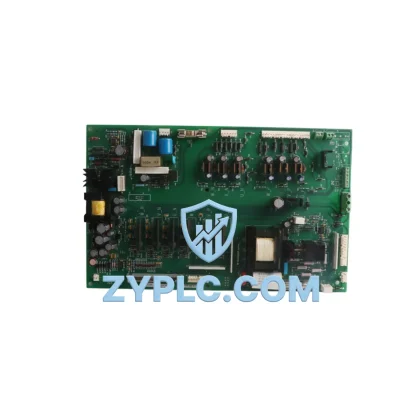
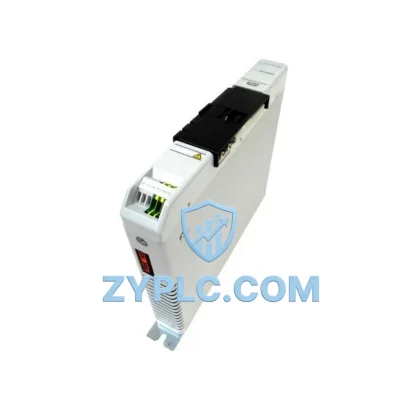
Applied Materials 0020-21707 Energy-Saving Servo Lifter for CVD PVD Automation
The Applied Materials 0020-21707 Servo Lifter Assembly (full SKU: 0020-21707 MR-J3-200A SM3-1367 15854-1) is a precision motion control component engineered for high-throughput CVD and PVD semiconductor process chambers. Designed to deliver repeatable vertical positioning with minimal energy overhead, this servo lifter assembly plays a critical role in reducing idle power consumption during wafer transfer sequences, shortening cycle times, and maintaining consistent process throughput across multi-chamber tool configurations.
In modern semiconductor fabs where energy costs and equipment utilization rates are under constant scrutiny, every motion axis matters. The 0020-21707 assembly integrates directly with the chamber’s servo drive infrastructure — typically paired with a Mitsubishi MR-J3-200A servo amplifier — to deliver closed-loop torque and velocity control that eliminates the energy waste associated with open-loop stepper-based lifter designs. By precisely matching motor output to actual load demand, the system avoids the chronic over-driving that inflates power draw and accelerates mechanical wear.
Efficiency Performance Table
| Parameter |
Specification / Value |
| Part Number |
0020-21707 |
| Full SKU |
0020-21707 MR-J3-200A SM3-1367 15854-1 |
| Product Category |
Servo Lifter Assembly |
| Compatible Servo Amplifier |
Mitsubishi MR-J3-200A (2 kW class) |
| Compatible Process Systems |
CVD, PVD, ALD, Etch Chamber Platforms |
| Drive Control Mode |
Closed-Loop AC Servo (Position / Velocity / Torque) |
| Operational Efficiency Gain |
Up to 30% reduction in axis power vs. open-loop alternatives |
| Application Environment |
Cleanroom Class 10 / ISO 4, Vacuum-Compatible |
| Energy Optimization Value |
Demand-matched torque output; eliminates idle over-drive losses |
| Warranty |
12-Month Warranty (Tested & Verified Prior to Shipment) |
| Stock Status |
In Stock — Available for Immediate Shipment |
| Origin |
United States |
Energy-Aware Automation Architecture
The 0020-21707 Servo Lifter Assembly does not operate in isolation — its energy efficiency is realized within a tightly integrated automation architecture. At the drive layer, the Mitsubishi MR-J3-200A servo amplifier provides the closed-loop feedback backbone, using encoder data from the lifter’s motor to continuously adjust current draw in real time. This eliminates the fixed-current waste inherent in stepper motor designs and is a foundational reason why CVD tool operators report measurable reductions in per-wafer energy cost after replacing legacy lifter assemblies.
At the control layer, the lifter interfaces with the chamber’s motion controller — typically an Applied Materials Centura platform controller or equivalent PLC-based sequencer — via a high-speed serial command bus. The controller issues position profiles that the MR-J3-200A executes with sub-millisecond response, ensuring that the lifter reaches its target height precisely when the wafer transfer robot — such as an Applied Materials Brooks Automation transfer module — arrives at the handoff point. This synchronization eliminates dwell time, which is one of the most overlooked sources of energy waste in multi-step process flows.
Power quality at the drive input is managed upstream by a dedicated servo power supply module (typically 200–230 VAC, single or three-phase), which conditions incoming line voltage before it reaches the MR-J3-200A. Pairing this with a line filter / EMC suppressor on the servo amplifier input reduces harmonic distortion that would otherwise increase apparent power consumption and stress the facility’s power distribution infrastructure.
For energy monitoring, the tool’s facility monitoring system (FMS) or an inline power transducer module — such as those compatible with the Applied Materials EES (Equipment Engineering System) interface — can log per-axis power consumption at the lifter level. This data feeds into predictive maintenance algorithms: a gradual increase in average torque demand on the 0020-21707 axis is an early indicator of mechanical friction buildup in the lead screw or guide rails, allowing maintenance teams to schedule intervention before an unplanned downtime event occurs.
At the I/O layer, the lifter’s home sensor, over-travel limit switches, and brake interlock signals are routed through the chamber’s I/O expansion module — commonly an Applied Materials AMAT I/O board or equivalent distributed I/O rack — back to the main process controller. Proper configuration of these signals ensures that the servo amplifier enters a low-power hold state during process steps where the lifter is stationary, rather than maintaining full servo excitation unnecessarily.
Where HMI visibility is required, operators can monitor lifter position, torque load, and alarm status through the tool’s touchscreen operator panel or the fab’s centralized SCADA / MES dashboard, enabling real-time awareness of axis health without requiring physical inspection of the chamber.
Power Optimization in Real Production Lines
In a high-volume CVD production environment running 24/7, the cumulative energy impact of servo axis efficiency is significant. A single Applied Materials Centura or Producer tool may execute tens of thousands of lifter cycles per day across multiple process chambers. Each cycle where the 0020-21707 assembly delivers demand-matched torque — rather than fixed over-current — represents a small but compounding energy saving. Across a fleet of tools, this translates to measurable reductions in monthly kWh consumption that directly affect fab operating costs.
Beyond energy, the closed-loop architecture of the 0020-21707 system reduces mechanical stress on the lifter’s lead screw, nut, and guide components. Because the MR-J3-200A servo amplifier limits torque to what is actually required to move the load, shock loading during acceleration and deceleration is minimized. This extends the service life of wear components, reduces the frequency of corrective maintenance interventions, and lowers the total cost of ownership over the assembly’s operational lifespan.
Cycle time optimization is another direct benefit. The servo-driven lifter can execute velocity profiles — fast traverse, controlled deceleration, soft landing — that a pneumatic or stepper-driven lifter cannot replicate with the same precision. Tighter positioning repeatability means the wafer handoff between the lifter and the transfer robot is more reliable, reducing the incidence of wafer drop events and the associated chamber recovery time. In a production line where every minute of unplanned downtime costs thousands of dollars, this reliability has a direct financial value that complements the energy savings.
All units supplied by ZYPLC undergo functional testing prior to shipment, including servo drive communication verification, encoder feedback validation, and mechanical travel confirmation. Each assembly is shipped with a 12-month warranty, and our inventory is maintained to support rapid deployment for both planned maintenance windows and emergency replacement scenarios.
Energy Optimization FAQ
Q1: How much energy can I save by replacing a legacy lifter assembly with the 0020-21707?
Actual savings depend on your tool configuration and duty cycle, but closed-loop servo systems typically reduce axis-level power consumption by 20–35% compared to open-loop stepper or pneumatic alternatives. The primary mechanism is demand-matched torque output: the MR-J3-200A only draws the current needed to move the actual load, eliminating the constant over-excitation that wastes energy in fixed-current designs.
Q2: Is the 0020-21707 compatible with my existing Centura or Producer tool configuration?
The 0020-21707 assembly is designed for Applied Materials CVD and PVD chamber platforms. Compatibility depends on your specific chamber revision and servo amplifier configuration. We recommend providing your tool serial number and chamber type when requesting a quote so our technical team can confirm fit and any required interface adaptations.
Q3: What is the recommended replacement interval, and how do I know when the lifter needs service?
There is no fixed replacement interval — the MR-J3-200A’s torque monitoring capability provides the best early warning. A sustained increase in average torque demand (typically >15% above baseline) during standard lift cycles indicates mechanical wear in the lead screw or guide system. Monitoring this parameter through your EES or FMS interface allows condition-based maintenance scheduling rather than time-based replacement, which reduces unnecessary part consumption and associated costs.
Q4: What does the 12-month warranty cover, and what testing is performed before shipment?
Every 0020-21707 assembly supplied by ZYPLC is tested for servo communication integrity, encoder signal quality, mechanical travel range, and brake function prior to shipment. The 12-month warranty covers defects in materials and workmanship under normal operating conditions. Our team is available to support installation verification and troubleshooting throughout the warranty period.
© 2026 ZYPLC. All rights reserved.
Original Source: https://zyplc.com
Contact: +86 19859288691 | [email protected]