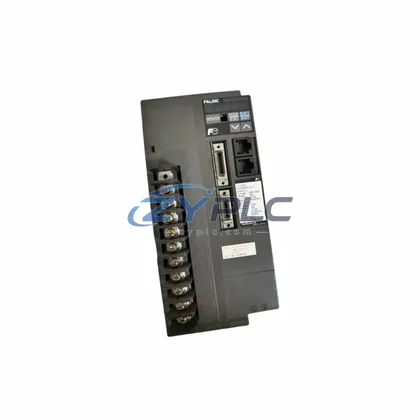
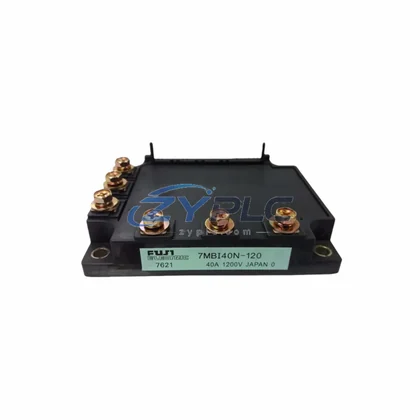
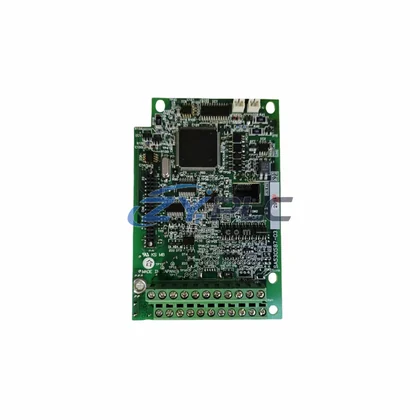
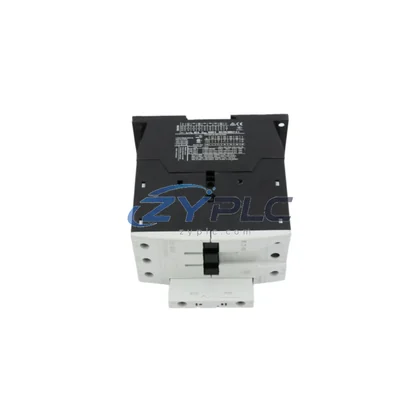
Basler ICRM-7 Industrial Network Interface for Electric Drive Systems: Bridging Field Devices and Smart Factory Data Links
The Basler ICRM-7 Inrush Current Reduction Module is a precision-engineered protection and control component designed for integration within industrial power and drive networks. As modern smart factories demand seamless data continuity from field-level devices through to SCADA and MES platforms, the ICRM-7 plays a critical role in stabilizing the electrical environment that underpins reliable industrial communication. By suppressing inrush current transients at startup, the ICRM-7 ensures that connected PLCs, remote I/O modules, HMI panels, and network switches operate within their rated electrical parameters — eliminating the voltage sags and interference that can corrupt real-time data transmission across industrial Ethernet and fieldbus networks.
In generator excitation and electric drive applications, the ICRM-7 is typically deployed alongside Basler Electric’s DECS-200 Digital Excitation Control System and the APR63-5 Automatic Voltage Regulator, forming a tightly integrated power management chain. When the drive system starts, the ICRM-7 limits the surge current that would otherwise propagate through the control bus, protecting the communication integrity of connected Basler BE1-11g generator protection relays and associated Modbus RTU or DNP3 communication links. This protection layer is essential in facilities where SCADA systems — such as those running on Wonderware or Ignition platforms — rely on uninterrupted polling cycles to maintain real-time visibility of generator status, excitation voltage, and load parameters.
The ICRM-7’s role extends beyond simple current limiting. In distributed control architectures, where Siemens S7-1200 or Allen-Bradley MicroLogix PLCs manage multiple drive zones over PROFIBUS DP or EtherNet/IP backbones, inrush events at one node can cascade into communication timeouts across the entire segment. The ICRM-7 isolates these transients, preserving the deterministic timing that industrial protocols require. Remote I/O racks — such as those using Phoenix Contact Axioline or Wago 750-series modules — benefit directly, as their analog and digital signal integrity is maintained even during heavy motor starts on the same power rail.
For HMI operators monitoring drive performance through panels connected via Modbus TCP or OPC-UA gateways, the ICRM-7 eliminates the nuisance alarms and communication dropouts that inrush events typically generate. This translates to cleaner alarm logs, more accurate trend data, and faster fault diagnosis — all of which are critical in facilities pursuing ISO 50001 energy management or IEC 61511 functional safety compliance. Edge gateways aggregating data from multiple drive nodes can maintain consistent data quality upstream to cloud analytics platforms without filtering out false anomalies caused by electrical interference.
ZYPLC maintains RFQ-confirmed availability of the Basler ICRM-7, sourced through authorized supply channels with full traceability documentation. Each unit undergoes pre-shipment functional verification, and all orders are Warranty terms are confirmed during quotation. Global logistics support ensures delivery to industrial sites across Asia, Europe, the Middle East, and the Americas, with expedited options available for urgent maintenance and commissioning requirements.
Compatibility & Integration Notes
| Attribute |
Specification |
| Product SKU |
ICRM-7 |
| Brand |
Basler Electric |
| Series |
Electric Drive / Generator Excitation Series |
| Product Type |
Inrush Current Reduction Module |
| Protocol Support |
Modbus RTU, DNP3, Modbus TCP (via gateway integration) |
| Interface Type |
Power Bus Interface, Control Signal Interface |
| Communication Role |
Electrical Noise Suppression for Industrial Communication Links |
| Network Compatibility |
PROFIBUS DP, EtherNet/IP, Industrial Ethernet (via upstream devices) |
| System Application |
Generator Excitation, Electric Drive Control, SCADA Integration, HMI Monitoring |
| Warranty |
12 Months |
| Origin |
USA |
| Availability |
Available — Pre-shipment Tested |
Connected Automation Data Flow
In a typical smart factory deployment, the Basler ICRM-7 sits at the intersection of the power distribution layer and the industrial communication network. The data flow begins at the field level: current and voltage sensors feed analog signals into the Basler DECS-200 excitation controller, which processes these inputs and communicates generator status upstream via Modbus RTU to a Siemens S7-300 PLC acting as the site’s primary automation controller. The ICRM-7 protects this entire signal chain during generator startup by preventing inrush transients from coupling into the communication wiring.
From the PLC, data flows over an EtherNet/IP backbone to a Rockwell Automation FactoryTalk SCADA server, where operators monitor excitation voltage, load sharing ratios, and fault conditions in real time. HMI panels — running on Weintek cMT or Proface GP4000 platforms — display live drive parameters and allow operators to issue control commands without leaving the control room. Remote I/O expansion racks using Phoenix Contact Axioline F modules extend the control reach to field junction boxes, collecting discrete and analog signals from temperature sensors, vibration monitors, and position encoders mounted on the drive train.
At the network edge, an industrial gateway — such as the Moxa MGate MB3480 — bridges legacy Modbus RTU devices to the Ethernet backbone, ensuring that older Basler APR63-5 voltage regulators and BE1-11g protection relays remain visible to the SCADA system without requiring hardware replacement. The ICRM-7’s current-limiting action during drive starts prevents the voltage dips that would otherwise cause these gateways to reset and lose their communication sessions — a common source of data gaps in historical trend databases.
Solving Data Isolation in Industrial Sites
One of the most persistent challenges in industrial facilities operating mixed-generation equipment is protocol fragmentation. Older generator protection systems may communicate exclusively over DNP3 or proprietary serial protocols, while newer drive controllers use EtherNet/IP or PROFINET. Without proper electrical isolation and current management at the power layer, the integration of these systems into a unified SCADA architecture is undermined by communication instability caused by electrical interference — precisely the problem the Basler ICRM-7 addresses.
Data island elimination requires not only protocol conversion gateways but also a stable electrical foundation. When inrush events cause momentary voltage sags on shared power rails, communication modules reset, PLC scan cycles are disrupted, and SCADA historians record false data gaps. The ICRM-7 removes this root cause, enabling continuous data flow from field sensors through to enterprise-level analytics platforms. Production line transparency — the ability to see real-time energy consumption, drive efficiency, and fault history across all assets — becomes achievable only when the underlying electrical environment is stable.
Remote monitoring and diagnostics are similarly dependent on communication continuity. Maintenance teams using mobile SCADA clients or remote desktop connections to diagnose drive faults need uninterrupted access to live data. The ICRM-7 ensures that the communication links supporting these remote sessions remain active even during the most demanding operational transitions — such as large motor starts or generator load transfers. System expansion is also simplified: adding new drive nodes or remote I/O segments to an existing network does not introduce new inrush risks when each new load is protected by an ICRM-7 module at the point of connection.
Industrial Connectivity FAQ
Q1: Does the Basler ICRM-7 introduce communication latency into the control network?
No. The ICRM-7 operates at the power layer and does not process or relay communication signals. Its function is to limit inrush current during startup events, which actually reduces latency-causing interference on adjacent communication wiring. Control network cycle times remain unaffected.
Q2: Is the ICRM-7 compatible with both Modbus RTU and EtherNet/IP environments?
Yes, indirectly. The ICRM-7 protects the electrical environment in which these protocols operate. It is compatible with any industrial communication architecture — including PROFIBUS DP, DNP3, Modbus TCP, and EtherNet/IP — by preventing the inrush-induced voltage disturbances that degrade communication reliability across all protocol types.
Q3: How does the ICRM-7 contribute to network stability in multi-drive installations?
In facilities with multiple drive systems sharing a common power bus, simultaneous or sequential motor starts can generate cumulative inrush currents that exceed the tolerance of communication power supplies and network switches. Deploying an ICRM-7 at each drive node limits the per-node inrush contribution, maintaining bus voltage within the operating range of all connected network equipment.
Q4: What warranty and pre-shipment testing does ZYPLC provide for the ICRM-7?
All Basler ICRM-7 units supplied by ZYPLC are Warranty terms are confirmed during quotation. Each unit undergoes functional verification prior to shipment, including continuity checks and operational parameter confirmation. Traceability documentation is available upon request for quality-critical installations.