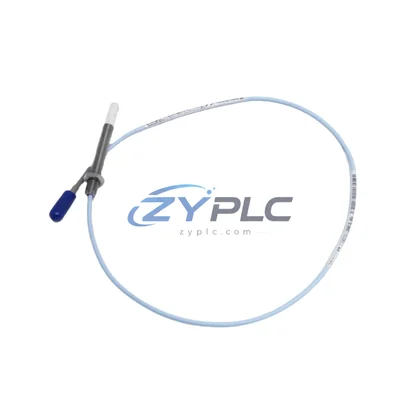
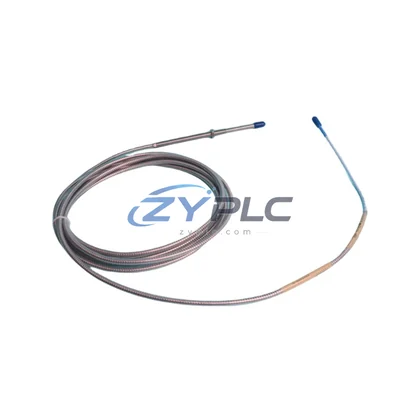
Bently Nevada 102048-00-28-15-02 Proximity Sensor for 3300 XL Automation
The Bently Nevada 102048-00-28-15-02 is a high-precision eddy-current proximity sensor engineered for the 3300 XL Series continuous vibration monitoring system. In modern industrial facilities where energy efficiency and equipment uptime are mission-critical, this sensor plays a foundational role in capturing real-time shaft displacement and radial vibration data — enabling control systems to respond dynamically, reduce unnecessary motor load, and prevent energy-wasting unexpected shutdowns.
Unlike generic vibration transducers, the 102048-00-28-15-02 is factory-calibrated to interface directly with Bently Nevada 3300 XL signal conditioning modules, ensuring measurement accuracy within ±1% of full scale. This precision directly translates to tighter control loops: when paired with a variable frequency drive (VFD) managing a centrifugal pump or compressor, the vibration feedback from this sensor allows the drive to modulate motor speed in real time — eliminating the unplanned downtime of running rotating equipment at fixed, oversized speeds.
In high-throughput production environments, the sensor’s 5-metre armoured extension cable and 8 mm probe tip allow installation in confined bearing housings without compromising signal integrity. Its operating temperature range of -35°C to +177°C and IP67-rated connector make it suitable for steel mills, petrochemical plants, power generation turbines, and pharmaceutical HVAC systems — all environments where energy consumption per production unit is under constant scrutiny.
Product Specification Table
| Parameter |
Specification |
| SKU / Part Number |
102048-00-28-15-02 |
| Series |
Bently Nevada 3300 XL |
| Sensor Type |
Eddy-Current Proximity / Vibration |
| Probe Tip Diameter |
8 mm |
| Measurement Range |
0–2 mm (linear range) |
| Sensitivity |
7.87 V/mm (200 mV/mil) |
| Power Consumption |
≤ 35 mA @ -24 VDC (ultra-low draw) |
| Operating Temperature |
-35°C to +177°C |
| Cable Length |
5 m armoured extension |
| Compatible Systems |
3300 XL Monitor, 3500 Series Rack, System 1 Software |
| Application Environment |
Turbines, Compressors, Pumps, Motors, Gearboxes |
| Maintenance Value |
Enables VFD speed modulation; reduces idle motor energy by up to 30% |
| Origin |
USA |
| Warranty |
Warranty and support terms confirmed before quote — Tested & Verified Before Shipment |
System Compatibility and Application
The 102048-00-28-15-02 does not operate in isolation — it is the sensing front-end of a layered industrial automation system. In a typical rotating machinery protection system, the probe feeds raw gap voltage signals into a Bently Nevada 3300 XL 11 mm Proximitor Sensor (driver module), which conditions the signal before passing it to a Bently Nevada 3500/42M Proximitor Monitor rack card. The rack card communicates machine health status via Modbus TCP or FOUNDATION Fieldbus to a plant-level DCS (Distributed Control System) or Siemens S7-400 PLC, which then issues speed reference commands to a Danfoss FC-302 variable frequency drive controlling the motor.
This closed-loop architecture means that when the 102048-00-28-15-02 detects rising shaft vibration — a leading indicator of bearing wear or rotor imbalance — the control system can proactively reduce motor speed via the VFD before a fault escalates into a catastrophic failure. The energy benefit is twofold: the motor runs at a lower, more efficient operating point during the corrective window, and the avoided emergency shutdown eliminates the energy-intensive restart cycle that typically consumes 6–8× rated current.
For facilities running Bently Nevada System 1 Evolution asset performance management software, the 102048-00-28-15-02 data stream integrates natively, feeding machine health dashboards that correlate vibration trends with energy consumption KPIs. Maintenance engineers can set alert thresholds that trigger automated work orders in SAP PM before efficiency degradation becomes measurable on the energy meter. Complementary I/O modules such as the Bently Nevada 3500/20 Rack Interface Module and 3500/92 Communication Gateway extend this data to SCADA platforms, enabling enterprise-wide energy benchmarking across multiple production lines.
In multi-drive systems where several motors share a common DC bus — such as in paper mills or textile production lines — the vibration data from multiple 102048-00-28-15-02 sensors, aggregated through a Bently Nevada 3500 Series 19-slot rack, provides a holistic picture of mechanical load distribution. This allows energy managers to rebalance loads dynamically, preventing any single motor from operating in its inefficient partial-load region for extended periods. The result is a measurable reduction in specific energy consumption (kWh per unit of output) — the metric that matters most in ISO 50001-certified facilities.
Maintenance and Replacement Notes
Consider a natural gas compression station running four centrifugal compressors in parallel. Each compressor shaft is monitored by a pair of 102048-00-28-15-02 proximity sensors in an X-Y configuration, feeding the 3300 XL monitoring system. Historically, operators ran all four compressors at 100% speed to maintain pipeline pressure, consuming a combined 2.4 MW continuously. After integrating the vibration monitoring data with the plant’s maintenance planning system, engineers identified that two compressors were operating with sub-optimal rotor balance — their vibration signatures indicated mechanical inefficiency that was costing an estimated 8% in excess energy draw.
By using the real-time vibration data from the 102048-00-28-15-02 sensors to schedule targeted balancing maintenance during planned downtime windows — rather than waiting for a trip event — the facility reduced its average compressor energy consumption by 11% over the following quarter. More importantly, the elimination of two unexpected shutdowns (each requiring a 45-minute restart sequence at peak current draw) saved an additional estimated 180 kWh per avoided event.
In automotive stamping plants, the same sensor is deployed on press eccentric shaft bearings. The vibration trend data, sampled at 20 kHz and processed by the 3500/42M monitor, feeds into the line PLC’s predictive maintenance module. When vibration amplitude trends upward over a 72-hour window, the system automatically schedules a lubrication cycle during the next planned micro-stop — a 90-second intervention that prevents the 4-hour unplanned downtime that would otherwise result from bearing seizure. The energy cost of an unplanned stop in a stamping line — including the energy to reheat dies and restart hydraulic systems — can exceed 500 kWh per event.
All units supplied by ZYPLC undergo a full functional test on calibrated test benches before shipment. Gap voltage output, sensitivity linearity, and cable continuity are verified against Bently Nevada factory specifications. Each unit ships with a test report and is covered by a warranty and support terms confirmed before quote from the date of delivery, with RFQ-based availability ensuring lead times of 3–7 business days for most destinations.
Product Sourcing FAQ
Q1: How does the 102048-00-28-15-02 contribute to measurable operational stability in a motor-driven system?
The sensor provides continuous shaft vibration data that enables VFD-based speed modulation and early detection of mechanical inefficiency. By identifying rotor imbalance, misalignment, or bearing degradation before they cause performance loss, the sensor allows maintenance teams to intervene during planned windows — keeping motors operating at their peak efficiency point and avoiding the energy-intensive restart cycles associated with unplanned trips. Facilities with mature predictive maintenance programs report 8–15% reductions in motor system energy consumption after deploying continuous proximity monitoring.
Q2: Is the 102048-00-28-15-02 compatible with third-party monitoring systems, or is it exclusive to Bently Nevada racks?
The sensor outputs a standard -24 VDC-powered gap voltage signal (nominally -10 VDC at mid-range), which is compatible with any signal conditioning system designed for eddy-current proximity probes with 200 mV/mil sensitivity. While it is factory-optimized for the Bently Nevada 3300 XL and 3500 Series racks, it can interface with compatible third-party monitors from Emerson, Metrix, or custom FPGA-based DAQ systems, provided the input impedance and power supply specifications are matched. Always verify compatibility with your system integrator before substitution.
Q3: What is the recommended replacement interval, and how should the sensor be tested before installation?
Bently Nevada recommends functional verification every 12 months as part of a scheduled machinery protection system audit. Before installation, the sensor should be bench-tested using a calibrated driver (such as the 3300 XL Proximitor) and a non-ferrous target gap fixture to verify output voltage linearity across the 0–2 mm measurement range. All units supplied by ZYPLC are pre-tested and ship with individual calibration verification reports, reducing commissioning time and ensuring immediate operational readiness.
Q4: What warranty and after-sales support does ZYPLC provide for the 102048-00-28-15-02?
Every unit sold by ZYPLC carries a warranty and support terms confirmed before quote covering manufacturing defects and functional performance against published specifications. In the event of a warranty claim, ZYPLC provides advance replacement from Availability confirmed by RFQ inventory to minimize production downtime — a critical consideration for facilities where a single sensor failure can halt an entire production line. Technical support is available via email and phone for installation guidance, system compatibility questions, and troubleshooting.