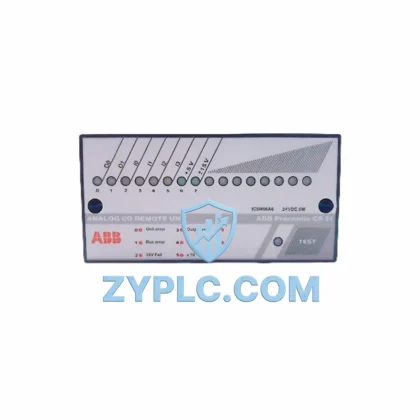
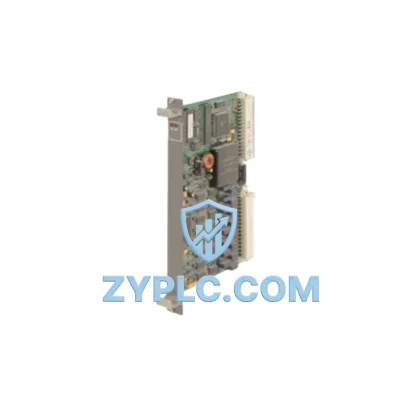
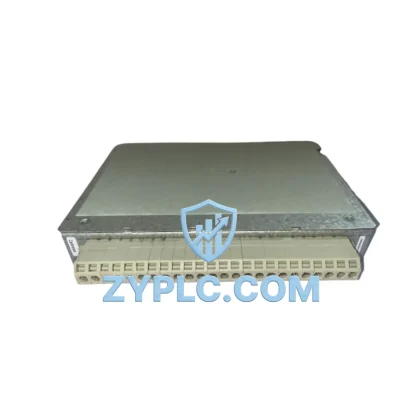
Bently Nevada 149992-02 Relay Output Module for 149992 Series
The Bently Nevada 149992-02 Relay Output Module is a precision-engineered output interface component designed to operate within the 149992 Series vibration and condition monitoring architecture. In modern industrial automation environments — spanning rotating machinery protection, turbine monitoring, compressor surveillance, and critical asset management — the relay output module serves as the decisive link between the monitoring system’s analytical layer and the plant’s protective action layer. The 149992-02 is not a standalone device; it is a system-integrated component whose value is fully realized only when understood within the broader context of the Bently Nevada monitoring platform.
Within a layered control architecture, the 149992-02 occupies the output execution layer, receiving conditioned alarm and trip signals from upstream signal conditioning and processing modules, and translating those signals into discrete relay contact closures that drive shutdown logic, annunciator panels, DCS interlock inputs, and safety instrumented system (SIS) interfaces. Its role is to ensure that the monitoring system’s decisions — whether a high-vibration alarm, a danger-level trip, or a system fault — are communicated reliably and without ambiguity to the plant’s protective infrastructure.
System architects deploying the 149992-02 typically integrate it alongside the Bently Nevada 3500 Series rack-based monitoring system or legacy 149992 Series rack assemblies. In these configurations, the relay output module shares a common backplane with signal conditioning modules such as the 149992-01 input module, the 3500/42M proximitor I/O module, and the 3500/22M transient data interface. The rack backplane provides both power distribution and inter-module communication, ensuring that relay state changes are synchronized with the monitoring system’s real-time alarm processing engine.
From a signal flow perspective, the 149992-02 receives its drive signals from the rack’s internal communication bus. Upstream, eddy-current proximity probes — such as those in the Bently Nevada 3300 XL or 7200 Series — feed raw vibration signals into the rack’s input modules. These signals are conditioned, filtered, and compared against configured alarm setpoints. When a setpoint is exceeded, the monitoring system asserts an alarm or danger state, which propagates through the backplane to the 149992-02, causing the appropriate relay contact to change state. This contact closure is then wired to the plant’s DCS, ESD system, or local annunciator, completing the protective action loop.
In redundant architecture designs — common in critical rotating machinery applications such as gas turbines, steam turbines, and large centrifugal compressors — the 149992-02 may be deployed in paired configurations, with dual relay outputs providing redundant trip paths to the plant’s safety logic solver. This approach aligns with IEC 61511 functional safety requirements and supports SIL-rated protective functions. The module’s relay contacts are rated for the voltage and current levels typical of industrial interlock circuits, ensuring compatibility with standard DCS digital input cards and relay-driven solenoid valve circuits.
Power integrity within the rack is maintained by dedicated power supply modules, such as the Bently Nevada 3500/15 power supply, which provides regulated DC power to all modules in the rack assembly. The 149992-02 draws its operating power from this common supply rail, and its relay coils are energized or de-energized based on the monitoring system’s alarm state. In fail-safe designs, the relay contacts are configured in a normally energized (de-energize-to-trip) arrangement, ensuring that a loss of power or module failure results in a protective trip rather than a masked fault condition.
For human-machine interface integration, the relay output states of the 149992-02 are typically reflected in the Bently Nevada System 1 software platform, which provides real-time visualization of alarm states, relay contact status, and historical trend data. Operators at the control room HMI can monitor the relay output status alongside vibration waveforms, orbit plots, and Bode diagrams, enabling rapid diagnosis of machinery faults and informed decision-making during alarm events. Integration with third-party SCADA systems is achieved through the System 1 OPC-DA or OPC-UA server interface, providing seamless data exchange with plant-wide historian and control systems.
From a maintenance and lifecycle management perspective, the 149992-02 is designed for hot-swap replacement within the 149992 Series rack, minimizing planned maintenance downtime. Spare module inventory management is simplified by the module’s standardized form factor and connector pinout, which is consistent across the 149992 Series product family. ZYPLC maintains verified stock of the 149992-02 with full functional testing prior to shipment, supported by a 12-Month Warranty covering manufacturing defects and operational failures under normal service conditions.
Product Specification Table
| System Role |
Relay Output Module — Alarm & Trip Output Execution Layer |
| Compatible Platform |
Bently Nevada 149992 Series Rack / 3500 Series Monitoring System |
| Output Type |
Discrete Relay Contact Closure (Form C) |
| Relay Configuration |
Normally Energized (Fail-Safe De-energize-to-Trip) |
| Communication Interface |
Rack Backplane Internal Bus |
| Power Source |
Rack Common DC Power Rail (via 3500/15 or equivalent PSU) |
| Installation Environment |
Control Panel / Rack Enclosure, Industrial Environment |
| Mounting |
Rack-Mounted, Backplane-Connected Module |
| Country of Origin |
United States |
| Warranty |
12-Month Warranty — Manufacturing Defects & Operational Failures |
| Supplier |
ZYPLC | +86 19859288691 | plc.sales@zyplc.com |
System Compatibility Notes
The 149992-02 achieves its full system value when deployed as part of a coordinated Bently Nevada monitoring architecture. In a typical turbine protection system, the rack assembly begins with the Bently Nevada 3500/15 Power Supply Module, which provides stable DC power to all downstream modules. The 149992-01 Input Module receives raw proximity probe signals from Bently Nevada 3300 XL Series eddy-current probes mounted at the machine’s bearing locations. These signals are conditioned and processed by the rack’s internal monitoring engine, with alarm and danger setpoints configured via the Bently Nevada rack configuration software.
When a monitored parameter exceeds its configured threshold, the alarm state propagates through the rack backplane to the 149992-02 Relay Output Module, which asserts the appropriate relay contact. This contact closure is wired to the plant’s DCS digital input module — typically a redundant I/O card in a Honeywell Experion, Emerson DeltaV, or ABB 800xA system — which triggers the configured interlock logic. In parallel, the relay output may drive a solenoid valve in the machine’s lube oil or seal gas system, initiating a controlled shutdown sequence.
For systems requiring enhanced diagnostic capability, the Bently Nevada 3500/42M Proximitor I/O Module and the 3500/22M Transient Data Interface are integrated into the same rack, providing waveform capture and transient event recording alongside the relay output function of the 149992-02. The Bently Nevada System 1 Software serves as the HMI layer, aggregating relay status, vibration trends, and alarm history into a unified operator display. Terminal blocks and marshalling panels — such as those from Phoenix Contact or Weidmüller — provide the field wiring interface between the relay output contacts and the plant’s interlock circuits, completing the system architecture.
Industrial Application Notes
The 149992-02 Relay Output Module finds application across a broad range of heavy industrial sectors where rotating machinery protection is critical to operational continuity and personnel safety.
In power generation facilities — including gas turbine, steam turbine, and hydro turbine plants — the 149992-02 provides the relay output interface for vibration-based trip functions, integrating with the plant’s turbine control system (TCS) and emergency shutdown system (ESD). In petrochemical and refining applications, the module supports compressor and pump protection systems, where relay outputs drive solenoid valves and DCS interlock inputs in accordance with API 670 machinery protection standards.
In mining and mineral processing operations, the 149992-02 is deployed in mill drive and crusher protection systems, where high-vibration events must trigger rapid equipment shutdown to prevent catastrophic mechanical failure. In water and wastewater treatment plants, the module supports pump and blower protection, ensuring that bearing failures are detected and acted upon before secondary damage occurs. In metallurgical and steel production facilities, the 149992-02 integrates into rolling mill and continuous caster protection architectures, where relay outputs coordinate with the mill’s main drive control system.
Across all these applications, the 149992-02’s role is consistent: to provide a reliable, fail-safe relay output interface that bridges the monitoring system’s analytical intelligence with the plant’s protective action infrastructure, ensuring that machinery faults are responded to with speed, precision, and system-level coordination.
Product Compatibility FAQ
Q1: Is the Bently Nevada 149992-02 compatible with the 3500 Series rack system, and can it be mixed with 3500 Series modules in the same rack?
The 149992-02 is designed for the 149992 Series rack architecture and is not directly interchangeable with 3500 Series modules, which use a different backplane connector and communication protocol. In installations requiring both legacy 149992 Series and current 3500 Series functionality, separate rack assemblies are used for each platform, with inter-system integration achieved at the DCS or SIS level via relay contact wiring or digital communication interfaces. ZYPLC recommends consulting the Bently Nevada system architecture documentation and confirming rack compatibility before ordering replacement modules.
Q2: How does the 149992-02 support redundant trip architecture, and what wiring configuration is recommended for SIL-rated applications?
For redundant trip architectures, the 149992-02 relay contacts are typically wired in a 1oo2 (one-out-of-two) or 2oo3 (two-out-of-three) voting configuration, depending on the SIL target and the plant’s functional safety design basis. In a 1oo2 configuration, two independent relay output modules — each receiving the same alarm signal from the monitoring system — provide dual trip paths to the safety logic solver, ensuring that a single relay failure does not prevent a protective trip. ZYPLC supplies the 149992-02 with full functional relay testing and provides documentation supporting integration into IEC 61511-compliant safety instrumented systems.
Q3: What does the 12-Month Warranty cover, and what is the process for warranty claims or advance replacement?
ZYPLC’s 12-Month Warranty on the Bently Nevada 149992-02 covers manufacturing defects and operational failures occurring under normal service conditions, including relay contact failure, coil open-circuit, and backplane connector degradation. The warranty period begins from the date of shipment. In the event of a warranty claim, ZYPLC’s technical team will assess the failure mode and, where applicable, arrange advance replacement to minimize plant downtime. To initiate a warranty claim or request technical support, contact ZYPLC at +86 19859288691 or plc.sales@zyplc.com.
© 2026 ZYPLC. All rights reserved.
Original Source: https://zyplc.com
Contact: +86 19859288691 | plc.sales@zyplc.com