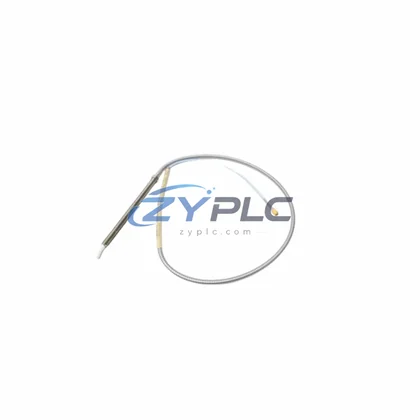
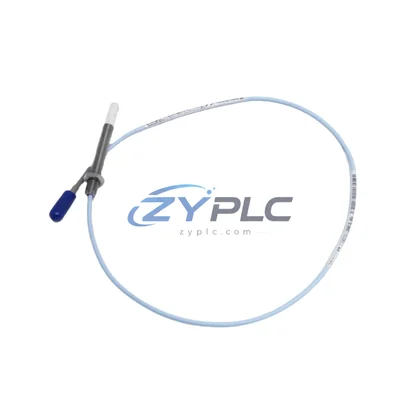
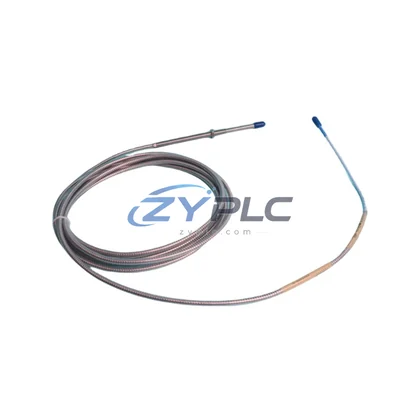
Bently Nevada 177230-02-01-05 Seismic Transmitter for 3500 Series Automation
In modern industrial facilities where equipment uptime and replacement lead time directly affect production continuity, the Bently Nevada 177230-02-01-05 Seismic Transmitter plays a critical role in the 3500 Series continuous vibration monitoring platform. By delivering precise, real-time seismic and vibration data to the control system, this transmitter enables plant engineers to move away from reactive maintenance cycles toward a fully predictive, maintenance-focused operational model. Rather than running machinery at fixed intervals regardless of actual condition, facilities equipped with the 177230-02-01-05 can schedule maintenance only when vibration signatures indicate genuine degradation — eliminating unnecessary downtime, reducing spare parts consumption, and cutting the unplanned downtimed on running compromised equipment at suboptimal efficiency.
The 177230-02-01-05 is designed to integrate seamlessly within the Bently Nevada 3500 rack-based monitoring architecture. It accepts velocity-type seismic inputs and conditions the signal for transmission to the 3500/42M Proximitor/Seismic Monitor module, which processes the data and communicates alarm states to the plant DCS or safety system. This tight integration between the transmitter and the monitor module ensures that vibration anomalies are captured with minimal latency, allowing the control system to respond before a developing fault escalates into a catastrophic failure — a failure mode that not only destroys equipment but also wastes the energy embedded in production materials and idle downstream processes.
From an energy architecture perspective, the 177230-02-01-05 sits at the sensing layer of a broader efficiency stack. The vibration data it generates feeds into the 3500 system’s Keyphasor module, which correlates rotational speed with vibration amplitude to identify imbalance, misalignment, and bearing wear — all conditions that force rotating machinery to draw abnormal load. When a pump or compressor develops rotor imbalance, its motor must work harder to maintain flow, increasing kWh consumption per unit of output. The 177230-02-01-05 detects this condition early, enabling corrective action before unplanned downtime compounds over weeks or months of degraded operation.
In facilities running variable-speed drives such as the Rockwell PowerFlex 755 or Siemens SINAMICS G120, the seismic transmitter’s output can be used to validate that drive speed adjustments are achieving the intended reduction in mechanical vibration. If a drive ramps down motor speed to save energy but vibration levels remain elevated, the 177230-02-01-05 provides the feedback signal that confirms the drive tuning is insufficient — prompting engineers to revisit PID parameters or inspect mechanical coupling. This closed-loop relationship between drive control and vibration monitoring is fundamental to achieving genuine operational stability rather than nominal ones.
The 3500 platform’s communication backbone, typically implemented via the 3500/92 Communication Gateway using Modbus TCP or OPC-UA, allows the 177230-02-01-05’s processed data to flow into plant-level SCADA and maintenance planning systems. When integrated with a power monitoring device such as the Schneider Electric PowerLogic ION7650 or the ABB M2M energy meter, plant operators can correlate vibration trends with real-time power consumption data — establishing a direct, quantifiable link between mechanical health and energy efficiency. A bearing in early-stage failure that increases motor current by 4% may seem minor in isolation, but across a fleet of 20 pumps running continuously, the cumulative energy cost is substantial and entirely avoidable with proper monitoring.
On the control execution side, the 177230-02-01-05’s alarm outputs interface with the plant’s safety instrumented system or PLC — commonly a Siemens S7-400H or a Rockwell ControlLogix L85E — to trigger automated protective actions. When vibration exceeds the danger threshold, the PLC can initiate a controlled shutdown sequence, isolating the affected machine while keeping adjacent production lines running. This targeted response minimizes the energy disruption of an unplanned full-line shutdown, preserving production rhythm and avoiding the energy-intensive restart cycles that follow emergency stops.
For facilities managing multiple rotating assets across large plant floors, the 177230-02-01-05 supports a distributed monitoring topology within the 3500 rack system. Multiple transmitters can be installed across different machine trains — turbines, compressors, fans, and gearboxes — all reporting into a centralized 3500 rack monitored by a single operator workstation running System 1 Evolution software. This centralized visibility allows energy managers to prioritize maintenance resources on the machines contributing most to excess operating load, rather than applying uniform maintenance schedules that waste labor and parts on healthy equipment.
The transmitter’s robust construction is rated for continuous operation in harsh industrial environments, including high-temperature areas near process equipment and locations subject to electromagnetic interference from large motor drives. Its signal conditioning circuitry filters out electrical noise that could otherwise generate false alarms, ensuring that the 3500 system’s alarm management remains reliable and that operators do not waste time and energy responding to spurious trips. Every unit supplied by ZYPLC undergoes full functional testing prior to shipment, verifying output signal accuracy, frequency response, and alarm relay operation against original Bently Nevada specifications.
Product Specification Table
| Parameter |
Specification / Value |
| Part Number |
177230-02-01-05 |
| Brand / Series |
Bently Nevada / 3500 |
| Product Type |
Seismic Transmitter |
| Input Signal Type |
Velocity (Seismic) |
| Compatible Monitor Module |
Bently Nevada 3500/42M Proximitor/Seismic Monitor |
| Communication Protocol |
Modbus TCP / OPC-UA (via 3500/92 Gateway) |
| Compatible Control Systems |
DCS, SIS, PLC (Siemens S7, Rockwell ControlLogix) |
| Application Environment |
Rotating machinery: turbines, compressors, pumps, fans |
| Maintenance Value |
Early fault detection reduces excess motor current draw; enables predictive maintenance to eliminate unplanned downtime from degraded equipment |
| Operating Environment |
Industrial — high temperature, EMI-resistant |
| Origin |
USA |
| Warranty |
Warranty and support terms confirmed before quote |
| Availability |
Confirmed via RFQ before quotation |
| Testing |
Full functional test performed prior to shipment |
System Compatibility and Application
The 177230-02-01-05 operates as the sensing foundation of an industrial automation system built around the Bently Nevada 3500 platform. At the rack level, it works alongside the 3500/42M Proximitor/Seismic Monitor to process raw velocity signals into calibrated vibration measurements. The 3500/20 Rack Interface Module manages rack-level communication and power distribution, ensuring that all monitoring channels — including those served by the 177230-02-01-05 — operate with consistent signal integrity. The 3500/15 Power Supply provides the stable DC power required for accurate transmitter operation, eliminating measurement drift caused by supply voltage fluctuation.
At the drive layer, the 177230-02-01-05’s vibration data informs the tuning of variable-frequency drives such as the Siemens SINAMICS G120 and Rockwell PowerFlex 755, which regulate motor speed to match actual process demand. When vibration data indicates mechanical resonance at a specific speed, drive engineers can program skip frequencies to avoid that operating point — reducing both vibration amplitude and the associated energy penalty of running through resonance. The Bently Nevada 3500/92 Communication Gateway bridges the monitoring system to the plant network, delivering real-time vibration data to SCADA platforms and maintenance planning dashboards where it can be correlated with power consumption data from devices such as the Schneider Electric PowerLogic ION7650.
At the control execution layer, the 177230-02-01-05’s alarm outputs connect to safety PLCs and DCS controllers — including the Siemens S7-400H for high-availability applications — enabling automated protective responses that preserve both equipment integrity and production energy efficiency. HMI systems running on Wonderware InTouch or Siemens WinCC display vibration trends alongside energy KPIs, giving operators a unified view of mechanical health and power consumption in a single interface. The System 1 Evolution asset management software aggregates data from all 3500-connected transmitters, including the 177230-02-01-05, to generate fleet-level health reports that support energy-focused maintenance prioritization.
Maintenance and Replacement Notes
In a typical continuous process plant — a petrochemical facility, a power generation station, or a large-scale water treatment plant — rotating machinery accounts for 60–70% of total electrical operating load. Pumps, compressors, and fans running with developing mechanical faults draw measurably more current than healthy machines performing the same work. The Bently Nevada 177230-02-01-05 addresses this energy leak at its source by providing the early warning data that allows maintenance teams to intervene before fault severity reaches the point of significant efficiency loss.
Consider a boiler feed pump running with a developing bearing defect. As the bearing degrades, rotor imbalance increases, forcing the motor to draw additional current to maintain the required flow rate. Without vibration monitoring, this condition may persist for weeks or months — consuming excess energy continuously — until the bearing fails catastrophically, triggering an emergency shutdown that disrupts the entire production line. With the 177230-02-01-05 installed and integrated into the 3500 monitoring rack, the developing imbalance is detected within the first days of onset. Maintenance can be scheduled during a planned outage window, the bearing replaced, and the pump returned to efficient operation — eliminating weeks of excess operating load and avoiding the energy-intensive restart sequence following an unplanned trip.
Beyond individual machine health, the 177230-02-01-05 contributes to production line rhythm optimization. In automated manufacturing environments where conveyor systems, robotic actuators, and process pumps must operate in coordinated sequences, unexpected vibration-related shutdowns break the production cadence and force energy-intensive restart cycles across multiple systems simultaneously. By maintaining continuous vibration surveillance, the 177230-02-01-05 enables a stable, predictable production rhythm that minimizes energy spikes associated with repeated starts and stops. All units supplied by ZYPLC are fully tested, covered by a warranty and support terms confirmed before quote, and available from stock for rapid deployment to minimize production disruption.
Product Sourcing FAQ
Q1: How does the 177230-02-01-05 contribute to measurable operational stability?
By detecting mechanical faults — imbalance, misalignment, bearing wear — at an early stage, the 177230-02-01-05 enables corrective maintenance before the fault forces the motor to draw abnormal load. Facilities that transition from time-based to condition-based maintenance using 3500 Series monitoring typically report 5–15% reductions in rotating machinery operating load, depending on fleet size and prior maintenance practices.
Q2: Is the 177230-02-01-05 compatible with my existing 3500 rack and DCS?
Yes. The 177230-02-01-05 is designed for use within the Bently Nevada 3500 rack system and interfaces with the 3500/42M Proximitor/Seismic Monitor module. Communication to your DCS or SCADA is handled via the 3500/92 Communication Gateway, which supports Modbus TCP and OPC-UA — protocols compatible with the majority of modern DCS platforms including Honeywell Experion, Emerson DeltaV, and Yokogawa CENTUM VP.
Q3: Can this unit replace a failed or obsolete seismic transmitter in an existing installation?
Yes. The 177230-02-01-05 is a direct replacement for failed units within the 3500 monitoring architecture. ZYPLC recommends verifying the rack slot configuration and cable termination against the original installation drawings prior to replacement. All units are tested to original Bently Nevada specifications before shipment, and the warranty and support terms confirmed before quote covers both the unit and its verified performance parameters.
Q4: What is the testing and warranty process for units supplied by ZYPLC?
Every 177230-02-01-05 unit supplied by ZYPLC undergoes a full functional test that verifies output signal accuracy, frequency response characteristics, and alarm relay operation. Test records are available upon request. Units are covered by a warranty and support terms confirmed before quote from the date of shipment. In the event of a warranty claim, ZYPLC provides rapid replacement to minimize production downtime and the associated energy and productivity costs of extended outages.