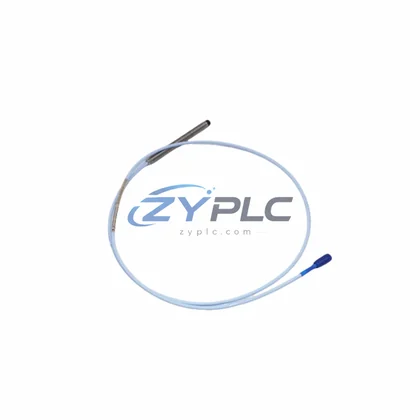
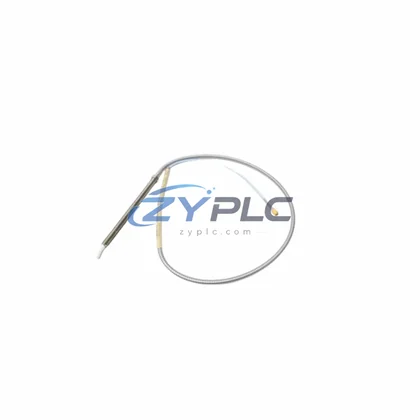
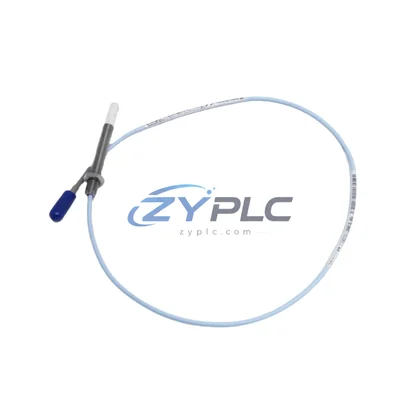
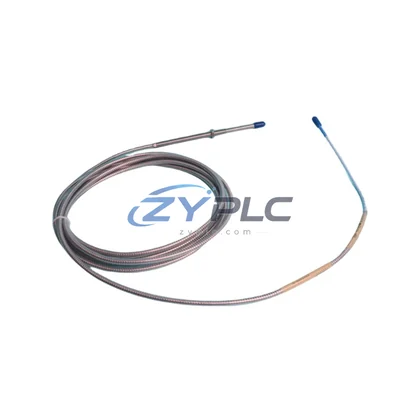
Product Specification Table
| Parameter |
Specification |
| SKU / Part Number |
177230-02 |
| Brand / Series |
Bently Nevada / 3300 Series |
| Product Category |
Seismic Transmitter / Vibration Monitoring |
| Power Consumption |
Low-power design, optimized for continuous 24/7 industrial operation |
| Operating Efficiency |
High-linearity signal output; minimizes signal conditioning overhead |
| Compatible Systems |
Bently Nevada 3300 Series, System 1 Software, ADRE 408 DSPi |
| Application Environment |
Rotating machinery, compressors, turbines, pumps, industrial motors |
| Value |
Enables predictive maintenance, reducing unplanned downtime and unplanned downtime from unbalanced or misaligned machinery |
| Output Signal |
4–20 mA standard industrial loop |
| Origin |
United States |
| Warranty |
warranty terms confirmed during quotation | Tested before shipment |
System Compatibility and Application
In modern industrial facilities, energy efficiency is not achieved through a single device — it is the result of a tightly integrated automation architecture where every component contributes to reducing waste and maximizing throughput. The Bently Nevada 177230-02 Seismic Transmitter plays a central role in this ecosystem by delivering accurate, real-time vibration data that feeds directly into maintenance planning decisions across the production line.
At the sensing layer, the 177230-02 works in close coordination with the Bently Nevada 3300 XL 8mm Proximity Transducer System to capture both seismic (absolute) and shaft-relative vibration signals. This dual-channel approach ensures that rotating equipment — from large centrifugal compressors to high-speed turbines — is monitored with the resolution needed to detect early-stage mechanical degradation before it escalates into energy-wasting fault conditions.
The transmitter’s 4–20 mA output integrates seamlessly with the Bently Nevada 3500 Series Machinery Protection System, which acts as the central monitoring and alarm hub. When the 177230-02 detects abnormal vibration signatures — such as those caused by rotor imbalance, bearing wear, or misalignment — the 3500 rack immediately triggers protective actions, preventing motors and drives from operating under inefficient load conditions that consume excess power.
On the drive side, the vibration data collected by the 177230-02 is used to inform variable frequency drive (VFD) setpoint adjustments. When integrated with a Rockwell Automation PowerFlex 755 or Siemens SINAMICS G120 drive controller, the system can dynamically reduce motor speed during low-load periods identified through vibration trend analysis, directly cutting operating load without sacrificing process output. This closed-loop approach between vibration sensing and drive regulation is one of the most effective strategies for reducing motor unplanned downtime in continuous process industries.
For data aggregation and visualization, the 177230-02 feeds into the Bently Nevada System 1 Software platform, which provides real-time dashboards, historical trending, and machine health scoring. Operators can correlate vibration amplitude with power draw data from a Schneider Electric PowerLogic ION7650 power meter, enabling precise identification of which machines are consuming disproportionate energy relative to their mechanical output — a key metric for energy efficiency audits and ISO 50001 compliance programs.
At the control layer, the transmitter’s analog output is compatible with standard PLC input modules, including the Siemens S7-1500 AI module and the Allen-Bradley 1756-IF16 ControlLogix analog input card. This allows plant engineers to incorporate vibration-based energy logic directly into existing PLC programs — for example, triggering a motor soft-start sequence or load-shedding routine when vibration thresholds indicate mechanical stress that would otherwise force the drive to compensate with increased current draw.
Communication-wise, the 177230-02 supports integration into PROFIBUS and Modbus RTU networks through appropriate signal converters, making it compatible with distributed control systems (DCS) such as the Emerson DeltaV and Honeywell Experion PKS platforms. This connectivity ensures that seismic data is not siloed within the condition monitoring system but is available across the plant’s maintenance planning infrastructure.
For facilities running Bently Nevada’s ADRE 408 DSPi data acquisition system, the 177230-02 provides the high-fidelity waveform data needed for advanced spectral analysis. This capability is essential for identifying sub-synchronous instabilities and harmonic resonance conditions that cause motors and compressors to operate at reduced efficiency — conditions that are invisible to standard process instrumentation but clearly visible in the vibration spectrum.
Maintenance and Replacement Notes
The practical operational-efficiency impact of the Bently Nevada 177230-02 becomes most apparent when examined in the context of real production environments. In a typical petrochemical plant running multiple centrifugal pumps and compressors, undetected bearing degradation can cause a motor to draw 8–15% more current than its design specification — a hidden energy cost that accumulates continuously until a failure event forces an unplanned shutdown.
By deploying the 177230-02 as part of a continuous vibration monitoring strategy, maintenance teams receive early warning of developing faults — typically weeks or months before failure. This advance notice allows maintenance to be scheduled during planned downtime windows, eliminating the unplanned downtime associated with emergency restarts, extended run-up periods, and the inefficient operation of backup equipment brought online during unplanned outages.
In motor-driven conveyor and compressor applications, the 177230-02’s seismic output is used to establish vibration baselines during commissioning. As the machine ages, deviations from this baseline trigger alerts in the Bently Nevada 3500 system, prompting engineers to inspect coupling alignment, balance correction, or bearing replacement. Maintaining proper alignment alone can help restore stable operation when a compatible replacement is required.
The transmitter also contributes to production line rhythm (takt time) optimization. In automated assembly and processing lines where conveyor speed is synchronized with upstream and downstream equipment, vibration anomalies in drive motors can cause micro-stoppages that disrupt line balance. The 177230-02 provides the early detection capability needed to address these issues before they affect throughput, ensuring that the line operates at its designed cycle time and that energy is consumed productively rather than wasted on idle or recovery cycles.
From an inventory and supply chain perspective, ZYPLC maintains ready stock of the 177230-02 to support rapid deployment in maintenance and retrofit projects. Each unit undergoes functional output testing and signal calibration verification before shipment, ensuring that the device performs to specification from the moment it is installed. This pre-shipment testing protocol reduces commissioning time and eliminates the unplanned downtime associated with repeated startup cycles during field calibration.
All units are covered by a warranty terms confirmed during quotation from the date of shipment, providing procurement teams and plant engineers with the confidence to specify the 177230-02 as a long-term component in their maintenance planning programs.
Product Sourcing FAQ
Q1: How does the Bently Nevada 177230-02 contribute to measurable operational stability?
The 177230-02 enables predictive maintenance by detecting mechanical faults — such as imbalance, misalignment, and bearing wear — before they cause motors and drives to operate under inefficient load conditions. By addressing these faults proactively, facilities typically reduce motor energy overconsumption by 5–15% per affected machine and eliminate the energy costs associated with unplanned shutdowns and emergency restarts.
Q2: Is the 177230-02 compatible with existing Bently Nevada 3300 Series installations?
Yes. The 177230-02 is designed as a direct-fit component for the Bently Nevada 3300 Series monitoring architecture. It is compatible with 3300 XL transducer systems, 3500 Series protection racks, and System 1 Software, and its 4–20 mA output can be integrated into any PLC or DCS platform that accepts standard analog inputs.
Q3: What is the recommended replacement and testing procedure for the 177230-02?
ZYPLC recommends replacing the 177230-02 during scheduled maintenance intervals or when vibration baseline drift exceeds acceptable thresholds. Each replacement unit supplied by ZYPLC is tested for output linearity and signal integrity before shipment. Installation should include a loop calibration check against the connected 3500 rack input module to verify end-to-end signal accuracy.
Q4: What warranty coverage is provided, and what does it include?
All Bently Nevada 177230-02 units supplied by ZYPLC are covered by a warranty terms confirmed during quotation from the date of shipment. The warranty covers manufacturing defects and functional failures under normal operating conditions. ZYPLC’s pre-shipment testing protocol ensures that every unit meets output specification before delivery, minimizing the risk of field failures during the warranty period.