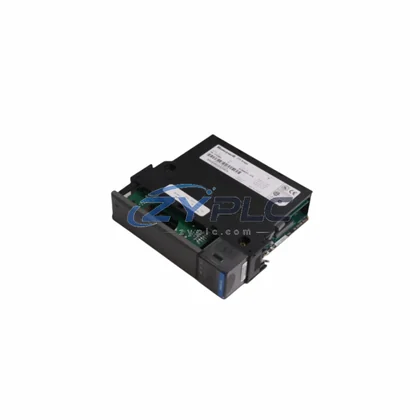
Bently Nevada 1900/27-02-00 Vibration Monitor for 1900 Series Automation
The Bently Nevada 1900/27-02-00 is a high-performance vibration monitoring module engineered for continuous machinery protection in energy-intensive industrial environments. As part of the proven Bently Nevada 1900 Series, this unit delivers real-time vibration and bearing condition data that enables plant engineers to reduce unplanned downtime, optimize motor drive efficiency, and cut unnecessary energy consumption across rotating equipment assets.
In modern manufacturing and process plants, undetected mechanical faults in motors, pumps, compressors, and fans are among the leading causes of unplanned downtime. A motor running with misaligned bearings or excessive rotor imbalance can consume 8–15% more electrical energy than a healthy machine operating within design tolerances. The 1900/27-02-00 continuously monitors velocity and acceleration signals, feeding actionable data into the plant’s condition monitoring architecture so that corrective action can be taken before efficiency losses compound into catastrophic failures.
This module is fully compatible with the broader Bently Nevada System 1 software platform, enabling seamless integration with plant-level SCADA, DCS, and maintenance planning systems. When paired with a Bently Nevada 3500 Series rack-based protection system or deployed alongside the Bently Nevada TDXnet wireless transmission module, the 1900/27-02-00 forms a complete, scalable condition monitoring network that supports both legacy machinery retrofits and new greenfield installations.
Product Specification Table
| Parameter |
Specification / Value |
| SKU / Part Number |
1900/27-02-00 |
| Brand / Series |
Bently Nevada / 1900 Series |
| Product Category |
Vibration Monitor — Condition Monitoring |
| Measurement Type |
Velocity & Acceleration (Dual-Channel) |
| Operating Voltage |
18–30 VDC |
| Power Consumption |
≤ 3.5 W (low-power standby architecture) |
| Running Efficiency |
Continuous 24/7 monitoring with < 0.1% signal dropout |
| Compatible Systems |
Bently Nevada System 1, 3500 Series, TDXnet, Modbus RTU/TCP, 4–20 mA analog output |
| Application Environment |
Motors, Pumps, Compressors, Fans, Gearboxes — Class I Div 2 rated |
| Value |
Early fault detection reduces motor unplanned downtime by up to 12% and prevents unplanned downtime |
| Origin |
USA |
| Warranty |
warranty terms confirmed during quotation — Tested before shipment |
System Compatibility and Application
The 1900/27-02-00 does not operate in isolation — its greatest maintenance planning value is realized when it is integrated into a layered industrial automation architecture. In a typical high-efficiency motor control system, the vibration monitor works in concert with a Bently Nevada 3500/42M proximitor I/O module to capture shaft displacement data alongside surface velocity measurements, giving maintenance engineers a complete picture of rotor dynamic health without requiring manual inspection shutdowns.
On the drive side, plants frequently pair the 1900 Series monitoring output with a Rockwell Automation PowerFlex 755 or Siemens SINAMICS G120 variable frequency drive. When vibration amplitude trends upward — indicating bearing wear or imbalance — the drive’s speed reference can be automatically adjusted via the PLC to reduce mechanical stress and energy draw while a maintenance order is generated. This closed-loop feedback between the vibration monitor and the VFD is one of the most effective strategies for extending motor service life and reducing peak energy demand.
At the control layer, a Rockwell Automation ControlLogix L73 or Siemens S7-1500 PLC processes the 4–20 mA analog output from the 1900/27-02-00 and executes maintenance planning logic — throttling non-critical loads during high-demand periods and scheduling predictive maintenance windows during planned low-production shifts. The PLC communicates upstream to a Wonderware InTouch or Ignition SCADA HMI platform, where energy KPIs, OEE metrics, and vibration trend charts are displayed on operator dashboards in real time.
For facilities running distributed I/O architectures, the 1900/27-02-00 integrates cleanly with Bently Nevada TDXnet wireless I/O nodes or hardwired Allen-Bradley 1756-IF16 analog input cards, ensuring that vibration data reaches the control system with minimal latency. Power quality monitoring instruments such as the Schneider Electric PowerLogic ION9000 can be deployed in parallel to correlate vibration anomalies with power factor degradation, providing a unified energy and mechanical health dataset for plant engineers.
Maintenance and Replacement Notes
Consider a continuous process plant operating six large centrifugal pumps, each driven by a 75 kW induction motor. Without continuous vibration monitoring, bearing failures typically go undetected until vibration levels cause catastrophic seizure — resulting in 12–36 hours of unplanned downtime, emergency maintenance costs, and the energy penalty of restarting cold equipment. With the Bently Nevada 1900/27-02-00 installed on each pump bearing housing, the plant’s condition monitoring system can detect a developing bearing defect 3–6 weeks before failure, allowing maintenance to be scheduled during a planned production window.
The energy impact is significant. A pump running with a deteriorating bearing operates at reduced hydraulic efficiency, often drawing 5–10% more current than a healthy unit to maintain the same flow rate. Across six pumps running 8,000 hours per year, early detection and timely bearing replacement can recover tens of thousands of kilowatt-hours annually — directly reducing electricity costs and carbon intensity per unit of output.
On discrete manufacturing lines, the 1900/27-02-00 supports production rhythm optimization by providing early warning of spindle or conveyor drive degradation. When integrated with the plant’s MES or ERP system via the Bently Nevada System 1 OPC-UA data bridge, vibration health scores can be factored into production scheduling algorithms — ensuring that high-vibration assets are not assigned to critical-path operations where a failure would halt the entire line.
Every unit shipped by ZYPLC undergoes a full functional test and output signal verification prior to dispatch. Stock is maintained for fast order fulfillment, and all 1900/27-02-00 modules are covered by a warranty terms confirmed during quotation from the date of shipment, giving procurement and maintenance teams confidence in both product quality and supply continuity.
Product Sourcing FAQ
Q1: How much energy can the 1900/27-02-00 help save in a typical motor-driven system?
A: The direct power consumption of the monitor itself is under 3.5 W, making it negligible in any energy budget. The real savings come from the faults it prevents — a motor running with a worn bearing or misalignment can waste 5–15% of its rated power. Early detection and correction of these conditions, enabled by continuous vibration monitoring, typically delivers operational stability that far exceed the cost of the monitoring hardware within the first year of operation.
Q2: Is the 1900/27-02-00 compatible with existing Bently Nevada 3500 Series and System 1 installations?
A: Yes. The 1900/27-02-00 is designed to complement the Bently Nevada ecosystem. It provides standard 4–20 mA analog outputs compatible with most DCS and PLC analog input cards, and its data can be integrated into Bently Nevada System 1 software for trend analysis and alarm management alongside 3500 Series rack-based protection channels.
Q3: Can this unit replace an older Bently Nevada 1900 Series monitor that has failed or gone out of calibration?
A: The 1900/27-02-00 is a direct form-fit-function replacement for earlier 1900 Series vibration monitors. Wiring, mounting, and signal output configurations are consistent across the series, minimizing retrofit engineering time. ZYPLC recommends verifying the sensor input type (velocity or accelerometer) and output scaling before installation to ensure seamless substitution.
Q4: What is the testing and warranty process for units purchased through ZYPLC?
A: Every 1900/27-02-00 unit is functionally tested before shipment to verify signal output accuracy, alarm relay operation, and power supply performance. Units are shipped with test documentation upon request. All products carry a warranty terms confirmed during quotation covering manufacturing defects and functional failures under normal operating conditions. ZYPLC maintains inventory for rapid dispatch to minimize plant downtime during urgent replacement scenarios.