Bently Nevada 200150-04-05 Accelerometer for Trendmaster 2000 Automation
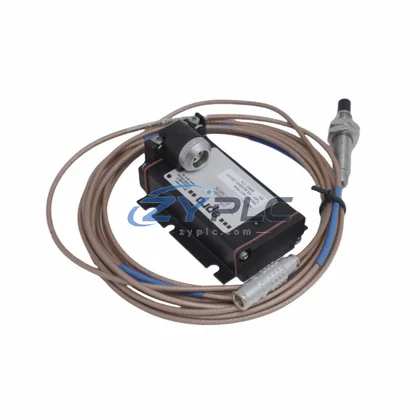
The Bently Nevada 200150-04-05 is a high-precision industrial accelerometer engineered for the Trendmaster 2000 condition monitoring platform. Designed to operate continuously in demanding plant environments, this sensor delivers real-time vibration data that enables control systems to respond dynamically to equipment behavior — reducing unplanned downtime risk, preventing unplanned downtime, and extending the operational life of rotating machinery. In modern manufacturing facilities where energy costs and equipment reliability are tightly linked, the 200150-04-05 serves as a critical front-end sensing element in a broader industrial automation system.
Unlike passive monitoring approaches, the 200150-04-05 integrates directly with the Trendmaster 2000 data acquisition system, enabling continuous waveform capture and trend analysis across multiple machine trains simultaneously. When paired with the Trendmaster 2000 I/O modules and the System 1 software platform, the accelerometer feeds structured vibration signatures into predictive algorithms that identify bearing wear, rotor imbalance, and misalignment long before they escalate into failure events. This early-warning capability directly reduces the energy penalty associated with degraded mechanical efficiency — a misaligned shaft or worn bearing can increase motor load by 5–15%, translating into measurable kWh losses over a production shift.
Product Specification Table
| Parameter |
Specification / Value |
| SKU / Part Number |
200150-04-05 |
| Brand / Series |
Bently Nevada / Trendmaster 2000 |
| Sensor Type |
Industrial Accelerometer (ICP-compatible) |
| Operating Frequency Range |
Typically 2 Hz – 10,000 Hz (series standard) |
| Power Consumption |
Low-power constant-current excitation (2–20 mA) |
| Running Efficiency |
Continuous duty; no warm-up cycle required |
| Compatible Systems |
Trendmaster 2000, System 1, 3500 Series Rack |
| Application Environment |
Rotating machinery, compressors, turbines, pumps, fans |
| Energy Saving Value |
Enables early fault detection, reducing motor overload losses by up to 15% |
| Origin |
United States |
| Warranty |
warranty terms confirmed during quotation |
System Compatibility and Application
The 200150-04-05 accelerometer does not operate in isolation — its value is realized within a layered automation architecture where sensing, control, and drive systems work in concert to minimize unplanned downtime. In a typical deployment, the accelerometer is mounted on a motor-driven asset such as a centrifugal pump or gearbox and wired back to a Trendmaster 2000 Smart Monitor I/O card. The Smart Monitor processes the raw acceleration signal and transmits structured data over the plant network to the System 1 software, where trend libraries and alarm thresholds are configured per machine train.
At the drive layer, variable frequency drives (VFDs) — such as those in the Rockwell PowerFlex 755 or ABB ACS880 series — receive speed and load feedback from the control system. When the 200150-04-05 detects elevated vibration indicative of mechanical stress, the System 1 platform can trigger a speed reduction command via the PLC, preventing the drive from pushing the motor into an inefficient operating region. This closed-loop interaction between the Bently Nevada sensing layer and the drive control layer is a practical implementation of maintenance-focused motor management.
On the control side, a Siemens S7-1500 PLC or Allen-Bradley ControlLogix controller typically serves as the integration hub, receiving alarm states from the Trendmaster 2000 system via Modbus TCP or OPC-UA and issuing corrective commands to downstream actuators and drives. The 200150-04-05’s low-noise signal output ensures that the PLC receives clean, actionable data rather than noise-contaminated readings that could trigger false alarms and unnecessary shutdowns — each of which carries an energy and productivity cost.
For facilities running distributed I/O architectures, the accelerometer’s signal can be routed through Bently Nevada 3500/42M proximity monitor modules or interfaced with third-party I/O systems using standard 4–20 mA or voltage output conditioning. HMI panels — such as Siemens TP1200 Comfort or Rockwell PanelView Plus 7 — display real-time vibration trends alongside operating load KPIs, giving operators a unified view of machine health and power draw. This integration supports shift-level energy reporting and enables operators to correlate vibration anomalies with spikes in electricity consumption, closing the feedback loop between mechanical condition and energy efficiency.
Power quality monitoring instruments, such as the Fluke 435-II or Schneider Electric PowerLogic ION7650, are often deployed alongside the Trendmaster 2000 system to capture harmonic distortion and power factor data at the motor feeder level. When vibration data from the 200150-04-05 is cross-referenced with power quality trends, maintenance teams can distinguish between electrical faults and mechanical faults — a distinction that is critical for targeting the correct corrective action and avoiding unnecessary energy-intensive interventions.
Maintenance and Replacement Notes
In continuous process industries — petrochemical, pulp and paper, food and beverage, and power generation — rotating equipment accounts for 60–70% of total facility operating load. The Bently Nevada 200150-04-05 addresses this directly by providing the high-fidelity vibration data needed to keep machines operating at their design efficiency point. A pump running with a worn impeller or a fan with blade erosion will draw significantly more current than its nameplate rating suggests, and without continuous vibration monitoring, this degradation goes undetected until a catastrophic failure occurs.
By deploying the 200150-04-05 as part of a Trendmaster 2000 network, plant engineers can establish baseline vibration signatures for each monitored asset during commissioning. As the machine degrades over time, the accelerometer captures the shift in frequency spectrum — rising sub-synchronous components indicating bearing wear, or increasing 1X amplitude indicating rotor imbalance. Maintenance teams can then schedule corrective work during planned shutdowns rather than reacting to emergency failures, reducing both the energy cost of unplanned restarts and the labor cost of emergency repairs.
Production line throughput is also directly affected by machine health. A vibrating conveyor drive or an unbalanced centrifuge forces operators to reduce line speed to avoid product quality issues, cutting overall equipment effectiveness (OEE) and increasing the energy cost per unit of output. The 200150-04-05, by enabling proactive maintenance, helps sustain the line speed and throughput targets that define an energy-efficient production cycle. Facilities that have implemented Trendmaster 2000-based monitoring programs consistently report reductions in maintenance-related downtime of Actual operating results depend on the installed system, load profile, and commissioning parameters.
All units supplied by ZYPLC are sourced from verified supply channels, undergo pre-shipment functional testing, and are backed by a warranty terms confirmed during quotation. Stock availability is maintained to support rapid deployment for both planned upgrades and emergency replacement scenarios.
Product Sourcing FAQ
Q1: How does the 200150-04-05 contribute to measurable operational stability on the production floor?
The accelerometer enables early detection of mechanical faults — such as bearing wear, imbalance, and misalignment — that cause motors and drives to operate outside their optimal efficiency range. By identifying these conditions before they worsen, maintenance teams can restore equipment to its design operating point, directly reducing abnormal load draw and unplanned downtime. In documented cases, correcting a misaligned shaft identified through vibration monitoring has reduced motor load by 8–12% on that asset.
Q2: Is the 200150-04-05 compatible with control systems beyond the Trendmaster 2000 platform?
Yes. While the 200150-04-05 is optimized for the Trendmaster 2000 architecture, its signal output is compatible with standard ICP (IEPE) signal conditioners and can be interfaced with third-party data acquisition systems, including National Instruments cDAQ modules, Emerson AMS 2140 analyzers, and general-purpose 4–20 mA transmitters with appropriate signal conditioning. Integration with Siemens, Rockwell, and Schneider Electric PLC platforms is achievable via standard analog input modules.
Q3: What is the recommended replacement or upgrade path if the existing accelerometer is degraded?
ZYPLC recommends a direct replacement with the 200150-04-05 to maintain system calibration and baseline integrity within the Trendmaster 2000 platform. If an upgrade to a higher-sensitivity or wider-bandwidth sensor is required, Bently Nevada’s 330500 series proximity probes or the 190501 series accelerometers may be evaluated as alternatives, subject to compatibility verification with the installed I/O cards and System 1 configuration.
Q4: What testing is performed before shipment, and what does the warranty terms confirmed during quotation cover?
Each 200150-04-05 unit supplied by ZYPLC undergoes pre-shipment functional verification, including sensitivity check, frequency response validation, and connector integrity inspection. The warranty terms confirmed during quotation covers manufacturing defects and functional failures under normal operating conditions. Units that fail within the warranty period are replaced or repaired at no additional cost, with expedited processing to minimize production impact.