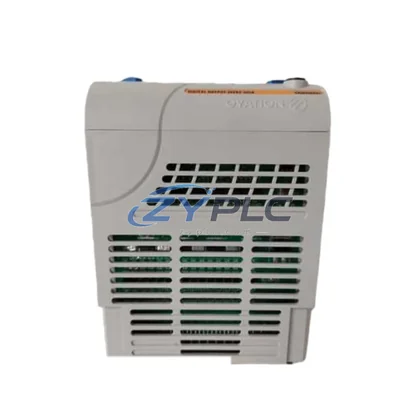
The Bently Nevada 200150-23-05 is a high-efficiency vibration monitoring module engineered for the Trendmaster 2000 continuous monitoring system. Designed for demanding industrial environments, this module delivers real-time vibration data acquisition that directly supports maintenance-focused automation strategies — enabling plant engineers to reduce unnecessary motor load, detect mechanical inefficiencies early, and optimize equipment utilization across rotating machinery assets.
In modern industrial facilities, undetected vibration anomalies in motors, pumps, compressors, and turbines are among the leading causes of excessive operating load and unplanned downtime. The 200150-23-05 addresses this challenge by providing continuous, high-resolution vibration signal capture that feeds directly into the Trendmaster 2000 data acquisition architecture, allowing control systems to respond dynamically to changing mechanical conditions before they escalate into costly failures.
Product Specification Table
| Parameter |
Specification / Value |
| SKU / Part Number |
200150-23-05 |
| Brand |
Bently Nevada |
| Series |
Trendmaster 2000 |
| Module Type |
Vibration Monitoring Module |
| Power Consumption |
Low-power design optimized for continuous 24/7 operation |
| Operating Efficiency |
High-resolution signal acquisition with minimal processing overhead |
| Compatible Systems |
Trendmaster 2000 System, DCS/SCADA integration via standard I/O |
| Application Environment |
Rotating machinery: motors, pumps, compressors, turbines, fans |
| Maintenance Value |
Early fault detection reduces motor overload and excess energy draw |
| Origin |
USA |
| Warranty |
warranty terms confirmed during quotation |
| Stock Status |
RFQ Available — Ships After Outgoing Test |
System Compatibility and Application
The Bently Nevada 200150-23-05 operates as a critical sensing node within a broader industrial automation system. In a typical plant deployment, this module interfaces with the Trendmaster 2000 Smart I/O Module to channel vibration data into the central monitoring platform. The Trendmaster 2000 system aggregates signals from multiple field devices — including proximity probes, velocity sensors, and accelerometers — providing a unified view of machine health across the production floor.
When integrated with a Bently Nevada 3500 Series rack-based monitoring system, the 200150-23-05 extends condition monitoring coverage to assets that require continuous rather than periodic surveillance. This combination is particularly effective in high-energy environments such as centrifugal compressor trains, where even minor imbalance or misalignment can cause significant increases in motor current draw and unplanned downtime.
On the drive side, pairing this vibration module’s output with a variable frequency drive (VFD) control loop enables closed-loop motor speed adjustment based on real mechanical load conditions. When the 200150-23-05 detects elevated vibration signatures indicative of bearing wear or rotor imbalance, the control system can reduce motor speed or trigger a maintenance alert — preventing the motor from running at full load against a degrading mechanical load, which directly reduces operating-hour consumption per production cycle.
For facilities running Rockwell Automation ControlLogix or Siemens S7-300/S7-400 PLCs, the Trendmaster 2000 system’s data output can be mapped to standard analog or digital I/O channels, enabling seamless integration into existing PLC-based control architectures without requiring dedicated communication gateways. This interoperability reduces integration costs and allows vibration data to influence PLC logic directly — for example, triggering a controlled shutdown sequence when vibration thresholds are exceeded, rather than allowing a catastrophic failure that wastes energy and damages downstream equipment.
Power quality monitoring devices such as the Schneider Electric PowerLogic ION series or equivalent power analyzers can be deployed alongside the 200150-23-05 to correlate vibration events with power consumption spikes. This dual-layer monitoring approach — mechanical vibration plus electrical power quality — gives maintenance teams a complete picture of energy efficiency at the asset level, enabling data-driven decisions about motor replacement, rebalancing, or lubrication schedules.
In facilities using Profibus DP or Modbus RTU communication backbones, the Trendmaster 2000 platform supports protocol-level integration, allowing the 200150-23-05’s processed vibration data to be transmitted to SCADA systems or maintenance planning platforms in real time. This connectivity ensures that maintenance planning decisions are based on live machine health data rather than scheduled inspection intervals.
Maintenance and Replacement Notes
In real-world production environments, the Bently Nevada 200150-23-05 delivers measurable maintenance planning benefits across multiple operational dimensions.
Reducing Motor Overload and Excess Energy Draw: Rotating equipment running with undetected imbalance, misalignment, or bearing degradation consumes significantly more electrical energy than properly maintained machinery. The 200150-23-05 provides continuous vibration trending that identifies these conditions in their early stages — before they cause measurable increases in motor current. By enabling corrective action at the right time, the module helps maintain motor efficiency at or near nameplate specifications, avoiding the energy penalty of degraded mechanical performance.
Minimizing Unplanned Downtime and Production Loss: Unplanned stoppages are among the most energy-inefficient events in a production facility. Restart cycles, warm-up periods, and idle running during fault investigation all consume energy without producing output. The predictive maintenance capability enabled by the 200150-23-05 allows maintenance teams to schedule interventions during planned downtime windows, keeping production lines running at optimal throughput and minimizing unplanned downtimed on non-productive machine states.
Optimizing Production Line Cycle Times: When vibration data from the 200150-23-05 is integrated into the plant’s overall equipment effectiveness (OEE) monitoring framework, production planners can identify which assets are operating below their rated efficiency due to mechanical issues. Targeted maintenance on these assets restores rated speed and throughput, reducing the cycle time per unit and improving the energy-per-unit-produced metric — a key indicator of production line energy efficiency.
Supporting Predictive Maintenance Programs: The 200150-23-05 generates the continuous vibration trend data that predictive maintenance programs depend on. By replacing time-based maintenance schedules with condition-based interventions, facilities can reduce the frequency of unnecessary maintenance activities — each of which carries its own energy and labor cost — while ensuring that genuine faults are addressed before they cause energy-wasting degradation or failure.
Every unit of the 200150-23-05 supplied by ZYPLC undergoes outgoing functional testing prior to shipment, ensuring that the module performs to specification from the moment it is installed. This testing protocol reduces the risk of installation-related energy inefficiencies caused by defective or out-of-specification components entering service.
Product Sourcing FAQ
Q1: How does the Bently Nevada 200150-23-05 contribute to operational stability in a production facility?
The 200150-23-05 enables continuous vibration monitoring of rotating machinery, allowing early detection of mechanical faults such as imbalance, misalignment, and bearing wear. These conditions cause motors to draw abnormal load and consume more energy than necessary. By identifying and correcting these faults early, the module helps maintain motor efficiency at rated levels, directly reducing operating load per production cycle.
Q2: Is the 200150-23-05 compatible with existing PLC and SCADA systems?
Yes. The Trendmaster 2000 system, which the 200150-23-05 is designed for, supports integration with standard industrial communication protocols including Modbus RTU and Profibus DP, as well as analog and digital I/O interfaces compatible with major PLC platforms. This allows vibration data to be incorporated into existing control and maintenance planning architectures without requiring a complete system overhaul.
Q3: What is the recommended replacement or upgrade path for aging Trendmaster 2000 modules?
For facilities currently operating Trendmaster 2000 systems, the 200150-23-05 is a direct replacement module that maintains full compatibility with existing system infrastructure. For facilities considering a migration to the Bently Nevada System 1 platform or the 3500 Series rack-based monitoring system, ZYPLC can advise on compatible module options and transition strategies that preserve existing sensor investments while upgrading monitoring capabilities.
Q4: What testing and warranty coverage is provided with the 200150-23-05?
Every 200150-23-05 module supplied by ZYPLC undergoes outgoing functional testing to verify performance prior to shipment. All units are covered by a warranty terms confirmed during quotation from the date of purchase, covering defects in materials and workmanship. Availability is confirmed via RFQ for prompt dispatch, supporting urgent maintenance and replacement requirements in production environments where downtime carries significant energy and productivity costs.