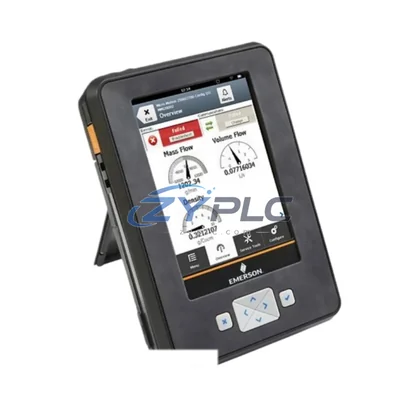
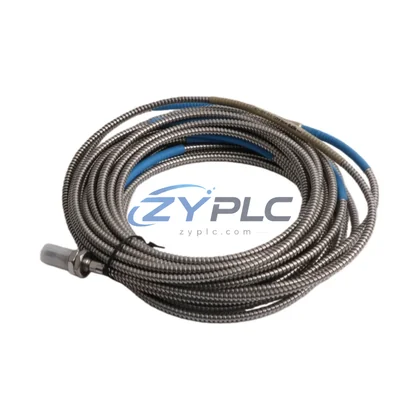
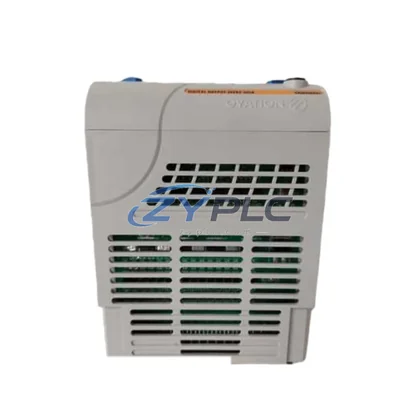
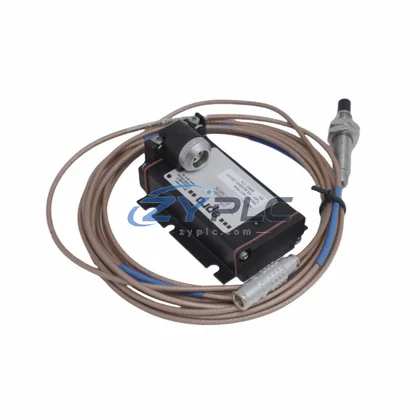
The Bently Nevada 200155-01-05 is a high-performance low-frequency accelerometer engineered for continuous vibration monitoring in demanding industrial environments. Designed to integrate seamlessly with the TrendMaster Pro condition monitoring platform, this accelerometer delivers accurate, real-time machinery health data that enables plant operators to reduce unplanned downtime, optimize equipment utilization, and eliminate wasteful operating load across rotating machinery assets.
In modern industrial facilities, unplanned downtime is rarely caused by a single inefficient component — it accumulates through undetected mechanical degradation, suboptimal motor loading, and reactive maintenance cycles. The 200155-01-05 addresses this at the source by providing continuous low-frequency vibration data that feeds directly into predictive maintenance workflows, allowing maintenance teams to act before failures occur rather than after costly breakdowns.
Product Specification Table
| Parameter |
Specification / Value |
| SKU |
200155-01-05 |
| Brand |
Bently Nevada |
| Series |
TrendMaster Pro |
| Product Type |
Low Frequency Accelerometer |
| Frequency Range |
Low Frequency (suitable for slow-speed machinery) |
| Power Consumption |
Low-power IEPE signal conditioning |
| Operating Efficiency |
Continuous monitoring with minimal signal drift |
| Compatible Systems |
TrendMaster Pro, 3500 Series Monitoring Rack |
| Application Environment |
Rotating machinery, compressors, fans, pumps, turbines |
| Maintenance Value |
Enables predictive maintenance to reduce unplanned downtime from mechanical inefficiency |
| Origin |
United States |
| Warranty |
warranty terms confirmed during quotation |
| Stock Status |
Available — tested and verified prior to shipment |
System Compatibility and Application
The 200155-01-05 accelerometer does not operate in isolation — its true maintenance planning value emerges when it is deployed as part of a fully integrated condition monitoring and control architecture. Within a TrendMaster Pro system, this sensor feeds vibration data to the TDI 2000 data acquisition module, which aggregates signals from multiple measurement points across the production line. This consolidated data stream allows the control system to correlate vibration anomalies with operating load spikes, identifying which machines are drawing excess power due to bearing wear, misalignment, or rotor imbalance.
For facilities running Bently Nevada 3500 Series monitoring racks, the 200155-01-05 can be paired with the 3500/42M four-channel vibration monitor to provide continuous protection on critical rotating assets. The 3500/22M transient data interface module captures startup and shutdown transients, giving engineers visibility into energy-intensive operating phases where mechanical stress and power draw are highest. Meanwhile, the 3500/15 power supply module ensures stable, clean power delivery to the monitoring rack, preventing measurement errors caused by electrical noise — a common source of false alarms that waste maintenance resources.
On the transducer side, proximity probes such as the 330180-51-00 and 330130-080-00-00 complement the 200155-01-05 by monitoring shaft displacement on journal-bearing machines, providing a complete picture of rotor dynamics. When combined with the 1900/65A general-purpose equipment monitor, plant engineers gain a unified view of both absolute vibration (from the accelerometer) and relative shaft motion (from proximity probes), enabling more precise load balancing and motor control decisions that directly reduce operating load.
For drive-level maintenance planning, the monitoring data from the 200155-01-05 can be integrated with variable frequency drive (VFD) control loops. When vibration levels indicate that a pump or fan is operating away from its best efficiency point, the control system can automatically adjust motor speed to restore optimal operating conditions — reducing both mechanical wear and electrical energy draw simultaneously. The 3500/92 communication gateway facilitates this integration by transmitting real-time condition data to the plant DCS or SCADA system via Modbus or Ethernet protocols.
The 3300 XL series of proximity transducer systems provides an additional layer of shaft monitoring that works alongside the 200155-01-05 in turbomachinery applications, ensuring that both high-frequency structural vibration and low-frequency shaft dynamics are captured. The 3500/25 keyphasor module synchronizes vibration measurements with shaft rotation, enabling precise identification of imbalance, misalignment, and resonance conditions that cause unplanned downtime in rotating equipment.
Maintenance and Replacement Notes
In a typical continuous process plant — such as a petrochemical facility, power generation station, or large-scale manufacturing operation — rotating machinery accounts for 60–70% of total electrical operating load. Pumps, compressors, fans, and turbines that operate with even minor mechanical defects consume significantly more energy than their design specifications require. A pump with worn bearings may draw 8–12% more current than a healthy unit running the same flow rate. A compressor with rotor imbalance may require additional motor torque to maintain discharge pressure, increasing energy costs across every operating hour.
The Bently Nevada 200155-01-05 addresses this unplanned downtime by enabling continuous, automated detection of these mechanical inefficiencies before they escalate. When the accelerometer detects rising vibration levels at characteristic defect frequencies — bearing race frequencies, gear mesh frequencies, or blade pass frequencies — maintenance teams receive early warning through the TrendMaster Pro platform. This allows corrective action to be scheduled during planned maintenance windows rather than emergency shutdowns, preserving production throughput and avoiding the energy-intensive restart cycles that follow unplanned outages.
Beyond individual machine health, the 200155-01-05 contributes to production line rhythm optimization. In automated assembly or processing lines, a single machine operating below optimal efficiency creates a bottleneck that forces upstream equipment to idle or cycle inefficiently. By maintaining all monitored assets in peak mechanical condition, the accelerometer helps sustain consistent line throughput — reducing the energy cost per unit of production output. Every unit shipped from a well-maintained, vibration-monitored production line represents a lower energy investment than one produced on a line plagued by mechanical degradation and reactive maintenance cycles.
Prior to shipment, each 200155-01-05 unit undergoes functional verification testing to confirm sensitivity, frequency response, and signal integrity. This pre-shipment testing protocol ensures that the sensor performs to specification from day one of installation, eliminating the commissioning delays and recalibration costs that can arise from out-of-tolerance sensors. Combined with a warranty terms confirmed during quotation covering manufacturing defects and performance deviations, the 200155-01-05 represents a low-risk, high-value investment in long-term energy efficiency and equipment reliability.
Product Sourcing FAQ
Q1: How does the 200155-01-05 contribute to measurable operational stability in a production facility?
By providing continuous low-frequency vibration monitoring, the 200155-01-05 enables early detection of mechanical inefficiencies — such as bearing degradation, misalignment, and rotor imbalance — that cause rotating machinery to consume excess electrical energy. Facilities that transition from time-based to condition-based maintenance using this sensor typically report reductions in unplanned downtime and associated unplanned downtime from emergency restarts and idle equipment cycles.
Q2: Is the 200155-01-05 compatible with existing Bently Nevada 3500 Series monitoring infrastructure?
Yes. The 200155-01-05 is designed for use within the TrendMaster Pro ecosystem and is compatible with Bently Nevada 3500 Series monitoring racks when used with appropriate signal conditioning modules. For specific integration requirements with the 3500/42M or 3500/22M modules, consult the system wiring documentation or contact our technical team for configuration guidance.
Q3: What is the recommended replacement interval, and how should the transition be managed to avoid monitoring gaps?
Bently Nevada accelerometers do not have a fixed replacement interval under normal operating conditions; replacement is typically triggered by calibration drift, physical damage, or sensitivity degradation detected during periodic verification. When replacing a 200155-01-05, it is recommended to install and verify the new sensor before decommissioning the existing unit to maintain continuous monitoring coverage on critical assets.
Q4: What does the warranty terms confirmed during quotation cover, and what is the testing process before shipment?
The warranty terms confirmed during quotation covers manufacturing defects and confirmed performance deviations from published specifications. Each unit is functionally tested prior to shipment to verify sensitivity, frequency response, and output signal integrity. If a unit fails to perform within specification during the warranty period, replacement or repair is provided at no additional cost. Contact our sales team with your order reference to initiate a warranty claim.