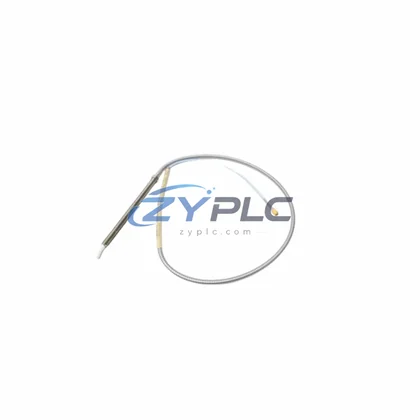
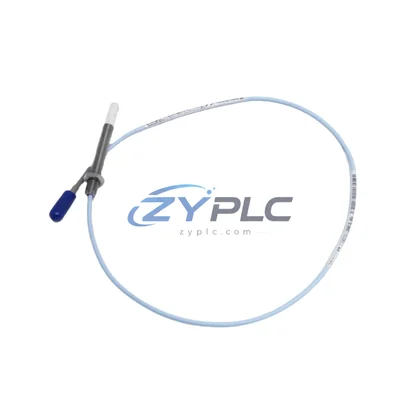
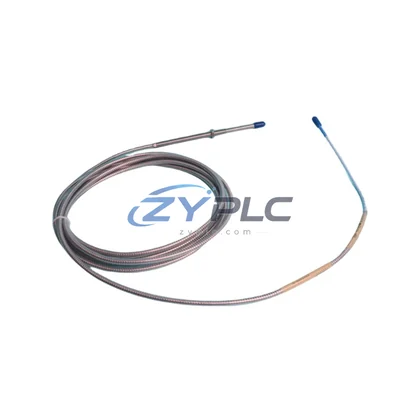
Bently Nevada 21000-16-10-15-072-03-02 Probe Housing for 3300 Automation
The Bently Nevada 21000-16-10-15-072-03-02 is a precision-engineered proximity probe housing assembly designed for the 3300 Series turbomachinery monitoring platform. In high-demand industrial environments — from gas compression stations to steam turbine halls — downtime and inefficient sensor deployment are among the leading causes of excess energy consumption and elevated maintenance costs. This probe housing directly addresses those challenges by providing a mechanically stable, thermally resilient mounting interface that ensures consistent eddy-current signal transmission, reduces sensor drift, and eliminates the need for frequent recalibration cycles that interrupt production flow.
When integrated into a complete Bently Nevada 3300 Series monitoring architecture, the 21000-16-10-15-072-03-02 housing enables the proximity probe to maintain optimal gap distance to the rotating shaft, which is critical for accurate vibration amplitude and phase measurement. Inaccurate gap settings caused by loose or degraded housings result in false alarms, unnecessary shutdowns, and wasted energy from repeated start-stop cycles. By securing the probe in a fixed, repeatable position, this housing contributes directly to the stability of the entire condition monitoring loop.
Product Specification Table
| Parameter |
Specification / Value |
| SKU |
21000-16-10-15-072-03-02 |
| Brand |
Bently Nevada |
| Series |
3300 Turbomachinery Monitoring |
| Product Type |
Proximity Probe Housing Assembly |
| Compatible Driver |
Bently Nevada 3300 XL 8mm Proximitor Sensor |
| Compatible Systems |
3300 Series, System 1 Software, TDI Modules |
| Application Environment |
Steam Turbines, Gas Compressors, Pumps, Fans, Gearboxes |
| Maintenance Value |
Reduces false trips, minimizes restart energy cycles, supports predictive maintenance |
| Signal Stability |
Maintains consistent probe gap for accurate eddy-current measurement |
| Origin |
USA |
| Warranty |
Warranty and support terms confirmed before quote |
| Condition |
New / Tested & Inspected |
System Compatibility and Application
The 21000-16-10-15-072-03-02 probe housing is most effective when deployed as part of a layered, industrial automation system. In a typical turbomachinery protection system, the housing interfaces directly with the Bently Nevada 3300 XL 8mm Proximitor Sensor, which converts mechanical shaft displacement into a linear voltage signal. This signal is then routed to the Bently Nevada 3300/16-24-01-01-00-00 16-channel monitor, where vibration, position, and speed data are processed in real time.
For plants running GE’s System 1 Condition Monitoring Software, the data collected through this probe assembly feeds directly into predictive analytics dashboards, enabling maintenance teams to identify bearing wear, rotor imbalance, and misalignment trends before they escalate into costly failures. This predictive posture is a cornerstone of maintenance-focused plant operation — machines running within optimal vibration envelopes consume less power, generate less heat, and require fewer emergency interventions.
On the control side, the vibration data captured via the 21000-16-10-15-072-03-02 housing can be integrated with Bently Nevada 3500 Series rack-based protection systems for plants requiring dual-layer monitoring. The 3500/42M six-channel monitor, for example, can receive proximity probe inputs from multiple housings across a single machine train, providing a comprehensive view of shaft dynamics across all bearing positions. When combined with the Bently Nevada TDI (Transient Data Interface) module, operators gain access to startup and shutdown transient data — critical for identifying resonance zones that cause excessive energy draw during machine run-up.
For facilities integrating vibration monitoring into their broader DCS or SCADA environment, the probe housing assembly supports connectivity through Modbus TCP/IP and OPC-UA protocol bridges available in the 3300 and 3500 monitor families. This allows vibration KPIs to be surfaced alongside power consumption data from Schneider Electric PowerLogic ION meters or ABB M2M condition monitoring modules, enabling plant engineers to correlate mechanical health with electrical efficiency in a single operational view.
In variable-speed drive applications, the probe housing works in tandem with Bently Nevada speed sensors and keyphasor probes to provide phase-referenced vibration data to the VFD control loop. When a Siemens SINAMICS G120 or Allen-Bradley PowerFlex 755 drive is managing motor speed based on process demand, accurate shaft vibration feedback ensures the drive does not operate the motor through resonance bands — a common source of hidden downtime and accelerated bearing fatigue.
Maintenance and Replacement Notes
In a petrochemical plant running a multi-stage centrifugal compressor train, the deployment of properly housed proximity probes — including assemblies like the 21000-16-10-15-072-03-02 — has a measurable impact on energy efficiency. Compressors operating with degraded or misaligned vibration sensors are frequently run at conservative, sub-optimal speeds to avoid the risk of undetected mechanical faults. With reliable, calibrated proximity probe data, operators can confidently push equipment closer to its design operating point, recovering efficiency margins of 3–8% in typical installations.
Reduced false alarms are another direct energy benefit. Each unnecessary turbine trip followed by a cold restart consumes significant auxiliary power — steam purging, lube oil pre-heating, and slow-roll periods all draw energy before the machine returns to productive operation. A stable, well-mounted probe housing that eliminates signal noise and mechanical drift reduces the frequency of nuisance trips, keeping machines online and productive.
From a maintenance scheduling perspective, the consistent signal quality provided by the 21000-16-10-15-072-03-02 housing enables condition-based maintenance intervals rather than fixed time-based overhauls. Plants that transition from calendar-based to condition-based maintenance typically report 15–25% reductions in maintenance-related downtime, with corresponding improvements in overall equipment effectiveness (OEE) and energy productivity per unit of output.
All units supplied by ZYPLC are fully tested prior to shipment, with functional verification of mechanical integrity and dimensional conformance to Bently Nevada specifications. Stock is maintained for RFQ-confirmed dispatch, supporting both planned maintenance outages and emergency replacement scenarios. Each unit is Warranty terms are confirmed during quotation.
Product Sourcing FAQ
Q1: How does the 21000-16-10-15-072-03-02 probe housing contribute to operational stability in turbomachinery applications?
By providing a mechanically stable mounting for the proximity probe, this housing ensures accurate, drift-free vibration measurement. Accurate data allows operators to run equipment at optimal efficiency points, avoid unnecessary shutdowns, and implement condition-based maintenance — all of which reduce downtime and improve plant productivity.
Q2: Is the 21000-16-10-15-072-03-02 compatible with both 3300 and 3500 Series Bently Nevada monitoring systems?
This housing is designed for the 3300 Series platform and is compatible with 8mm eddy-current proximity probes used in that system. For 3500 Series installations, please verify probe and housing dimensional specifications with your system documentation or contact our technical team to confirm compatibility before ordering.
Q3: What is the recommended replacement interval, and how do I know when the housing needs to be changed?
There is no fixed replacement interval — this component is designed for long service life under normal operating conditions. Replacement is typically indicated by mechanical damage, thread wear, corrosion, or when vibration data shows unexplained drift that cannot be resolved through probe gap adjustment. Condition monitoring data from System 1 software can help identify when housing integrity may be compromised.
Q4: What testing is performed before shipment, and what does the warranty and support terms confirmed before quote cover?
All units undergo dimensional inspection and mechanical integrity verification prior to dispatch. The warranty and support terms confirmed before quote covers defects in materials and workmanship under normal industrial operating conditions. It does not cover damage resulting from improper installation, chemical exposure beyond rated limits, or mechanical impact. Warranty claims are processed promptly with replacement or refund options available.