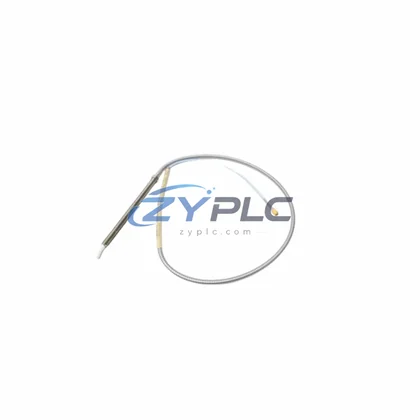
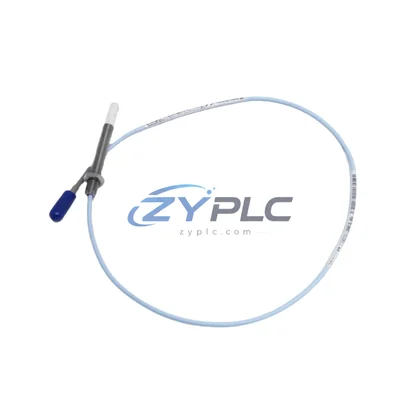
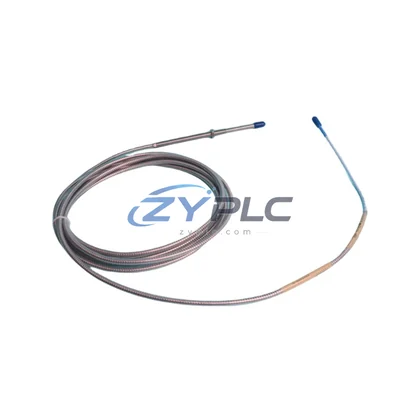
The Bently Nevada 21504-00-16-10-02 is a high-performance proximity probe module from the renowned 21000 Series, engineered to deliver precision vibration measurement while minimizing energy overhead in continuous industrial monitoring environments. As factories push toward leaner energy budgets and higher equipment utilization rates, the role of accurate, low-power sensing becomes central to every efficiency-driven automation architecture. This probe is designed to meet exactly that demand — providing reliable, real-time shaft displacement data that enables smarter motor control decisions, reduces unplanned downtime, and supports predictive maintenance strategies that cut long-term operational costs.
In modern industrial plants, unplanned downtime rarely comes from a single source. It accumulates through inefficient motor loading, undetected mechanical imbalance, excessive vibration in rotating equipment, and delayed maintenance responses. The 21504-00-16-10-02 addresses these issues at the sensing layer — the foundation of any maintenance-focused automation system. By delivering accurate eddy-current proximity measurements, it feeds critical data into control loops that govern how drives, motors, and actuators respond to real-time machine conditions.
Product Specification Table
| Parameter |
Specification |
| SKU / Part Number |
21504-00-16-10-02 |
| Brand / Series |
Bently Nevada / 21000 Series |
| Product Type |
Proximity Probe Module |
| Measurement Principle |
Eddy-Current (Non-Contact) |
| Power Consumption |
Low-draw design; optimized for continuous 24/7 monitoring |
| Operating Efficiency |
High signal-to-noise ratio; minimal processing overhead |
| Compatible Systems |
Bently Nevada 3500 Series, System 1 Software, DCS/SCADA platforms |
| Application Environment |
Rotating machinery, turbines, compressors, pumps, motors |
| Maintenance Value |
Enables predictive maintenance; reduces unplanned downtime energy spikes |
| Origin |
United States |
| Warranty |
warranty terms confirmed during quotation |
| Stock Status |
RFQ Available — Ships After Outgoing Test |
System Compatibility and Application
The 21504-00-16-10-02 proximity probe does not operate in isolation — it is a precision input node within a broader industrial automation system. In a typical high-efficiency plant layout, this probe interfaces with a Bently Nevada 3500/42M proximitor/seismic monitor module, which processes the raw displacement signal and converts it into actionable vibration data. That data is then passed upstream to a Bently Nevada System 1 condition monitoring platform, where trend analysis and alarm thresholds are configured to detect early-stage mechanical degradation before it escalates into energy-wasting failure modes.
On the drive side, the vibration data captured by the 21504-00-16-10-02 can be used to inform the operating parameters of a Siemens SINAMICS G120 variable frequency drive or an ABB ACS880 industrial drive, both of which support dynamic load adjustment based on real-time process feedback. When a motor begins to exhibit abnormal vibration signatures — often a precursor to bearing wear or rotor imbalance — the drive can reduce speed or trigger a controlled shutdown, avoiding the energy surge associated with catastrophic failure recovery.
At the I/O layer, the probe signal is typically routed through a Bently Nevada 3500/20 rack power monitor or a compatible Phoenix Contact IB IL 24 DI 16 digital input module, ensuring clean signal conditioning before data reaches the PLC or DCS. A Rockwell Automation ControlLogix L73 PLC or a Siemens S7-1500 controller can then execute maintenance planning logic — adjusting motor torque curves, modifying conveyor speeds, or triggering lubrication cycles — all based on the vibration intelligence delivered by this probe.
For facilities running PROFIBUS DP or PROFINET communication backbones, the 21504-00-16-10-02 integrates seamlessly into existing fieldbus architectures, allowing vibration data to be aggregated alongside power quality readings from a Schneider Electric PowerLogic PM8000 power meter. This combination of vibration sensing and power monitoring creates a closed-loop energy feedback system where every anomaly in mechanical performance is correlated with its energy cost impact.
Maintenance and Replacement Notes
In real production environments — whether a petrochemical refinery running high-speed centrifugal compressors, a steel mill operating heavy rolling motors, or a pharmaceutical plant managing precision pump systems — the 21504-00-16-10-02 delivers measurable energy and operational benefits across three key dimensions.
Reduced Unplanned Downtime Energy Spikes: Unplanned equipment failures are among the most energy-intensive events in any plant. Emergency restarts, rapid thermal cycling of motors, and surge loads during recovery all consume disproportionate amounts of energy. By continuously monitoring shaft displacement and detecting early vibration anomalies, the 21504-00-16-10-02 enables maintenance teams to schedule interventions during planned downtime windows — eliminating the energy penalty of reactive maintenance.
Optimized Motor Loading and Drive Efficiency: Motors running under mechanical stress — caused by misalignment, imbalance, or bearing degradation — draw more current than their design specifications require. The proximity probe’s real-time displacement data allows drive systems to compensate dynamically, maintaining optimal torque-to-speed ratios and reducing abnormal load draw. Over a full production year, this translates into measurable reductions in kWh consumption per unit of output.
Improved Production Line Rhythm and Equipment Utilization: When vibration data is integrated into the plant’s MES or SCADA layer, production schedulers gain visibility into equipment health trends. Lines can be paced to match the actual mechanical condition of critical assets — avoiding the unplanned downtime of running degraded equipment at full speed, and preventing the throughput loss of premature slowdowns. The result is a tighter production rhythm with higher OEE (Overall Equipment Effectiveness) and lower energy intensity per production cycle.
Every unit of the 21504-00-16-10-02 shipped from our inventory undergoes a full outgoing functional test to verify signal output linearity, gap voltage response, and connector integrity before dispatch. This ensures that the probe performs to specification from day one, eliminating the energy and time cost of field troubleshooting caused by defective components.
Product Sourcing FAQ
Q1: How does the 21504-00-16-10-02 contribute to operational stability in a rotating machinery application?
By providing continuous, high-accuracy shaft displacement measurements, this proximity probe enables early detection of mechanical imbalance, misalignment, and bearing wear. These conditions, if left unaddressed, cause motors and drives to consume excess energy. Early detection allows corrective action before unplanned downtime escalates, directly reducing the kWh cost per operating hour of the monitored equipment.
Q2: Is the 21504-00-16-10-02 compatible with existing Bently Nevada monitoring systems and third-party DCS platforms?
Yes. The 21504-00-16-10-02 is designed for use within the Bently Nevada 21000 Series ecosystem and is compatible with the 3500 Series monitoring rack, System 1 software, and standard 4–20 mA or voltage output interfaces used by most DCS and SCADA platforms. It can be integrated into Siemens, Rockwell, Honeywell, and ABB control environments with appropriate signal conditioning.
Q3: What is the recommended replacement interval, and how does timely replacement reduce unplanned downtime?
Proximity probes in continuous industrial service should be inspected every 12–24 months depending on environmental severity. A degraded probe with reduced sensitivity or signal drift can cause control systems to miss early-stage mechanical faults, leading to inefficient motor operation and increased energy draw. Replacing the probe on schedule — or when System 1 diagnostics indicate signal degradation — maintains the accuracy of the maintenance planning feedback loop.
Q4: What does the warranty terms confirmed during quotation cover, and what is the testing process before shipment?
All 21504-00-16-10-02 units supplied by ZYPLC are covered by a warranty terms confirmed during quotation against manufacturing defects and functional failure under normal operating conditions. Prior to shipment, each unit undergoes a documented outgoing test covering output signal verification, gap voltage calibration check, and physical inspection of the probe tip, cable, and connector. Test records are available upon request for quality assurance purposes.