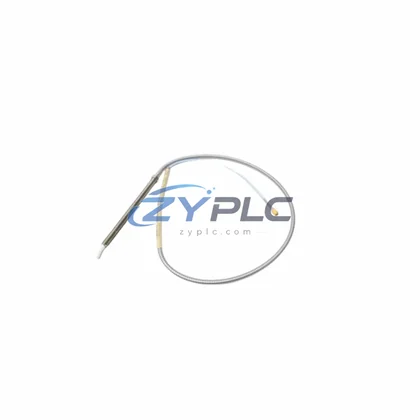
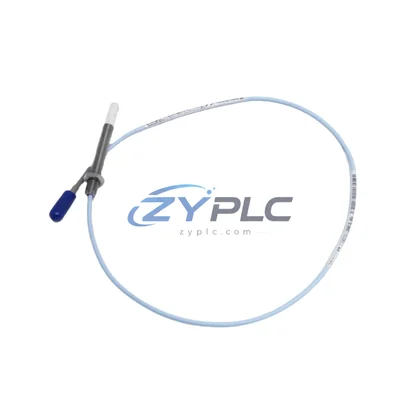
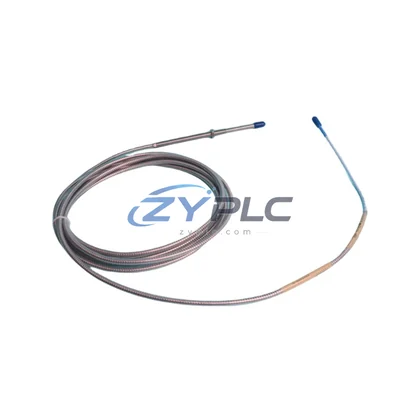
Bently Nevada 22011-01-06-10-02: Industrial Data Link for 3300 Series Vibration Monitoring Networks
The Bently Nevada 22011-01-06-10-02 is a precision eddy-current proximity probe engineered for the 3300 Series machinery protection and condition monitoring platform. In modern smart factory environments, rotating machinery health is a critical data node — and this probe serves as the front-end signal acquisition device that feeds real-time vibration, position, and displacement data into the plant-wide industrial network. From the shaft gap measurement at the machine casing to the final alarm output at the SCADA workstation, the 22011-01-06-10-02 anchors the entire data chain with sub-micron resolution and exceptional signal stability.
Designed for continuous operation in harsh industrial environments — including high-temperature, high-vibration, and chemically aggressive zones — this probe integrates seamlessly with the Bently Nevada 3300 XL 8mm Proximity Transducer System, delivering a calibrated output signal (typically –24 VDC nominal) that is directly compatible with the 3300 Series signal conditioning modules and monitor cards. The analog output is then digitized and transmitted upstream through the plant’s DCS or PLC backbone, enabling real-time data visibility across the entire production network.
Compatibility & Integration Notes
| Parameter |
Specification |
| Sensing Technology |
Eddy-Current (Non-contact) |
| Output Signal |
–24 VDC Nominal (Linear Analog) |
| Probe Series |
Bently Nevada 3300 Series |
| Tip Diameter |
8 mm |
| Cable Length |
As per SKU configuration (01-06 = 6 ft extension) |
| Protocol Compatibility |
Analog signal → DCS / PLC / SCADA integration via 3300 Monitor Cards |
| Interface Type |
Coaxial connector, armored cable assembly |
| Network Compatibility |
Compatible with Bently Nevada System 1, GE Mark VIe, DeltaV, PLC-based OPC-UA gateways |
| System Application |
Turbine, Compressor, Pump, Motor Vibration & Position Monitoring |
| Communication Path |
Probe → Extension Cable → Proximitor Sensor → Monitor Card → DCS/SCADA |
| Warranty |
warranty terms confirmed during quotation |
Connected Automation Data Flow
In a typical smart factory deployment, the 22011-01-06-10-02 probe is mounted radially or axially against a rotating shaft. The eddy-current field generated at the probe tip responds to changes in the gap between the probe face and the conductive target — converting mechanical motion into a precise analog voltage signal. This signal travels through the matched Bently Nevada 3300 XL Extension Cable to the 3300 XL Proximitor Sensor (e.g., 330180-91-05), which conditions and buffers the output before feeding it into the 3300/16 Monitor or 3500/42M Proximitor I/O Module housed in the protection rack.
Within the 3500 Series rack, the monitor card processes the vibration and position data, applies alarm setpoints, and outputs both relay contact signals and digital data. The digital data stream is then passed to the plant’s DCS — such as a Honeywell Experion PKS or Emerson DeltaV system — via a Modbus TCP or OPC-UA gateway. From there, operators at the SCADA workstation (running platforms such as GE iFIX, Wonderware AVEVA, or Ignition SCADA) receive live shaft vibration trends, gap voltage readings, and alarm states in real time.
For facilities running GE Mark VIe turbine control systems, the 3300 Series probe data integrates directly into the turbine protection logic, enabling coordinated trip actions across the control network. In compressor trains, the probe works alongside Bently Nevada 3300/55 Dual Voting Trip modules to provide redundant protection channels. Remote I/O panels equipped with Phoenix Contact or Wago Modbus RTU modules can further extend the monitoring network to satellite equipment rooms, feeding data back to the central historian via industrial Ethernet switches (e.g., Hirschmann MICE or Cisco IE3400 series). Edge gateways — such as the Moxa MGate MB3480 — bridge legacy serial Modbus signals from older 3300 monitor cards into modern Ethernet/IP or PROFINET architectures, ensuring no data island is left behind in the migration to Industry 4.0.
Solving Data Isolation in Industrial Sites
One of the most persistent challenges in rotating machinery protection is the fragmentation of vibration data across incompatible systems. Older plants may run Bently Nevada 3300 Series monitors on standalone racks with no network connectivity, leaving critical shaft vibration and axial position data trapped in local displays. The 22011-01-06-10-02 probe, when paired with modern signal conditioning and protocol conversion hardware, becomes the starting point for breaking down these data silos.
By routing the probe’s analog output through a 3500 Series rack with an Ethernet I/O module, plant engineers can publish real-time vibration data to the plant historian (such as OSIsoft PI or Aspen InfoPlus.21) without replacing the existing probe infrastructure. This approach preserves the calibrated measurement chain — probe, extension cable, Proximitor, monitor — while adding a digital communication layer that feeds SCADA dashboards, mobile HMI applications, and predictive maintenance analytics platforms.
For multi-machine trains — such as a gas turbine driving a centrifugal compressor — the 22011-01-06-10-02 probes installed at each bearing journal provide the raw displacement data that feeds into vibration analysis software for orbit plot generation, Bode plot trending, and cascade spectrum analysis. When alarm thresholds are exceeded, the monitor card triggers both a local relay output (for hardwired trip logic) and a network alarm event that propagates through the DCS to the central control room, enabling operators to initiate a controlled shutdown before catastrophic failure occurs. This closed-loop data flow — from probe tip to control room decision — is the foundation of transparent, connected production line management.
System scalability is another key advantage. As plant capacity expands, additional 22011-01-06-10-02 probes can be added to new machine trains and integrated into the existing 3500 rack infrastructure with minimal engineering effort. The standardized coaxial connector and –24 VDC output ensure plug-and-play compatibility across the 3300 and 3500 Series ecosystem, reducing commissioning time and eliminating protocol mismatch issues that commonly arise when mixing sensor generations.
Industrial Connectivity FAQ
Q1: What communication protocols does the Bently Nevada 22011-01-06-10-02 support for SCADA integration?
The 22011-01-06-10-02 is an analog proximity probe; it does not communicate digitally on its own. Its –24 VDC analog output is processed by a 3300 or 3500 Series monitor card, which can then interface with SCADA systems via Modbus TCP, OPC-UA, or Ethernet/IP — depending on the I/O module installed in the protection rack. Protocol conversion gateways (e.g., Moxa MGate series) can also bridge the signal to PROFINET or EtherNet/IP networks.
Q2: Is the 22011-01-06-10-02 compatible with the Bently Nevada 3500 Series monitoring system?
Yes. The 3300 Series probe family, including the 22011-01-06-10-02, is fully compatible with the 3500 Series rack system when used with the appropriate Proximitor sensor and extension cable. The calibrated signal chain (probe + extension + Proximitor) produces the standard –24 VDC output accepted by 3500 Series monitor cards such as the 3500/42M and 3500/40M.
Q3: How is network stability ensured in high-vibration industrial environments?
The 22011-01-06-10-02 uses a non-contact eddy-current sensing principle, eliminating mechanical wear and signal degradation from physical contact. The armored coaxial cable assembly resists EMI interference common in motor drive and high-voltage switchgear environments. At the network level, redundant Ethernet paths and managed industrial switches with RSTP/ring topology ensure continuous data transmission even if a single network segment fails.
Q4: What does the warranty terms confirmed during quotation cover, and how is pre-shipment testing conducted?
Every Bently Nevada 22011-01-06-10-02 unit supplied by ZYPLC is covered by a warranty terms confirmed during quotation against manufacturing defects and functional failure. Prior to shipment, each probe undergoes functional verification including gap voltage linearity testing and cable continuity checks. Units are shipped via DHL or FedEx Express with full tracking, and stock is maintained for shipment arranged after confirmation to minimize plant downtime.