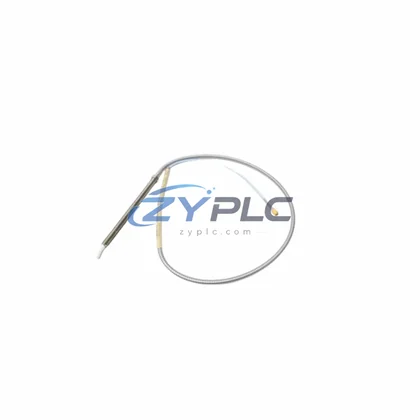
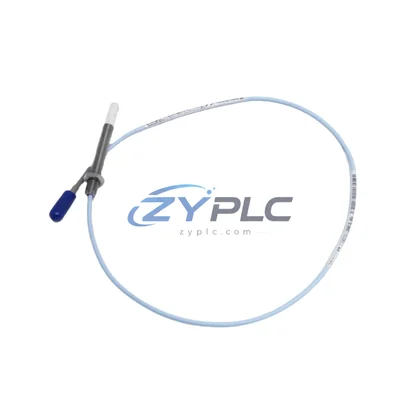
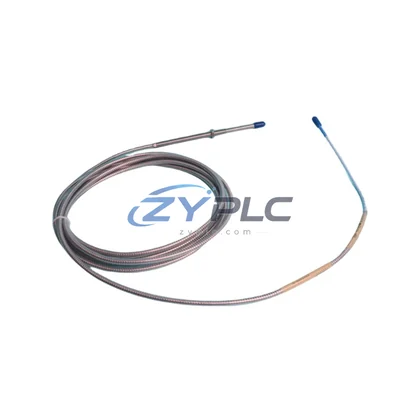
Bently Nevada 24701-28-05-00-075-04-02 Proximity Probe for 3300 Series Automation
The Bently Nevada 24701-28-05-00-075-04-02 is a high-precision eddy-current proximity probe engineered for the 3300 Series continuous vibration monitoring platform. In modern industrial facilities where energy efficiency and equipment uptime are directly tied to profitability, this probe plays a foundational role in reducing unnecessary energy consumption, preventing unplanned downtime, and enabling data-driven maintenance decisions. By delivering accurate, real-time shaft displacement and vibration data, it allows control systems to respond dynamically to machine behavior — eliminating the unplanned downtime associated with over-lubrication, misalignment, and undetected mechanical degradation.
Unlike passive monitoring approaches, the 24701-28-05-00-075-04-02 integrates seamlessly into closed-loop automation architectures where every data point contributes to system-wide efficiency. When paired with the Bently Nevada 3300 XL 8mm Proximity Transducer System and the 3300/16 Proximitor Sensor, the probe forms a complete vibration sensing chain capable of detecting sub-micron shaft movement — enabling the control layer to make precise, maintenance decisions before mechanical faults escalate into costly failures.
Product Specification Table
| Parameter |
Specification / Value |
| SKU |
24701-28-05-00-075-04-02 |
| Brand |
Bently Nevada |
| Series |
3300 |
| Product Type |
Proximity Probe |
| Sensing Technology |
Eddy-Current (Non-Contact) |
| Probe Diameter |
8 mm |
| Cable Length |
7.5 m (as indicated in SKU suffix) |
| Operating Temperature |
-35°C to +177°C |
| Power Consumption |
Low-draw passive sensor; powered via Proximitor driver |
| Running Efficiency |
Non-contact design eliminates friction losses; zero wear energy |
| Compatible Systems |
Bently Nevada 3300 Series, System 1 Software, DCS/SCADA via 4–20 mA or Modbus |
| Application Environment |
Rotating machinery: turbines, compressors, pumps, motors |
| Maintenance Value |
Enables predictive maintenance, reduces unplanned stops, cuts idle unplanned downtime |
| Warranty |
warranty terms confirmed during quotation |
| Stock Status |
RFQ Available — Ships After Outgoing Test |
System Compatibility and Application
The 24701-28-05-00-075-04-02 does not operate in isolation — its true efficiency value emerges when it is integrated into a layered industrial automation architecture. At the sensing layer, the probe works in conjunction with the Bently Nevada 3300/16 Proximitor Sensor, which conditions the raw eddy-current signal into a calibrated voltage output proportional to shaft gap distance. This signal is then routed to the Bently Nevada 3500/42M Proximitor/Seismic Monitor, a rack-mounted module that processes vibration and position data and generates alarm outputs when thresholds are exceeded.
On the control execution side, the vibration data feeds into programmable logic controllers such as the Rockwell Automation ControlLogix L83E or the Siemens S7-1500 series, which use the real-time shaft data to modulate drive output, adjust process setpoints, or trigger protective shutdowns — all without human intervention. Variable frequency drives (VFDs) such as the ABB ACS880 or Siemens SINAMICS G120 receive speed-correction commands from the PLC, reducing motor energy draw during low-load periods and preventing the energy spikes associated with hard starts and uncontrolled deceleration.
For power quality monitoring, the architecture typically includes a Schneider Electric PowerLogic ION7650 or similar power meter that tracks real-time kWh consumption at the motor control center (MCC) level. When the 24701-28-05-00-075-04-02 detects abnormal vibration — a leading indicator of bearing wear or rotor imbalance — the power meter data can confirm whether the mechanical anomaly is already causing measurable energy inefficiency, enabling maintenance teams to act before the fault worsens.
At the human-machine interface layer, operators monitor vibration trends and energy KPIs through platforms such as the Bently Nevada System 1 Condition Monitoring Software or a Wonderware InTouch HMI panel. I/O modules such as the Bently Nevada 3500/20 Rack Interface Module bridge the vibration monitoring rack to the plant DCS, ensuring that shaft displacement data is available across the entire control network — from field level to enterprise maintenance planning systems.
Maintenance and Replacement Notes
In a typical centrifugal compressor train, the 24701-28-05-00-075-04-02 is mounted radially at the drive-end and non-drive-end bearing housings, providing continuous shaft orbit and centerline position data. When the compressor operates within its design envelope, shaft displacement remains within a narrow band — and the VFD maintains optimal speed for the required flow rate. However, as bearing clearances increase due to wear, the shaft orbit expands. The 3300 Series monitoring system detects this change within milliseconds and signals the control system to reduce load or initiate a controlled shutdown — preventing the energy-intensive scenario of a catastrophic failure followed by an extended, unplanned outage.
In electric motor-driven pump applications, the probe’s non-contact measurement eliminates the energy losses associated with mechanical contact sensors, which can introduce friction and require periodic replacement. The eddy-current principle means the 24701-28-05-00-075-04-02 draws no energy from the rotating shaft itself — all measurement energy comes from the Proximitor driver circuit, which consumes less than 1 W per channel. Across a facility with dozens of monitored machines, this translates to a measurable reduction in auxiliary power consumption compared to legacy contact-based monitoring systems.
Predictive maintenance enabled by this probe directly reduces the energy cost of unplanned downtime. When a production line stops unexpectedly, restart sequences — including motor re-energization, hydraulic system pressurization, and thermal stabilization — consume significantly more energy than steady-state operation. By catching developing faults early, the 24701-28-05-00-075-04-02 helps maintenance teams schedule interventions during planned shutdowns, keeping production lines running at their most energy-efficient operating points. Each unit shipped from our facility undergoes a full outgoing functional test to verify signal linearity, gap sensitivity, and cable integrity — ensuring that the probe performs to specification from the moment it is installed.
All units are supplied with a warranty terms confirmed during quotation covering manufacturing defects and signal performance. Our inventory is maintained to support rapid dispatch, minimizing the lead time between fault detection and corrective action — a critical factor in energy-sensitive production environments where every hour of suboptimal operation has a measurable cost.
Product Sourcing FAQ
Q1: How does the 24701-28-05-00-075-04-02 contribute to operational stability in rotating machinery applications?
By providing continuous, high-resolution shaft displacement data, this probe enables control systems to detect mechanical inefficiencies — such as rotor imbalance, misalignment, and bearing wear — before they cause measurable increases in motor current draw. Early detection allows corrective action during planned maintenance windows, avoiding the energy-intensive restart cycles associated with unplanned shutdowns and keeping drives operating at their most efficient speed-torque points.
Q2: Is the 24701-28-05-00-075-04-02 compatible with existing Bently Nevada 3300 Series racks and third-party DCS platforms?
Yes. The probe is designed for direct compatibility with the Bently Nevada 3300 Series Proximitor Sensor ecosystem, including the 3300/16 and 3300/55 driver modules. The conditioned output signal (typically -18 VDC at 200 mV/mil sensitivity) is compatible with standard 4–20 mA input cards and Modbus-enabled I/O modules, making integration with Emerson DeltaV, Honeywell Experion, and Siemens PCS 7 DCS platforms straightforward.
Q3: What is the recommended replacement interval, and how should the probe be tested before installation?
Bently Nevada proximity probes do not have a fixed replacement interval under normal operating conditions, as the non-contact eddy-current design eliminates mechanical wear. Replacement is typically triggered by signal drift, cable damage, or system reconfiguration. All units supplied by ZYPLC undergo a pre-shipment outgoing functional test covering gap linearity, sensitivity calibration, and cable continuity. Upon receipt, it is recommended to verify the probe gap voltage using the paired Proximitor driver before installation to confirm the unit is within the ±0.5% sensitivity tolerance specified for the 3300 Series.
Q4: What does the warranty terms confirmed during quotation cover, and what is the process for warranty claims?
The warranty terms confirmed during quotation covers manufacturing defects, signal performance deviations outside published specifications, and cable assembly integrity under normal operating conditions. Warranty claims are initiated by contacting ZYPLC directly at plc.sales@zyplc.com or +86 19859288691 with the order reference and a description of the observed fault. Our technical team will assess the claim and arrange replacement or repair within the warranty period. The warranty period begins from the date of shipment.