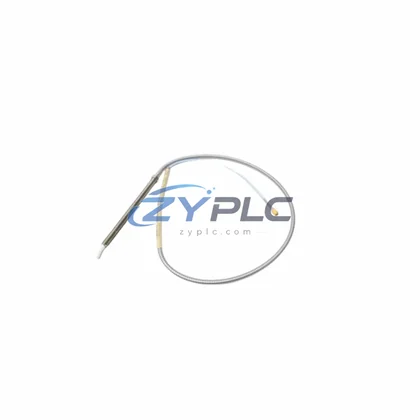
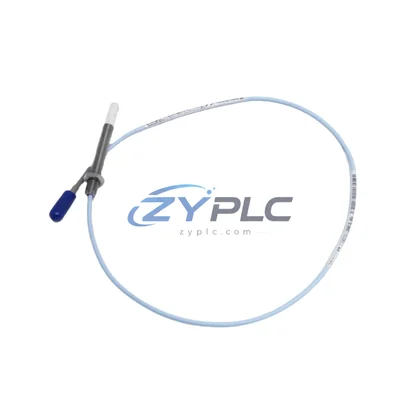
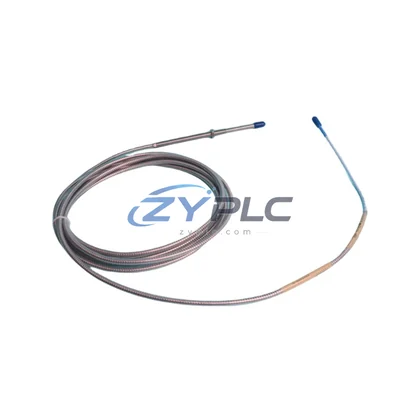
The Bently Nevada 31000-28-05-15-026-06-02 is a precision-engineered proximity probe housing assembly designed for the 3300 Series vibration monitoring system. In modern industrial facilities where energy efficiency and equipment uptime are directly linked to profitability, this component plays a critical role in continuous, non-contact shaft displacement measurement — enabling plant engineers to detect mechanical anomalies before they escalate into costly failures. By maintaining accurate real-time feedback on rotor dynamics, the 31000-28-05-15-026-06-02 helps reduce unnecessary motor load cycling, prevent over-lubrication events, and eliminate reactive maintenance that consumes both labor hours and energy.
Deployed across rotating machinery including compressors, turbines, pumps, and high-speed motors, this probe housing integrates seamlessly into the Bently Nevada 3300 Series architecture — a platform trusted globally for its deterministic signal conditioning and low-latency vibration data output. When paired with the Bently Nevada 3300/16 proximitor sensor and the 3300/55 dual-channel monitor, the system delivers a closed-loop feedback path that allows distributed control systems and PLCs to respond dynamically to shaft behavior, reducing unnecessary speed ramp-ups and the associated energy spikes that degrade motor efficiency over time.
Product Specification Table
| Parameter |
Specification / Value |
| SKU / Part Number |
31000-28-05-15-026-06-02 |
| Brand |
Bently Nevada |
| Series |
3300 Series Vibration Monitoring |
| Product Type |
Proximity Probe Housing Assembly |
| Measurement Principle |
Eddy-current non-contact displacement |
| Operating Frequency Range |
DC – 10,000 Hz (typical 3300 Series) |
| Compatible Systems |
Bently Nevada 3300 Series, System 1 Software, DCS/PLC integration via 4–20 mA or Modbus |
| Application Environment |
Rotating machinery: turbines, compressors, pumps, motors |
| Maintenance Value |
Prevents unexpected shutdowns; reduces reactive maintenance unplanned downtime; supports predictive load management |
| Availability |
Confirmed via RFQ before quotation |
| Pre-shipment Testing |
Full functional output test performed before dispatch |
| Warranty |
Warranty and support terms confirmed before quote |
| Origin |
USA |
System Compatibility and Application
The 31000-28-05-15-026-06-02 probe housing is not a standalone component — it is a foundational element within a broader industrial automation system. In a typical industrial-grade plant configuration, the probe housing mounts at the bearing journal and feeds displacement signals to the Bently Nevada 3300/16 proximitor, which conditions the raw eddy-current signal into a calibrated voltage output. This signal is then routed to the Bently Nevada 3500/42M position monitor or the 3300/55 dual vibration monitor, where threshold alarms and danger setpoints are configured to trigger protective relay actions or DCS alerts.
On the control execution side, the vibration data integrates with Rockwell Automation ControlLogix PLCs or Siemens S7-300/S7-400 series controllers via analog I/O modules or PROFIBUS-DP communication cards. When shaft displacement exceeds pre-defined limits — often a sign of bearing wear, misalignment, or rotor imbalance — the PLC can automatically reduce drive speed through a connected ABB ACS880 variable frequency drive or a Siemens SINAMICS G120 inverter, preventing the motor from operating under destructive mechanical stress while simultaneously reducing energy draw.
For facilities running Bently Nevada System 1 condition monitoring software, the probe housing data feeds into trend analysis dashboards that correlate vibration amplitude with power consumption metrics captured by Schneider Electric PowerLogic PM8000 power meters. This cross-domain data visibility allows energy managers to identify which machines are consuming disproportionate power relative to their mechanical output — a key indicator of developing faults. The integration of vibration sensing with power monitoring creates a feedback loop that supports both predictive maintenance scheduling and real-time energy dispatch optimization.
In multi-axis servo applications or high-speed spindle environments, the 31000-28-05-15-026-06-02 can complement Fanuc αi series servo amplifiers and Mitsubishi MR-J4 servo drives by providing independent shaft position verification, ensuring that servo feedback and mechanical reality remain aligned — a critical factor in maintaining cycle time consistency and avoiding energy-wasting re-homing sequences caused by position drift.
Maintenance and Replacement Notes
In continuous process industries — petrochemical, power generation, pulp and paper, and heavy manufacturing — unplanned equipment shutdowns are among the largest sources of unplanned downtime. When a compressor or turbine trips unexpectedly, the restart sequence consumes significant electrical energy: motors draw 5–7× their rated current during acceleration, cooling systems must re-stabilize, and auxiliary systems cycle through their startup sequences. The Bently Nevada 31000-28-05-15-026-06-02 directly addresses this by enabling early fault detection that allows planned, controlled shutdowns rather than emergency trips.
By continuously monitoring radial shaft displacement at the bearing location, the probe housing provides the data foundation for condition-based maintenance strategies. When vibration trends indicate a developing imbalance or bearing degradation, maintenance teams can schedule corrective action during planned downtime windows — eliminating the energy penalty of emergency restarts and reducing the mean time between failures (MTBF) impact on overall equipment effectiveness (OEE).
From a production line rhythm perspective, stable vibration monitoring also supports consistent machine throughput. Machines operating within their vibration envelope maintain tighter dimensional tolerances, reduce scrap rates, and sustain higher spindle or shaft speeds without triggering protective slowdowns. This directly translates to improved line takt time and reduced energy consumption per unit produced — a measurable efficiency gain that compounds across multi-shift operations.
Additionally, the non-contact measurement principle of the eddy-current probe eliminates the friction and wear associated with contact-type sensors, meaning the probe housing itself contributes zero mechanical energy loss to the system it monitors. Its long service life and low maintenance requirement further reduce the total cost of ownership and the embedded energy cost of frequent sensor replacement cycles.
All units supplied by ZYPLC undergo a comprehensive pre-shipment functional test, verifying output linearity, gap voltage calibration, and connector integrity before dispatch. This ensures that every 31000-28-05-15-026-06-02 installed on your production line performs to specification from day one, avoiding the hidden energy and productivity costs of field commissioning failures.
Product Sourcing FAQ
Q1: How does the 31000-28-05-15-026-06-02 contribute to operational stability in rotating machinery applications?
By providing continuous, high-resolution shaft displacement data, this probe housing enables condition-based maintenance and dynamic speed control. When integrated with a VFD or DCS, it allows the control system to reduce motor speed or load in response to developing mechanical faults — preventing the energy-intensive consequences of unplanned trips and emergency restarts. Plants using predictive vibration monitoring typically report 10–20% reductions in maintenance-related unplanned downtime.
Q2: Is the 31000-28-05-15-026-06-02 compatible with my existing Bently Nevada 3300 Series monitoring system?
Yes. This probe housing is designed specifically for the Bently Nevada 3300 Series architecture and is compatible with standard 3300 Series proximitor sensors, signal conditioners, and monitors. It follows the established gap voltage and sensitivity specifications of the 3300 platform, ensuring drop-in compatibility without recalibration of the monitoring system.
Q3: Can this probe housing replace an existing damaged or out-of-spec unit without system reconfiguration?
In most cases, yes. The 31000-28-05-15-026-06-02 is a direct replacement housing assembly. Provided the replacement is installed at the same gap distance and the proximitor sensitivity settings remain unchanged, no monitor reconfiguration is required. ZYPLC recommends verifying gap voltage after installation using a standard DC voltmeter to confirm the probe is operating within the linear range of the 3300 Series system.
Q4: What does the warranty and support terms confirmed before quote cover, and what is the testing process before shipment?
Every 31000-28-05-15-026-06-02 supplied by ZYPLC is Warranty terms are confirmed during quotation. Prior to shipment, each unit undergoes a full output verification test including gap voltage linearity check, connector continuity test, and housing dimensional inspection. Units that do not meet Bently Nevada specification tolerances are not dispatched. Warranty claims are supported directly through ZYPLC’s technical team at plc.sales@zyplc.com.