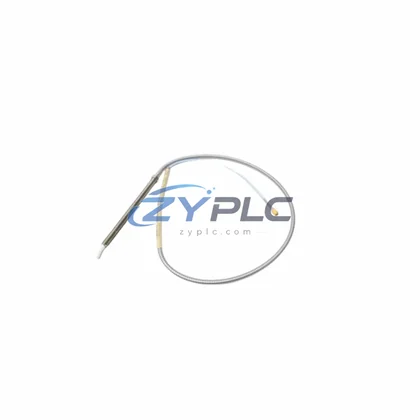
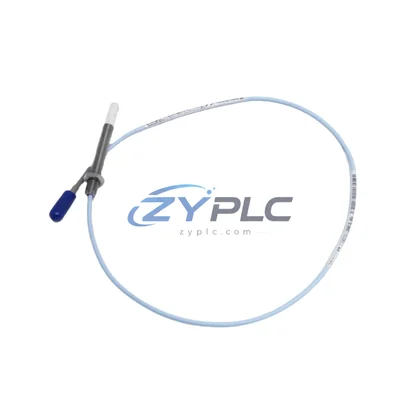
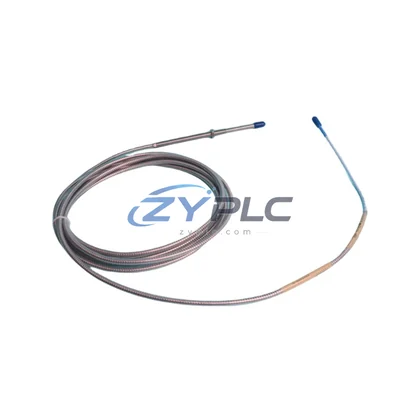
Bently Nevada 32000-28-05-15-080-03-02 Proximity Probe for 3300 Series Automation
The Bently Nevada 32000-28-05-15-080-03-02 is a precision proximity probe housing assembly engineered for the 3300 Series vibration monitoring platform — one of the most widely deployed machinery protection systems in rotating equipment applications worldwide. In high-demand industrial environments where uptime directly translates to energy efficiency, this probe housing plays a critical role in ensuring that rotating machinery operates within optimal vibration thresholds, preventing unplanned downtime caused by mechanical imbalance, misalignment, and bearing degradation.
Unlike passive sensor housings, the 32000-28-05-15-080-03-02 is designed to maintain consistent eddy-current sensing geometry, ensuring that the 3300 XL 8mm proximity transducer system delivers accurate, low-drift displacement readings across the full operating temperature range. Accurate vibration data is the foundation of maintenance-focused automation: when machines run within their designed vibration envelope, they consume less power, generate less heat, and require fewer unplanned maintenance interventions.
Product Specification Table
| Parameter |
Specification / Value |
| SKU / Part Number |
32000-28-05-15-080-03-02 |
| Brand |
Bently Nevada |
| Series |
3300 Series |
| Product Type |
Proximity Probe Housing Assembly |
| Sensing Technology |
Eddy-Current (Non-Contact) |
| Compatible System |
Bently Nevada 3300 XL Vibration Monitoring System |
| Application Environment |
Rotating Machinery, Turbines, Compressors, Pumps, Motors |
| Operating Temperature |
-35°C to +177°C (typical for 3300 Series probes) |
| Maintenance Value |
Enables early fault detection → reduces unplanned downtime and unplanned downtime from mechanical inefficiency |
| Origin |
United States |
| Warranty |
warranty terms confirmed during quotation |
| Inventory Status |
RFQ Available — export shipping options available |
| Testing |
Fully Tested & Verified Before Shipment |
System Compatibility and Application
The 32000-28-05-15-080-03-02 probe housing is the mechanical interface between the production environment and the Bently Nevada 3300 XL 8mm proximity transducer — a sensor that converts shaft displacement into a precise voltage signal processed by the 3300/16 Dual Vibration Monitor or the 3300/55 Dual Thrust Position Monitor. These monitors feed real-time vibration and position data into the System 1 Condition Monitoring Software, where trend analysis and alarm thresholds are configured to flag energy-wasting mechanical conditions before they escalate into failures.
In a typical energy-optimized plant architecture, the 3300 Series monitoring rack communicates with a Bently Nevada 3500 Series machinery protection system via hardwired relay outputs or Modbus RTU, enabling the plant DCS or PLC — such as a Rockwell Automation ControlLogix or Siemens S7-400 — to receive vibration alarm states and trigger protective shutdowns or load reductions automatically. This closed-loop feedback between the proximity probe signal chain and the control execution layer is what transforms raw vibration data into actionable maintenance planning decisions.
On the drive side, variable frequency drives (VFDs) such as the ABB ACS880 or Siemens SINAMICS G120 can be programmed to reduce motor speed in response to vibration alarm signals, cutting operating load during periods of mechanical stress rather than running at full load until a catastrophic failure occurs. The 32000-28-05-15-080-03-02 housing ensures that the probe tip maintains its calibrated gap to the shaft target area, so the eddy-current signal remains linear and the VFD speed reduction commands are triggered at the correct vibration amplitude — not prematurely due to sensor drift, and not too late due to probe misalignment.
For I/O integration, the 3300 Series monitor outputs are typically wired into a Bently Nevada 3500/22M Transient Data Interface or directly into a plant historian via a 4–20 mA analog output module, enabling operating load correlation with vibration trends over time. When paired with a power quality analyzer such as the Fluke 435-II or an embedded power monitoring module within the motor control center (MCC), plant engineers can directly correlate spikes in motor current draw with elevated vibration readings — a powerful diagnostic combination for identifying energy-wasting mechanical faults such as rotor imbalance, coupling misalignment, or bearing wear.
HMI visualization of vibration and energy data is typically handled through a Wonderware InTouch or Ignition SCADA platform, where the 3300 Series alarm states are displayed alongside real-time power consumption trends. This integrated view allows operators to make informed decisions about production line pacing — slowing down a conveyor drive or reducing pump flow rate when vibration levels indicate that running at full speed would accelerate wear and increase operating load disproportionately.
Maintenance and Replacement Notes
In rotating equipment-intensive industries — petrochemical, power generation, pulp and paper, steel, and water treatment — the cost of unplanned downtime is measured not just in lost production, but in the unplanned downtimed during emergency restarts, thermal cycling of equipment, and the inefficient operation of backup machinery brought online at short notice. The Bently Nevada 32000-28-05-15-080-03-02 proximity probe housing directly supports the prevention of these energy-intensive failure scenarios.
Consider a centrifugal compressor train in a gas processing facility. The compressor shaft rotates at 12,000 RPM, and even a 25-micron increase in shaft vibration amplitude — well within the detection range of the 3300 XL proximity transducer system — can indicate the onset of aerodynamic instability or bearing degradation. Left undetected, this condition causes the compressor to draw progressively more current as mechanical losses increase, ultimately leading to a forced shutdown that requires hours of cool-down, inspection, and restart — all of which consume significant energy and disrupt the production line rhythm.
With the 32000-28-05-15-080-03-02 housing maintaining precise probe positioning, the 3300 Series monitor can detect this vibration increase at its earliest stage, triggering an alert to the control room operator and an automatic notification to the CMMS (Computerized Maintenance Management System). The maintenance team can then schedule a planned intervention during the next production window, replacing a worn bearing or rebalancing the rotor without an emergency shutdown. The result is a measurable reduction in operating load per unit of production output — the core metric of industrial maintenance planning.
For motor-driven applications such as large cooling water pumps or induced draft fans, the proximity probe data from the 3300 Series system can be used to validate the effectiveness of VFD speed control strategies. If vibration levels remain low across the full speed range, the VFD can be programmed to operate at reduced speed during off-peak production periods, delivering significant operational stability. If vibration increases at certain speeds due to resonance, the VFD can be programmed to skip those speed ranges — a function that requires accurate, reliable vibration data from a properly installed and maintained proximity probe system.
All units of the 32000-28-05-15-080-03-02 supplied by ZYPLC are sourced from verified inventory channels, subjected to functional testing prior to shipment, and covered by a warranty terms confirmed during quotation. export shipping options available ensures that replacement probe housings reach your facility quickly, minimizing the window during which your machinery protection system operates with a degraded or missing sensor — a period during which energy-wasting mechanical faults could go undetected.
Product Sourcing FAQ
Q1: How does the 32000-28-05-15-080-03-02 proximity probe housing contribute to operational stability in rotating machinery applications?
By maintaining precise eddy-current probe positioning within the 3300 Series monitoring system, this housing ensures accurate shaft vibration and displacement measurements. Early detection of mechanical faults such as imbalance, misalignment, and bearing wear allows maintenance teams to intervene before these conditions cause increased motor current draw, reduced efficiency, and unplanned shutdowns — all of which waste significant energy.
Q2: Is the 32000-28-05-15-080-03-02 compatible with the full Bently Nevada 3300 Series monitoring platform?
Yes. This housing assembly is designed for use within the Bently Nevada 3300 Series ecosystem, including the 3300 XL 8mm proximity transducer, the 3300/16 Dual Vibration Monitor, and the 3300/55 Dual Thrust Position Monitor. It is also compatible with the broader 3500 Series machinery protection architecture when used as part of an integrated vibration monitoring chain.
Q3: What is the recommended replacement interval, and how does timely replacement reduce unplanned downtime?
Bently Nevada recommends periodic inspection of proximity probe housings for mechanical damage, corrosion, and thread integrity. A damaged or misaligned housing causes probe gap errors that result in false readings — either masking real mechanical faults or triggering unnecessary shutdowns. Both outcomes waste energy: undetected faults increase mechanical losses, while unnecessary shutdowns consume energy during restart cycles. Replacing the 32000-28-05-15-080-03-02 housing at the first sign of physical damage ensures continuous, accurate monitoring and sustained energy efficiency.
Q4: What testing and warranty coverage does ZYPLC provide for the 32000-28-05-15-080-03-02?
Every unit supplied by ZYPLC undergoes functional testing and verification before shipment to confirm mechanical integrity and dimensional compliance with Bently Nevada specifications. All units are covered by a warranty terms confirmed during quotation against defects in materials and workmanship. Our technical team is available to support installation, commissioning, and system compatibility questions to ensure your 3300 Series monitoring system delivers optimal maintenance planning performance from day one.