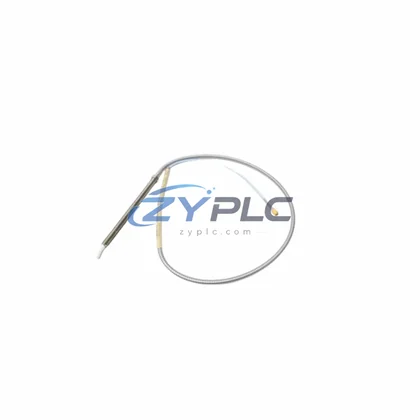
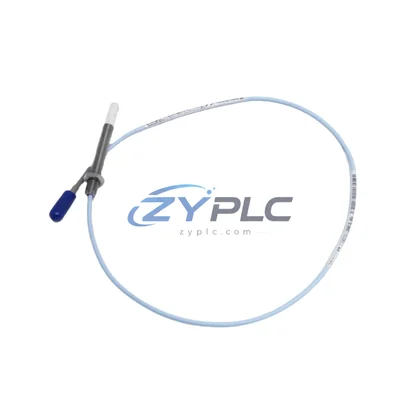
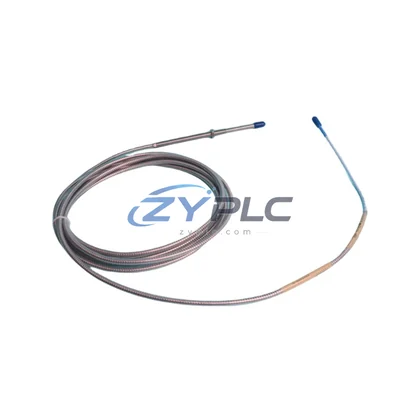
Bently Nevada 3300/12-01-20-01: Industrial Data Link for Smart Factory Vibration Networks
The Bently Nevada 3300/12-01-20-01 Proximitor/Seismic I/O Module is a precision-engineered signal conditioning and interface unit designed for the Bently Nevada 3300 Series machinery protection system. In modern smart factory environments, where rotating equipment health directly impacts production continuity, this module serves as a critical node in the industrial data chain — bridging field-level proximity probes and seismic sensors with upper-layer monitoring, control, and SCADA platforms.
From the moment a proximity probe detects shaft displacement or a seismic transducer captures vibration amplitude, the 3300/12-01-20-01 conditions, digitizes, and transmits that signal into the 3300 rack architecture. This real-time signal path feeds directly into the Bently Nevada 3300/16-01-01-01 System Monitor and the 3300/20 Rack Interface Module, enabling continuous machinery health assessment without latency gaps that could mask developing faults.
In integrated plant architectures, the module works in concert with the Bently Nevada 3500 Series rack systems for facilities requiring expanded channel capacity, and communicates upstream through the System 1 Evolution software platform — Bently Nevada’s flagship SCADA and asset performance management environment. System 1 aggregates vibration, position, and process data from multiple 3300/12-01-20-01 modules across a plant, enabling operators to visualize trends, configure alarm thresholds, and initiate remote diagnostics from a centralized HMI workstation.
For facilities running distributed control architectures, the 3300/12-01-20-01 integrates with GE Mark VIe turbine control systems and Emerson DeltaV DCS platforms via hardwired I/O or Modbus RTU gateway bridges, ensuring that vibration data flows seamlessly into the plant-wide process control loop. When paired with an Anybus X-gateway or Moxa MGate protocol converter, the analog and digital outputs of the 3300/12-01-20-01 can be mapped to PROFIBUS DP, EtherNet/IP, or PROFINET networks — eliminating data silos between legacy machinery protection systems and modern Ethernet-based control infrastructure.
The module’s dual-channel design supports simultaneous monitoring of radial vibration and axial position on a single shaft, reducing rack slot consumption while maintaining full API 670 compliance. Each channel delivers a buffered output signal that can feed both the local 3300 rack processor and an external Emerson AMS Device Manager or OSIsoft PI historian for long-term trend archiving and predictive maintenance analytics.
Compatibility & Integration Notes
| Parameter |
Specification |
| SKU |
3300/12-01-20-01 |
| Brand / Series |
Bently Nevada / 3300 Series |
| Module Type |
Proximitor / Seismic I/O Module |
| Signal Input |
Proximity probe (eddy current), seismic velocity / accelerometer |
| Output Interface |
Buffered analog output, digital alarm relay, rack backplane I/O |
| Protocol Compatibility |
Modbus RTU (via gateway), hardwired 4–20 mA, dry contact relay |
| Network Compatibility |
PROFIBUS DP, EtherNet/IP, PROFINET (via protocol converter) |
| SCADA / HMI Integration |
Bently Nevada System 1, GE Mark VIe, Emerson DeltaV, OSIsoft PI |
| Compliance Standard |
API 670, CE, RoHS |
| Channels |
Dual-channel (radial vibration + axial position) |
| Power Supply |
24 VDC (rack-supplied) |
| Operating Temperature |
0°C to +65°C |
| Warranty |
warranty terms confirmed during quotation — Covered against manufacturing defects |
Connected Automation Data Flow
In a typical smart factory deployment, the 3300/12-01-20-01 sits at the foundation of a layered industrial data architecture. At the field level, Bently Nevada 3300/05-02-00-00 proximity probes and 3300/55 seismic transducers feed raw displacement and vibration signals into the module’s input channels. The conditioned outputs travel across the 3300 rack backplane to the 3300/16-01-01-01 System Monitor, which applies alarm logic and trip setpoints in accordance with API 670 machinery protection standards.
At the control layer, the alarm relay outputs of the 3300/12-01-20-01 interface directly with a Siemens S7-400 PLC or Allen-Bradley ControlLogix L7x safety controller, triggering automated shutdown sequences when vibration thresholds are exceeded. Simultaneously, the buffered analog output connects to a Yokogawa CENTUM VP DCS analog input card, integrating machinery health data into the broader process control loop without requiring a separate communication gateway.
For remote monitoring and diagnostics, a Moxa MGate MB3480 Modbus-to-EtherNet/IP gateway bridges the 3300 rack’s serial data stream to the plant’s Ethernet backbone, where a Wonderware InTouch HMI or Ignition SCADA server aggregates real-time vibration trends alongside temperature, pressure, and flow data from other field instruments. An OSIsoft PI Data Archive server stores historical vibration signatures, enabling maintenance engineers to perform spectral analysis and detect bearing wear, rotor imbalance, or misalignment weeks before a failure event.
Edge computing nodes — such as a Siemens SIMATIC IPC427E industrial PC — can run local analytics algorithms on the buffered output data, reducing latency for time-critical alarm responses while forwarding aggregated health indices to cloud-based asset management platforms. This multi-layer data flow architecture ensures that the 3300/12-01-20-01 is not merely a signal conditioner but a foundational connectivity node in the plant’s industrial IoT ecosystem.
Solving Data Isolation in Industrial Sites
One of the most persistent challenges in industrial facilities running legacy machinery protection systems is protocol fragmentation. The Bently Nevada 3300/12-01-20-01 was designed for an era of hardwired I/O, yet its buffered analog outputs and relay contacts remain universally compatible with modern protocol conversion infrastructure. By deploying an Anybus Communicator or HMS X-gateway alongside the 3300 rack, plant engineers can expose vibration data on PROFINET or EtherNet/IP networks without modifying the existing rack configuration — preserving API 670 certification integrity while eliminating the data silo between the machinery protection system and the plant DCS.
Remote monitoring gaps are addressed through Modbus RTU-to-Ethernet gateways that relay 3300/12-01-20-01 alarm states and analog values to SCADA servers over standard TCP/IP infrastructure. This enables 24/7 remote diagnostics from control rooms or off-site engineering centers, reducing the need for physical site inspections on rotating equipment in hazardous or hard-to-access locations.
Production line transparency is achieved by integrating the module’s outputs into MES (Manufacturing Execution System) platforms such as Siemens Opcenter or Rockwell FactoryTalk, where machinery health KPIs are displayed alongside OEE metrics. When a vibration alarm triggers, the MES can automatically log a maintenance work order, notify the responsible technician via mobile alert, and adjust production scheduling to minimize unplanned downtime impact.
System scalability is inherent in the 3300 rack architecture: additional 3300/12-01-20-01 modules can be added to expand channel coverage as new machinery is commissioned, with each module’s data automatically discovered by the System 1 software platform. This plug-and-expand design supports phased smart factory rollouts without requiring system-wide reconfiguration.
Every 3300/12-01-20-01 unit supplied by ZYPLC undergoes pre-shipment functional testing, including signal input simulation, alarm relay verification, and output calibration checks. Units are shipped with full documentation and are covered by a warranty terms confirmed during quotation against manufacturing defects, with DHL/FedEx express delivery available globally.
Industrial Connectivity FAQ
Q1: Does the Bently Nevada 3300/12-01-20-01 support Modbus or EtherNet/IP communication natively?
The 3300/12-01-20-01 communicates via hardwired analog outputs (buffered voltage/current) and relay contacts natively. Modbus RTU or EtherNet/IP connectivity requires a protocol gateway such as the Moxa MGate or Anybus Communicator installed between the 3300 rack and the Ethernet network. ZYPLC can advise on compatible gateway configurations for your specific network architecture.
Q2: What is the communication latency for alarm signals from the 3300/12-01-20-01 to a SCADA system?
Hardwired relay outputs respond within milliseconds of a threshold crossing, making them suitable for direct PLC safety interlock wiring. When routed through a Modbus gateway to a SCADA server, typical end-to-end latency is 50–200 ms depending on polling rate and network load — well within the requirements for condition monitoring applications.
Q3: Can the 3300/12-01-20-01 be integrated with non-Bently Nevada SCADA or DCS platforms?
Yes. The module’s buffered analog outputs (typically 0–24 VDC or 4–20 mA via signal conditioner) are compatible with any DCS or PLC analog input card. For digital integration, protocol converters enable connectivity to Emerson DeltaV, Siemens PCS 7, Yokogawa CENTUM VP, and other major DCS platforms. ZYPLC provides technical consultation to support cross-platform integration projects.
Q4: What warranty and testing does ZYPLC provide for the 3300/12-01-20-01?
All units are covered by a warranty terms confirmed during quotation against manufacturing defects from the date of shipment. Pre-shipment testing includes functional signal simulation, relay output verification, and visual inspection per IPC-A-610 workmanship standards. Expedited DHL/FedEx shipping is available with full export documentation for international orders.