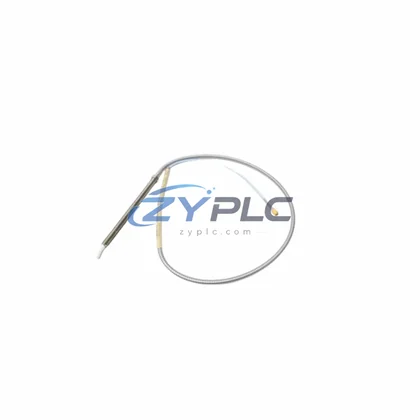
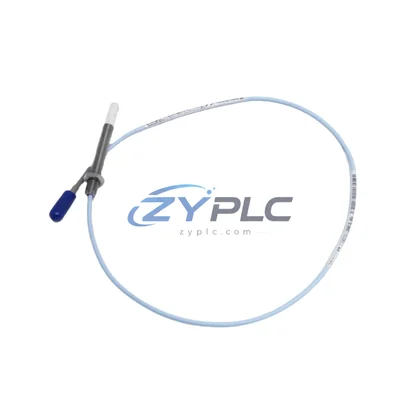
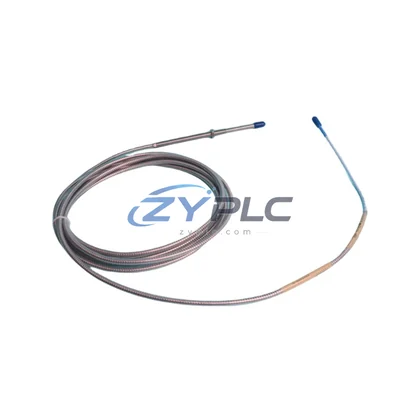
Bently Nevada 330101-00-28-20-12-05 Proximity Probe for 3300 XL Automation
The Bently Nevada 330101-00-28-20-12-05 is an 8mm eddy-current proximity probe engineered for the 3300 XL Series continuous machinery monitoring system. In modern industrial facilities where energy efficiency and equipment uptime are inseparable goals, this probe plays a foundational role in reducing unplanned downtime risk caused by undetected rotor imbalance, shaft misalignment, and bearing degradation. By delivering real-time, high-resolution radial vibration and position data directly to the 3300 XL rack-mounted monitors, the 330101-00-28-20-12-05 enables plant engineers to move from reactive maintenance to a predictive, maintenance-focused operational model.
Every watt saved in a rotating machinery system begins with accurate measurement. When a shaft runs with even minor misalignment or imbalance, the motor driving it draws abnormal load — often 5–15% above baseline — to compensate for the mechanical inefficiency. The 330101-00-28-20-12-05 detects these deviations at the micron level, allowing the control system to trigger corrective action before energy losses compound. Integrated with the 3300 XL monitor modules and paired with a compatible 330130 extension cable and 330180 proximitor sensor, this probe forms a complete sensing chain that feeds actionable data into the plant’s maintenance planning loop.
Product Specification Table
| Parameter |
Specification / Value |
| Probe Diameter |
8mm (Standard) |
| Cable Length |
28 inches (0.71m) integral cable |
| Extension Cable |
20 feet (6.1m) — matched system |
| Proximitor Cable |
12 feet (3.66m) |
| Output Sensitivity |
200 mV/mil (7.87 V/mm) |
| Operating Gap Range |
0.25 – 2.26 mm (10 – 89 mil) |
| Frequency Response |
DC to 10,000 Hz |
| Compatible System |
Bently Nevada 3300 XL Series |
| Application Environment |
Turbines, compressors, pumps, motors — oil & gas, power generation, petrochemical |
| Energy Saving Value |
Prevents excess motor draw from misalignment/imbalance; enables predictive maintenance to reduce unplanned downtime energy spikes |
| Warranty |
warranty terms confirmed during quotation |
| Availability |
RFQ Available — Ships after outgoing test |
System Compatibility and Application
The 330101-00-28-20-12-05 does not operate in isolation — it is the sensing front-end of a layered automation architecture designed to minimize unplanned downtime across the entire drivetrain. Within the 3300 XL framework, the probe signal is conditioned by the 3300/16 dual-channel monitor module, which processes gap voltage, 1X and 2X vibration vectors, and direct vibration amplitude. These values are then passed via the system’s communication backplane to a Bently Nevada System 1 software platform, where trend analysis and alarm thresholds are configured to flag inefficiency before it becomes failure.
On the drive side, the rotating equipment monitored by this probe is typically controlled by a variable frequency drive (VFD) such as an ABB ACS880 or Siemens SINAMICS G120, which adjusts motor speed in response to load demand. When the 3300 XL system detects rising vibration amplitude — a sign of mechanical stress or imbalance — the VFD can be commanded to reduce speed or trigger a controlled shutdown, preventing the motor from drawing peak current under fault conditions. This closed-loop interaction between the proximity probe, the monitor rack, and the drive system is one of the most effective maintenance planning strategies available in rotating machinery applications.
For facilities running Siemens S7-1500 or Allen-Bradley ControlLogix PLCs as the central automation controller, the 3300 XL system communicates alarm and trend data via Modbus TCP or OPC-UA, enabling the PLC to coordinate operational-efficiency responses across multiple machines simultaneously. An HMI panel — such as a Siemens TP1200 Comfort or Rockwell PanelView Plus 7 — displays real-time vibration trends alongside operating load data from a power monitoring relay like the Schneider Electric PowerLogic ION7650, giving operators a unified view of mechanical health and electrical efficiency on a single screen.
I/O modules within the 3300 XL rack, including the 3300/20 keyphasor module, provide phase reference signals that allow the system to distinguish synchronous from non-synchronous vibration components — critical for identifying whether energy losses stem from rotor imbalance (correctable by balancing) or from structural resonance (requiring isolation or speed adjustment). This level of diagnostic granularity directly translates to targeted energy interventions rather than blanket load reductions that sacrifice throughput.
Maintenance and Replacement Notes
In a typical continuous process plant — a petrochemical facility running centrifugal compressors, for example — a single undetected bearing defect can cause a compressor to operate 8–12% below its designed adiabatic efficiency for weeks before a catastrophic failure occurs. During that period, the drive motor compensates by drawing additional current, the cooling system works harder, and auxiliary systems run longer cycles. The 330101-00-28-20-12-05, installed at the compressor’s radial bearing location, captures the sub-synchronous and super-synchronous vibration signatures that indicate this degradation in its earliest stages.
Once the 3300 XL monitor flags an alarm condition, the plant’s maintenance team can schedule a corrective intervention during the next planned production window rather than responding to an emergency shutdown. The operational stability from avoiding a single unplanned stop — including the restart energy surge, the production loss during cool-down and restart, and the auxiliary system energy consumed during the outage — can exceed the annual operating cost of the entire monitoring system. This is the economic and environmental case for precision proximity sensing as an maintenance planning tool.
On high-speed turbine trains, the 330101-00-28-20-12-05 is typically installed in pairs at each bearing journal, providing X-Y vibration vectors that allow the System 1 software to generate orbital plots. These orbits reveal shaft centerline position shifts caused by oil film instability or thermal growth — both of which increase bearing friction losses and drive operating load upward. By trending centerline position over time, engineers can optimize lube oil temperature and pressure setpoints to maintain the shaft in its lowest-friction operating zone, supporting earlier maintenance decisions and reducing unplanned downtime risk.
For production lines where throughput consistency is a key performance indicator, the real-time data from the 330101-00-28-20-12-05 feeds into overall equipment effectiveness (OEE) calculations. A machine running with elevated vibration is a machine running below its design efficiency — it produces more heat, consumes more energy per unit of output, and degrades faster. By maintaining vibration within alarm limits, the probe indirectly sustains the production line rhythm, reduces scrap rates caused by vibration-induced quality deviations, and extends the mean time between maintenance interventions.
All units supplied by ZYPLC undergo outgoing functional testing prior to shipment, verifying gap voltage output, sensitivity linearity, and cable integrity. Stock is maintained for shipment arranged after confirmation, and each unit is covered by a warranty terms confirmed during quotation against manufacturing defects and performance deviation.
Product Sourcing FAQ
Q1: How does the 330101-00-28-20-12-05 contribute to operational stability in rotating machinery?
By providing continuous, high-resolution shaft vibration and position data to the 3300 XL monitoring system, this probe enables early detection of mechanical inefficiencies — such as imbalance, misalignment, and bearing wear — that cause motors to draw abnormal load. Early intervention prevents unplanned downtime from compounding and avoids the high energy cost of unplanned shutdowns and restarts.
Q2: Is the 330101-00-28-20-12-05 compatible with my existing 3300 XL rack and monitors?
Yes. This probe is a standard 8mm component of the Bently Nevada 3300 XL system and is designed to work with 3300 XL monitor modules, 330130 extension cables, and 330180 proximitor sensors. It is also backward-compatible with earlier 3300 series installations where the cable lengths and connector types match.
Q3: What is the recommended replacement interval, and how does timely replacement reduce unplanned downtime?
Bently Nevada recommends replacing proximity probes when sensitivity drift exceeds ±5% of the nominal 200 mV/mil output, or when physical damage to the probe tip or cable is detected. A drifting probe produces inaccurate gap readings, which can mask real vibration increases and allow mechanical inefficiencies to go undetected — resulting in sustained excess operating load. ZYPLC stocks tested replacement units for shipment arranged after confirmation.
Q4: What testing is performed before shipment, and what does the warranty terms confirmed during quotation cover?
Each 330101-00-28-20-12-05 unit supplied by ZYPLC is tested for gap voltage output accuracy, sensitivity linearity across the operating range, and cable/connector integrity before shipment. The warranty terms confirmed during quotation covers manufacturing defects and performance deviations from published specifications. Units that fail to meet specification during the warranty period are replaced or refunded.