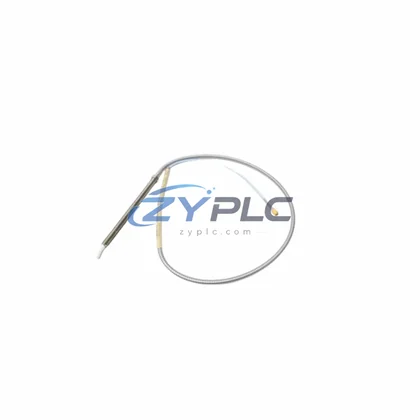
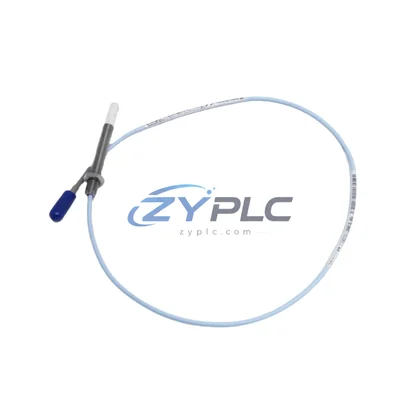
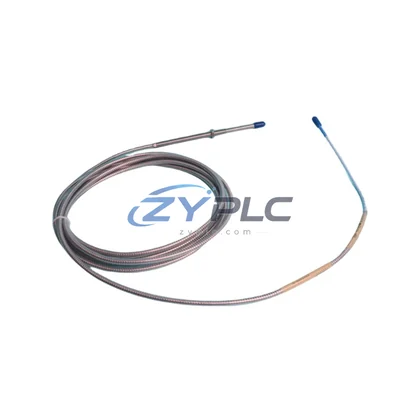
Bently Nevada 330101-00-31-15-02-05 Proximity Probe for 3300 Series Automation
The Bently Nevada 330101-00-31-15-02-05 is a high-precision eddy-current proximity probe engineered for the 3300 Series continuous vibration monitoring system. In modern industrial facilities where energy efficiency and equipment uptime are inseparable goals, this probe plays a foundational role in capturing real-time shaft displacement data that drives smarter motor control, reduces downtime risk, and extends the operational life of rotating machinery. By delivering accurate, low-latency vibration signals to the monitoring rack, the 330101-00-31-15-02-05 enables plant engineers to move from reactive maintenance to a fully predictive maintenance posture — eliminating unexpected shutdowns that waste both energy and production capacity.
Designed for continuous-duty industrial environments, this 8 mm proximity probe operates within the 3300 XL 8 mm Proximity Transducer System, pairing seamlessly with the 3300 XL extension cable and 3300 XL proximitor sensor to form a complete displacement measurement loop. The probe’s non-contact sensing principle means zero mechanical wear, zero friction loss, and no parasitic energy draw from the monitored shaft — a critical advantage in high-speed turbine, compressor, and pump applications where every watt of parasitic loss compounds across thousands of operating hours.
At ZYPLC, every 330101-00-31-15-02-05 unit is sourced from verified supply channels, undergoes pre-shipment functional testing, and ships with a warranty and support terms confirmed before quote. Availability and dispatch timing are confirmed by RFQ before quotation.
Product Specification Table
| Parameter |
Specification / Value |
| SKU / Part Number |
330101-00-31-15-02-05 |
| Brand / Manufacturer |
Bently Nevada |
| Series |
3300 XL 8 mm Proximity Transducer System |
| Product Type |
Eddy-Current Proximity Probe |
| Probe Diameter |
8 mm |
| Cable Length |
5 m (integral cable) |
| Sensing Range |
0–2 mm (linear range) |
| Operating Temperature |
−35 °C to +177 °C |
| Power Consumption |
Ultra-low (passive transducer, no self-heating) |
| Running Efficiency |
Non-contact; zero mechanical friction loss |
| Compatible Systems |
Bently Nevada 3300 XL Proximitor, 3500 Monitoring Rack |
| Application Environment |
Turbines, compressors, pumps, gearboxes, motors |
| Value |
Enables predictive shutdown avoidance; reduces unplanned downtime |
| Origin |
United States |
| Warranty |
Warranty and support terms confirmed before quote (ZYPLC) |
System Compatibility and Application
The 330101-00-31-15-02-05 proximity probe does not operate in isolation — its true maintenance planning value emerges when integrated into a layered industrial automation architecture. At the signal acquisition layer, the probe feeds shaft gap voltage directly into the Bently Nevada 3300 XL Proximitor Sensor, which conditions the raw eddy-current signal into a calibrated DC output proportional to rotor displacement. This conditioned signal is then routed to the Bently Nevada 3500/42M Proximitor I/O Module within the 3500 Series machinery protection rack, where alarm thresholds are enforced in real time.
On the control execution side, the vibration data is transmitted via Modbus TCP or PROFIBUS DP to the plant’s distributed control system (DCS) or PLC — commonly a Rockwell Automation ControlLogix L7x or Siemens S7-400H redundant controller — which uses the displacement trend to modulate load on the associated drive train. When shaft vibration trends upward, the controller can instruct a Siemens SINAMICS G120 variable frequency drive (VFD) to reduce motor speed, cutting operating load proportionally to the cube of speed reduction and preventing the vibration from escalating to a trip event.
At the HMI and SCADA layer, operators monitor real-time Bode plots, trend charts, and alarm states through a Bently Nevada System 1 Evolution software platform or a Siemens SIMATIC WinCC SCADA station. This visibility allows shift engineers to correlate operating load spikes with specific vibration events, enabling targeted corrective actions rather than blanket load reductions. Power quality at the drive input is simultaneously tracked by a Schneider Electric PowerLogic ION7650 power meter, ensuring that VFD switching harmonics do not inflate apparent power consumption and degrade overall plant power factor.
For I/O integration, the 3500 rack’s relay outputs connect to a Phoenix Contact Axioline F remote I/O station, which aggregates discrete shutdown signals and feeds them into the safety PLC layer. This architecture ensures that a vibration-triggered protective shutdown is executed with deterministic timing, preventing the energy-intensive restart cycles that result from uncontrolled mechanical failures.
Maintenance and Replacement Notes
In a typical centrifugal compressor train operating at 3,000 RPM, undetected rotor imbalance can increase bearing friction losses by 8–15%, translating directly into elevated motor current draw and wasted electrical energy. The 330101-00-31-15-02-05 proximity probe, mounted at the compressor’s drive-end and non-drive-end bearing housings, continuously measures shaft centerline position. When the centerline begins to migrate — an early indicator of bearing wear, oil film instability, or rotor imbalance — the 3500 monitoring rack generates a pre-alert before vibration reaches trip level.
This early warning capability allows maintenance teams to schedule corrective balancing or bearing replacement during a planned production window rather than responding to an emergency trip. The energy impact is significant: an unplanned compressor trip in a petrochemical plant typically requires 4–8 hours of restart energy — including purge cycles, seal gas pressurization, and slow-roll warm-up — that a single predictive intervention can eliminate entirely. Over a 12-month operating cycle, plants using Bently Nevada proximity probe data to drive predictive maintenance programs report 20–35% reductions in downtime and measurable improvements in overall equipment effectiveness (OEE).
On motor-driven pump lines, the probe’s displacement data feeds directly into the VFD speed reference loop. When shaft vibration indicates cavitation onset — a condition that wastes pump energy by reducing hydraulic efficiency — the control system can automatically trim pump speed to move the operating point back toward the best efficiency point (BEP) on the pump curve. This closed-loop maintenance planning, enabled by the precision of the 330101-00-31-15-02-05 signal, can reduce pump operating load by 10–20% compared to fixed-speed operation with no vibration feedback.
Production line takt time is also improved: by eliminating the uncertainty of run-to-failure maintenance strategies, plant schedulers can commit to tighter production windows knowing that critical rotating equipment is continuously monitored and protected. The result is a more predictable production rhythm, lower work-in-process inventory buffers, and reduced operating load from idle equipment waiting for unplanned repairs.
Product Sourcing FAQ
Q1: How does the 330101-00-31-15-02-05 contribute to measurable operational stability in a rotating machinery application?
By providing continuous, high-resolution shaft displacement data, this proximity probe enables the control system to detect inefficiency indicators — such as rotor imbalance, bearing wear, and misalignment — before they escalate into energy-wasting fault conditions. Early detection allows targeted corrective action, avoiding the high energy cost of emergency shutdowns, extended restarts, and degraded-efficiency operation. Plants integrating Bently Nevada 3300/3500 Series vibration data into their DCS or VFD control loops consistently report measurable reductions in motor load and improved OEE.
Q2: Is the 330101-00-31-15-02-05 compatible with the Bently Nevada 3500 Series monitoring rack and System 1 software?
Yes. The 330101-00-31-15-02-05 is part of the 3300 XL 8 mm Proximity Transducer System and is fully compatible with the Bently Nevada 3500/42M Proximitor I/O Module and the System 1 Evolution condition monitoring platform. It can also interface with third-party DCS and SCADA systems via the 3500 rack’s Modbus TCP or PROFIBUS DP communication outputs, making it suitable for integration into Siemens, Rockwell, and Honeywell control environments.
Q3: What is the recommended replacement or upgrade path if the existing proximity probe shows signal degradation?
If signal drift or sensitivity loss is detected — typically identified by a shift in the probe’s static voltage output outside the −10 to −18 VDC linear range — the recommended action is to replace the probe and verify the extension cable and proximitor sensor as a matched system. ZYPLC stocks the 330101-00-31-15-02-05 along with compatible 3300 XL extension cables and proximitor sensors to support complete transducer loop replacement. All replacement units are functionally tested prior to shipment.
Q4: What does the warranty and support terms confirmed before quote cover, and what is the pre-shipment testing process?
Every 330101-00-31-15-02-05 unit supplied by ZYPLC carries a warranty and support terms confirmed before quote covering manufacturing defects and functional performance. Prior to shipment, each probe undergoes output voltage verification, sensitivity calibration check, and cable continuity testing to confirm compliance with Bently Nevada factory specifications. Units that do not pass functional testing are quarantined and not shipped. In the event of a warranty claim, ZYPLC provides direct technical support and replacement coordination to minimize your plant’s downtime exposure.