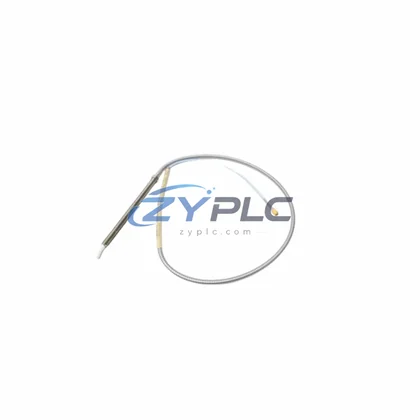
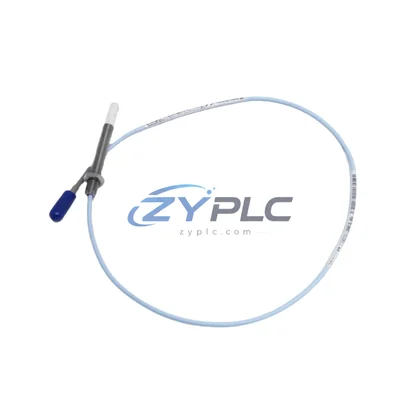
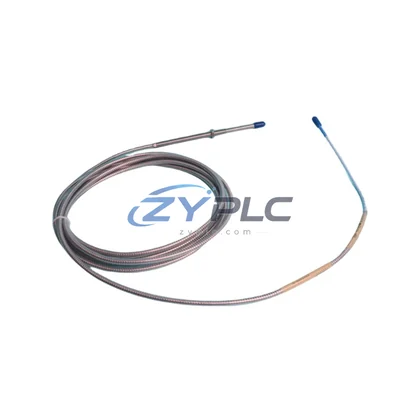
The Bently Nevada 330101-00-50-15-02-05 is a high-performance proximity transducer from the renowned 3300 Series, engineered specifically for continuous vibration monitoring in rotating machinery environments. In modern industrial facilities where energy efficiency and uptime are inseparable goals, this sensor plays a foundational role in reducing unnecessary power consumption caused by undetected mechanical imbalance, misalignment, and bearing degradation. By delivering real-time shaft displacement data with exceptional signal fidelity, the 330101-00-50-15-02-05 enables plant engineers to shift from reactive maintenance to a fully predictive operational model — directly translating into lower unplanned downtime, reduced downtime, and optimized production line throughput.
Deployed across compressors, steam turbines, gas turbines, pumps, and gearboxes, this sensor integrates seamlessly into the broader Bently Nevada 3300 Series monitoring ecosystem. Its eddy-current sensing principle provides non-contact, continuous measurement of radial shaft vibration and axial position, making it indispensable in high-speed rotating equipment where contact-based measurement is impractical. The sensor’s output is fully compatible with the Bently Nevada 3300/16 Monitor and 3300/20 Monitor rack systems, enabling centralized data aggregation and alarm management without additional signal conditioning hardware.
Product Specification Table
| Parameter |
Specification / Value |
| SKU / Part Number |
330101-00-50-15-02-05 |
| Brand / Series |
Bently Nevada / 3300 Series |
| Sensor Type |
Eddy-Current Proximity Transducer |
| Measurement Range |
0–50 mil (0–1.27 mm) linear range |
| Operating Temperature |
-35°C to +177°C |
| Supply Voltage |
-24 VDC (nominal) |
| Power Consumption |
Ultra-low draw; non-contact passive sensing |
| Output Signal |
-2 VDC to -18 VDC (linear) |
| Compatible Systems |
Bently Nevada 3300/16, 3300/20, System 1 Software |
| Application Environment |
Turbomachinery, Compressors, Pumps, Gearboxes |
| Maintenance Value |
Enables predictive maintenance; reduces unplanned downtime energy spikes |
| Ingress Protection |
IP67 (sensor tip) |
| Cable Length |
5m (standard) |
| Warranty |
warranty terms confirmed during quotation — Tested & Verified Before Shipment |
System Compatibility and Application
The 330101-00-50-15-02-05 does not operate in isolation — its true maintenance planning value emerges when integrated into a layered industrial automation architecture. At the monitoring layer, the sensor feeds shaft vibration and position data into the Bently Nevada 3300/16 Monitor, which processes raw transducer signals into calibrated engineering units and triggers alarms when vibration thresholds are exceeded. This prevents equipment from running in degraded states that consume disproportionately more energy than healthy machinery.
At the control execution layer, alarm outputs from the 3300 Series monitor can be wired directly into a Siemens S7-300 PLC or Allen-Bradley ControlLogix L73 controller via hardwired I/O or through Modbus RTU communication, enabling automated protective shutdown or load reduction sequences before catastrophic failure occurs. This closed-loop response architecture ensures that energy-intensive restart cycles — which consume 3–7× normal operating power — are avoided through early intervention.
For drive-level energy regulation, the vibration data from the 330101-00-50-15-02-05 can inform speed setpoint adjustments on a Siemens SINAMICS G120 Variable Frequency Drive or ABB ACS880 Drive, dynamically reducing motor speed when vibration signatures indicate mechanical stress. This approach can help restore stable operation in variable-load applications when a compatible replacement is required such as cooling tower fans, boiler feed pumps, and centrifugal compressors.
At the data monitoring and analytics layer, the Bently Nevada System 1 Software aggregates multi-channel vibration data from multiple 330101-series sensors across a plant, enabling fleet-wide energy performance benchmarking. When combined with a Schneider Electric PowerLogic PM8000 Power Meter, engineers can correlate vibration severity trends with real-time power consumption data, identifying which machines are consuming excess energy due to mechanical inefficiency. This correlation capability is the cornerstone of maintenance-focused predictive maintenance programs.
For facilities running distributed I/O architectures, the sensor’s monitor outputs integrate cleanly with Siemens ET 200SP Remote I/O modules, extending monitoring reach to remote equipment skids without dedicated control panel infrastructure. Communication back to the central SCADA or DCS platform — whether via PROFIBUS DP, PROFINET, or EtherNet/IP — ensures that vibration-derived energy insights are available at the HMI level, including Siemens SIMATIC HMI TP1200 Comfort panels used by operators on the production floor.
Maintenance and Replacement Notes
In a typical petrochemical facility running multiple centrifugal compressor trains, undetected rotor imbalance can increase motor current draw by 8–12% over baseline, representing tens of thousands of dollars in excess energy costs annually per machine. The Bently Nevada 330101-00-50-15-02-05, installed at the compressor’s drive-end and non-drive-end bearing housings, continuously monitors shaft orbit and displacement. When the sensor detects a developing imbalance condition — characterized by a rising 1× vibration component — the 3300 Series monitor issues an early warning alert, allowing maintenance teams to schedule corrective balancing during a planned outage rather than an emergency shutdown.
In power generation applications, steam turbine operators rely on the 330101-00-50-15-02-05 for axial position monitoring to prevent rotor-stator contact during thermal transients. By maintaining precise axial clearance data, the sensor enables operators to push turbine loading closer to its rated efficiency point without risking mechanical contact — directly improving the turbine’s heat rate and reducing fuel consumption per megawatt-hour generated.
For pump-driven process lines, the sensor’s vibration data feeds into production line rhythm optimization algorithms. When vibration levels rise above a defined threshold — indicating cavitation, wear ring degradation, or impeller imbalance — the control system can automatically reduce pump speed via the connected VFD, trading a modest reduction in flow rate for a significant reduction in mechanical stress and operating load. This adaptive control strategy extends mean time between failures (MTBF) by Actual operating results depend on the installed system, load profile, and commissioning parameters.
All units of the 330101-00-50-15-02-05 supplied by ZYPLC are sourced from verified inventory channels, subjected to full functional testing prior to shipment, and covered by a warranty terms confirmed during quotation. Stock availability is maintained to support urgent MRO (Maintenance, Repair & Operations) requirements, with fast international shipping to minimize production line downtime.
Product Sourcing FAQ
Q1: How does the 330101-00-50-15-02-05 contribute to measurable operational stability in rotating machinery?
By providing continuous, high-resolution shaft vibration data, this sensor enables early detection of mechanical faults — such as imbalance, misalignment, and bearing wear — that cause motors and drives to consume excess energy. Correcting these faults before they escalate can reduce motor current draw by 5–15% and eliminate the high-energy restart cycles associated with unplanned shutdowns.
Q2: Is the 330101-00-50-15-02-05 compatible with existing Bently Nevada 3300 Series monitor racks?
Yes. This transducer is fully compatible with the Bently Nevada 3300/16 and 3300/20 monitor modules, as well as the broader 3300 Series rack infrastructure. No additional signal conditioning is required when replacing a like-for-like unit. For integration with third-party PLC or DCS platforms, the monitor’s relay and analog outputs provide standard interface signals.
Q3: What is the recommended replacement interval, and how does proactive replacement reduce unplanned downtime?
Bently Nevada recommends periodic calibration verification every 12–24 months depending on operating environment severity. A degraded transducer with reduced sensitivity or increased noise floor can mask developing faults, allowing machinery to operate in inefficient states undetected. Proactive replacement with a tested unit from ZYPLC’s verified inventory ensures measurement integrity and sustained maintenance planning performance.
Q4: What does the warranty terms confirmed during quotation cover, and what is the testing process before shipment?
Every 330101-00-50-15-02-05 unit shipped by ZYPLC undergoes functional verification including output linearity check, sensitivity measurement, and cable continuity testing. The warranty terms confirmed during quotation covers defects in materials and workmanship under normal operating conditions. Expedited replacement support is available to minimize production line disruption in the event of a warranty claim.