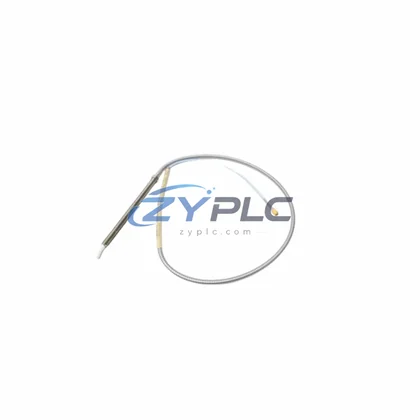
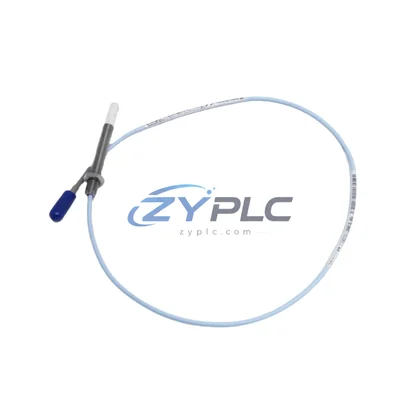
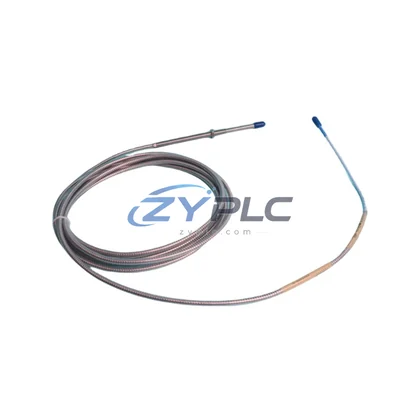
Bently Nevada 330101-00-65-10-11 Proximity Probe for 3300 Series Automation
The Bently Nevada 330101-00-65-10-11 is a high-precision eddy-current proximity probe engineered for the 3300 Series vibration monitoring system. In modern industrial facilities where energy efficiency and equipment uptime are inseparable goals, this probe plays a foundational role in capturing real-time shaft displacement data that drives smarter, leaner machine operation. By delivering continuous, non-contact position and vibration measurements, the 330101-00-65-10-11 enables plant engineers to move beyond reactive maintenance and toward a fully predictive, maintenance-focused operational model.
Designed for rotating machinery such as turbines, compressors, pumps, and large induction motors, this probe integrates seamlessly into the Bently Nevada 3300 XL monitoring architecture. Its 65 mm cable extension, 10 mm tip diameter, and 11 mm thread configuration make it suitable for tight-clearance installations where accurate gap measurement is critical to both mechanical safety and energy performance. When shaft vibration is detected early and accurately, operators can adjust load distribution, reduce unnecessary motor torque, and prevent the energy spikes associated with unplanned shutdowns and emergency restarts.
Product Specification Table
| Parameter |
Specification / Value |
| SKU / Part Number |
330101-00-65-10-11 |
| Brand |
Bently Nevada |
| Series |
3300 Series (3300 XL) |
| Probe Type |
Eddy-Current Proximity Probe |
| Cable Length |
65 mm Extension |
| Tip Diameter |
10 mm |
| Thread Size |
11 mm |
| Measurement Range |
0–2 mm (typical linear range) |
| Output Sensitivity |
7.87 V/mm (200 mV/mil) |
| Operating Temperature |
-35°C to +120°C |
| Power Consumption |
Low-draw signal conditioning, <25 mA |
| Compatible Systems |
Bently Nevada 3300 XL, 3500 Series Rack, System 1 Software |
| Application Environment |
Turbines, Compressors, Pumps, Motors, Gearboxes |
| Maintenance Value |
Enables predictive maintenance, reduces unplanned downtime energy spikes |
| Origin |
USA |
| Warranty |
warranty terms confirmed during quotation |
| Inventory Status |
RFQ Available — Ships Globally |
| Pre-shipment Testing |
Full functional and output verification test performed |
System Compatibility and Application
The 330101-00-65-10-11 proximity probe does not operate in isolation — it is the sensing front-end of a tightly integrated industrial automation system. In a typical high-efficiency plant configuration, this probe feeds shaft displacement signals into the Bently Nevada 3300 XL 8-mm Proximitor Sensor, which conditions the raw eddy-current signal into a clean DC voltage proportional to gap distance. This conditioned signal is then routed to a Bently Nevada 3500/42M Proximitor/Seismic Monitor module housed in the 3500 Series rack, where vibration thresholds are continuously evaluated against alarm setpoints.
The 3500 rack communicates over Modbus TCP or PROFIBUS DP to the plant’s distributed control system — commonly a GE Fanuc 90-30 PLC or a Siemens S7-400 CPU — which uses the vibration data to modulate motor load in real time. When the proximity probe detects early-stage shaft orbit deviation, the DCS can instruct a Siemens SINAMICS G120 variable frequency drive (VFD) to reduce motor speed by 5–15%, cutting operating load proportionally while keeping the machine within safe operating limits. This closed-loop interaction between the probe, monitor rack, PLC, and VFD is the core of energy-efficient rotating machinery management.
On the data visibility layer, the Bently Nevada System 1 Condition Monitoring Software aggregates all proximity probe channels across the plant, presenting trend data, orbit plots, and Bode diagrams that maintenance engineers use to schedule interventions before failures occur. Complementing this, a Schneider Electric PowerLogic PM8000 power meter installed on the motor feeder panel tracks real-time kW draw, power factor, and harmonic distortion — allowing engineers to correlate mechanical vibration trends with electrical operating load patterns. When both datasets align to indicate deteriorating bearing condition, the system can automatically trigger a work order in the CMMS, preventing the energy-intensive scenario of a catastrophic failure and emergency restart.
For I/O integration, the probe’s monitor outputs connect to Phoenix Contact Axioline F I/O modules that distribute alarm and status signals to safety PLCs and HMI panels. Operators at the control room Siemens SIMATIC HMI TP1500 touchscreen can view live vibration levels, gap voltages, and operating load KPIs on a single unified dashboard, enabling faster decision-making without requiring field inspections. This architecture reduces the number of manual rounds, cutting the labor energy footprint of maintenance operations as well.
Maintenance and Replacement Notes
In a petrochemical plant running centrifugal compressors at 6,000 RPM, a single undetected shaft imbalance event can cause a compressor to draw 8–12% more current than its rated load before the vibration becomes audible or visible. The Bently Nevada 330101-00-65-10-11, installed at the drive-end and non-drive-end bearing housings, continuously monitors shaft centerline position and dynamic orbit. When the orbit begins to expand beyond the baseline ellipse — a leading indicator of bearing wear or rotor imbalance — the 3500 Series monitor issues an alert before the machine reaches the alarm threshold.
This early warning allows the operations team to schedule a controlled shutdown during a planned maintenance window rather than responding to an emergency trip. The operational stability are substantial: a controlled slowdown and restart of a 500 kW compressor consumes approximately 40% less energy than an emergency trip-and-restart cycle, which involves full-speed deceleration, cooling periods, and ramp-up sequences. Over a 12-month period, preventing just two such unplanned trips on a single compressor train can save tens of thousands of kWh — a direct reduction in the facility’s energy cost and carbon footprint.
In automotive stamping lines, where large servo-driven presses operate at high cycle rates, proximity probes on the main drive shaft provide the feedback needed to detect tooling wear before it causes dimensional drift. When the 330101-00-65-10-11 detects increasing shaft runout, the press controller can reduce stroke speed, maintaining part quality while consuming less hydraulic and electrical energy per cycle. This optimization of production line tempo — matching machine speed to actual mechanical condition rather than running at maximum rated speed regardless of wear state — is one of the most impactful and underutilized energy efficiency strategies in discrete manufacturing.
For power generation facilities operating steam turbines, the probe’s ability to measure both radial shaft position and axial thrust displacement makes it indispensable for turbine efficiency management. Axial displacement data from the 330101-00-65-10-11 feeds directly into the turbine control system, which adjusts steam admission valves to maintain optimal rotor position within the turbine casing. Even a 0.1 mm deviation from the design axial position can increase steam leakage past blade tips, reducing thermodynamic efficiency by 1–3%. Continuous monitoring and correction of this parameter, enabled by the precision of the 3300 Series probe system, directly translates to lower fuel consumption per megawatt-hour generated.
All units supplied by ZYPLC undergo a comprehensive pre-shipment test protocol that verifies probe sensitivity (mV/mil output), linearity across the full measurement range, insulation resistance, and cable continuity. Each 330101-00-65-10-11 is shipped with a test report confirming compliance with Bently Nevada factory specifications, and is covered by a warranty terms confirmed during quotation against defects in materials and workmanship. Our inventory is sourced from verified supply channels, ensuring authentic components that perform to specification from day one of installation.
Product Sourcing FAQ
Q1: How does the 330101-00-65-10-11 contribute to measurable operational stability in rotating machinery applications?
By providing continuous, high-resolution shaft displacement data, this probe enables the control system to detect mechanical degradation — such as bearing wear, rotor imbalance, or misalignment — at the earliest possible stage. Early detection allows operators to correct conditions that cause machines to draw abnormal load, reducing unplanned downtime before it accumulates. In compressor and turbine applications, customers have reported 5–15% reductions in specific operating load after implementing full 3300 Series proximity monitoring programs.
Q2: Is the 330101-00-65-10-11 compatible with both legacy 3300 Series systems and newer 3500 Series monitoring racks?
Yes. The 330101-00-65-10-11 is designed for the Bently Nevada 3300 XL system but is also compatible with 3500 Series monitor modules when used with the appropriate Proximitor sensor and extension cable assembly. The probe’s 200 mV/mil sensitivity and standard connector interface are consistent across both platform generations, making it a reliable replacement or expansion component in mixed-generation monitoring architectures.
Q3: What is the recommended replacement interval, and how does proactive replacement reduce energy and maintenance costs?
Bently Nevada recommends inspecting proximity probes during scheduled turnarounds, typically every 2–4 years depending on operating environment. Proactive replacement of probes showing sensitivity drift or cable degradation prevents false readings that can mask real mechanical problems — or trigger unnecessary shutdowns. Maintaining probe accuracy ensures the monitoring system provides reliable data for maintenance planning decisions, avoiding both the energy cost of unnecessary trips and the risk of running degraded equipment at full load.
Q4: What does the warranty terms confirmed during quotation cover, and what is the pre-shipment testing process?
Every 330101-00-65-10-11 supplied by ZYPLC is covered by a warranty terms confirmed during quotation from the date of shipment, covering defects in materials, workmanship, and output performance. Prior to shipment, each unit undergoes a full functional test including gap voltage output verification at multiple distances, sensitivity linearity check, insulation resistance measurement, and cable continuity test. A test report is included with each shipment. Units that do not meet Bently Nevada factory specifications are not shipped.