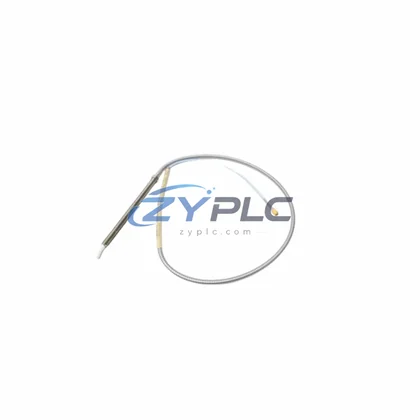
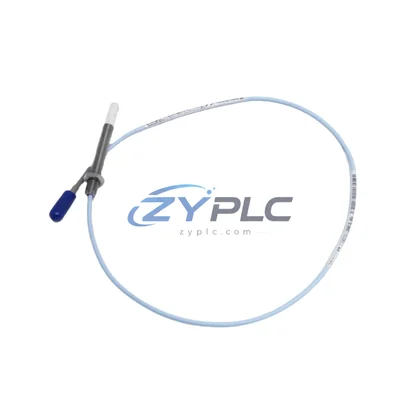
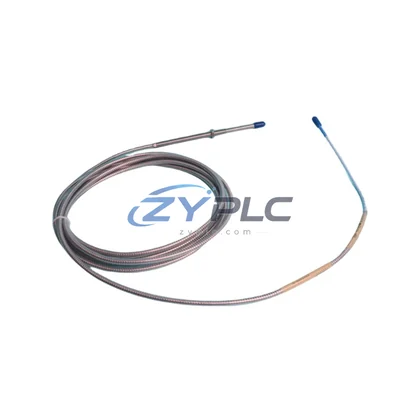
Bently Nevada 330101-15-27-05-02-05 Proximity Probe for 3300
The Bently Nevada 330101-15-27-05-02-05 is a precision eddy-current proximity probe engineered as a core sensing element within the Bently Nevada 3300 Series machinery protection and condition monitoring architecture. Rather than functioning as a standalone transducer, this probe is designed to operate as an integrated node within a layered automation system — delivering real-time shaft displacement and vibration data that flows upward through the signal chain to protection monitors, data acquisition modules, and plant-level control platforms. Its role in the control hierarchy spans the field instrumentation layer, directly feeding the I/O and signal conditioning layer, and ultimately supporting decisions at the supervisory control and human-machine interface (HMI) level.
In rotating machinery protection systems — including steam turbines, gas compressors, centrifugal pumps, and large induction motors — the 330101-15-27-05-02-05 probe is typically deployed in conjunction with the Bently Nevada 3300 XL 8mm Extension Cable and the 3300 XL Proximitor® Sensor, forming a complete proximity transducer system. The Proximitor converts the probe’s raw eddy-current signal into a calibrated DC voltage proportional to the gap between the probe tip and the rotating shaft, enabling the downstream 3500 Series Rack-Based Monitoring System or the 3300 Series Monitor to evaluate shaft vibration amplitude, eccentricity, and axial position against user-defined alert and danger setpoints.
Product Specification Table
| Parameter |
Specification |
| System Role |
Field-Level Proximity Sensing / Shaft Vibration Transducer |
| SKU / Part Number |
330101-15-27-05-02-05 |
| Brand |
Bently Nevada |
| Series |
3300 XL 8mm Proximity Transducer System |
| Probe Length |
15 inches (381 mm) |
| Cable Length |
27 inches (686 mm) |
| Probe Tip Diameter |
8 mm |
| Sensitivity |
200 mV/mil (7.87 V/mm) |
| Frequency Range |
DC to 10,000 Hz |
| Operating Temperature |
-35°C to +177°C (probe body) |
| Supply Voltage |
-24 VDC (via Proximitor) |
| Output Signal |
-1 VDC to -21 VDC (gap-proportional) |
| Communication / Integration |
Analog signal to 3300/3500 Monitor; compatible with DCS/SCADA via monitor relay outputs |
| Mounting |
Threaded tip, bracket or housing mount |
| Installation Environment |
Industrial — turbine halls, compressor stations, pump rooms, petrochemical plants |
| Warranty |
warranty terms confirmed during quotation (ZYPLC) |
System Compatibility Notes
The 330101-15-27-05-02-05 proximity probe achieves its full protective value only when correctly integrated within a coordinated control system architecture. At the field instrumentation layer, the probe is paired with the Bently Nevada 3300 XL Proximitor® Sensor (such as the 330180-X1-05 or 330130-040-00-00 series), which provides the oscillator-demodulator circuitry necessary to convert the raw eddy-current impedance change into a usable analog voltage signal. This signal is then routed via shielded coaxial cable to the Bently Nevada 3500/40M Proximitor® Monitor or the 3500/42M Proximitor®/Seismic Monitor, which resides in the 3500 Rack — a modular, rack-based machinery protection platform that supports up to 16 monitor modules per rack.
Within the 3500 Rack, the 3500/01 Rack Interface Module (RIM) manages communication between the individual monitor cards and the plant’s distributed control system (DCS) or safety instrumented system (SIS) via Modbus RTU, Modbus TCP/IP, or the System 1® Evolution software platform. The System 1 platform aggregates vibration, position, and process data from multiple 3500 racks across a facility, enabling plant-wide condition monitoring and predictive maintenance workflows. For facilities requiring redundant protection, the 3500/20 Power Monitor and dual-redundant power supply modules ensure that a single power supply failure does not interrupt protection coverage — a critical requirement in continuous-process industries such as petrochemicals, LNG, and power generation.
At the human-machine interface layer, operators interact with vibration trend data, alarm states, and historical waveforms through the System 1 software or through DCS graphics fed by the 3500 rack’s relay and analog outputs. In some architectures, the Bently Nevada TDXnet® Transient Data Interface is used to capture high-resolution transient waveforms during machine startup and shutdown, providing engineering teams with the data needed for rotor dynamic analysis and balancing. For facilities that also monitor temperature and process variables alongside vibration, the 3500/60 Temperature Monitor and 3500/62 Process Variable Monitor modules can be installed in the same rack, creating a unified machinery health monitoring node that feeds a single data stream to the plant historian.
From a maintenance and spare parts perspective, stocking the 330101-15-27-05-02-05 alongside its companion 3300 XL Extension Cable and the appropriate Proximitor sensor ensures that field technicians can perform complete transducer system replacements without waiting for multi-component procurement cycles — a key factor in minimizing mean time to repair (MTTR) in critical rotating equipment applications.
Industrial Application Notes
The 330101-15-27-05-02-05 proximity probe is deployed across a wide range of heavy industrial and process automation environments where continuous shaft monitoring is a regulatory or operational requirement.
In power generation facilities — including coal-fired, gas turbine, and combined-cycle plants — this probe monitors the radial vibration of turbine rotors and generator shafts, providing the early warning data that allows operators to schedule maintenance outages before catastrophic bearing or seal failures occur. The probe’s wide frequency response (DC to 10,000 Hz) ensures that both low-speed eccentricity and high-frequency subsynchronous instabilities are captured within the same measurement channel.
In petrochemical and refinery applications, the probe is installed on centrifugal compressors, reactor agitators, and boiler feed pumps — equipment where unplanned downtime can result in significant production losses and safety incidents. The probe’s high-temperature rating and robust construction make it suitable for installation in hot, humid, or chemically aggressive environments typical of these facilities.
In water and wastewater treatment plants, large vertical turbine pumps and blower units benefit from continuous vibration monitoring to detect impeller imbalance, cavitation, and bearing wear — all of which manifest as changes in the shaft vibration signature captured by the proximity probe system.
In mining and mineral processing operations, the probe is used on SAG mill drives, crusher main shafts, and slurry pump assemblies, where the combination of high loads, variable speeds, and abrasive environments accelerates mechanical wear. Early detection of shaft displacement anomalies allows maintenance teams to intervene before secondary damage propagates to gearboxes or motor windings.
In packaging and discrete manufacturing lines, the probe supports condition-based maintenance programs on high-speed rotating equipment such as centrifuges, spindles, and conveyor drive motors, reducing unplanned stoppages and improving overall equipment effectiveness (OEE).
Product Compatibility FAQ
Q1: Is the 330101-15-27-05-02-05 compatible with both the 3300 Series and 3500 Series monitoring systems?
Yes. The 330101-15-27-05-02-05 is part of the 3300 XL 8mm Proximity Transducer System and is fully compatible with both the Bently Nevada 3300 Series monitors and the 3500 Series rack-based monitoring platform. When used with the 3500 Series, the probe must be paired with the appropriate 3300 XL Proximitor® Sensor, and the monitor card must be configured for the correct sensitivity (200 mV/mil) and gap voltage range. System 1 software can then be used to configure alarm setpoints, trend displays, and data export to the plant DCS or historian.
Q2: What installation and commissioning considerations apply when integrating this probe into an existing control architecture?
Proper installation requires attention to probe gap setting (typically 50 mils / 1.27 mm for 8mm probes on steel targets), cable routing to minimize electromagnetic interference from power cables and VFDs, and grounding of the Proximitor housing to the machine frame. During commissioning, technicians should verify the static gap voltage, confirm the probe-Proximitor-monitor system calibration using a calibration fixture or known-gap standard, and validate alarm relay outputs against the DCS logic. All wiring should comply with the facility’s hazardous area classification requirements if the probe is installed in a Zone 1 or Zone 2 environment.
Q3: What does the warranty terms confirmed during quotation cover, and how does ZYPLC support long-term spare parts availability?
ZYPLC provides a warranty terms confirmed during quotation on the 330101-15-27-05-02-05 covering manufacturing defects and functional failures under normal operating conditions. In addition to warranty coverage, ZYPLC supports RFQ sourcing for companion components — including Proximitor sensors, extension cables, and monitor modules — to support complete transducer system replacements without extended lead times. For long-term maintenance planning, ZYPLC can assist engineering teams in identifying compatible replacement parts and obsolescence alternatives as the 3300 and 3500 product lines evolve.